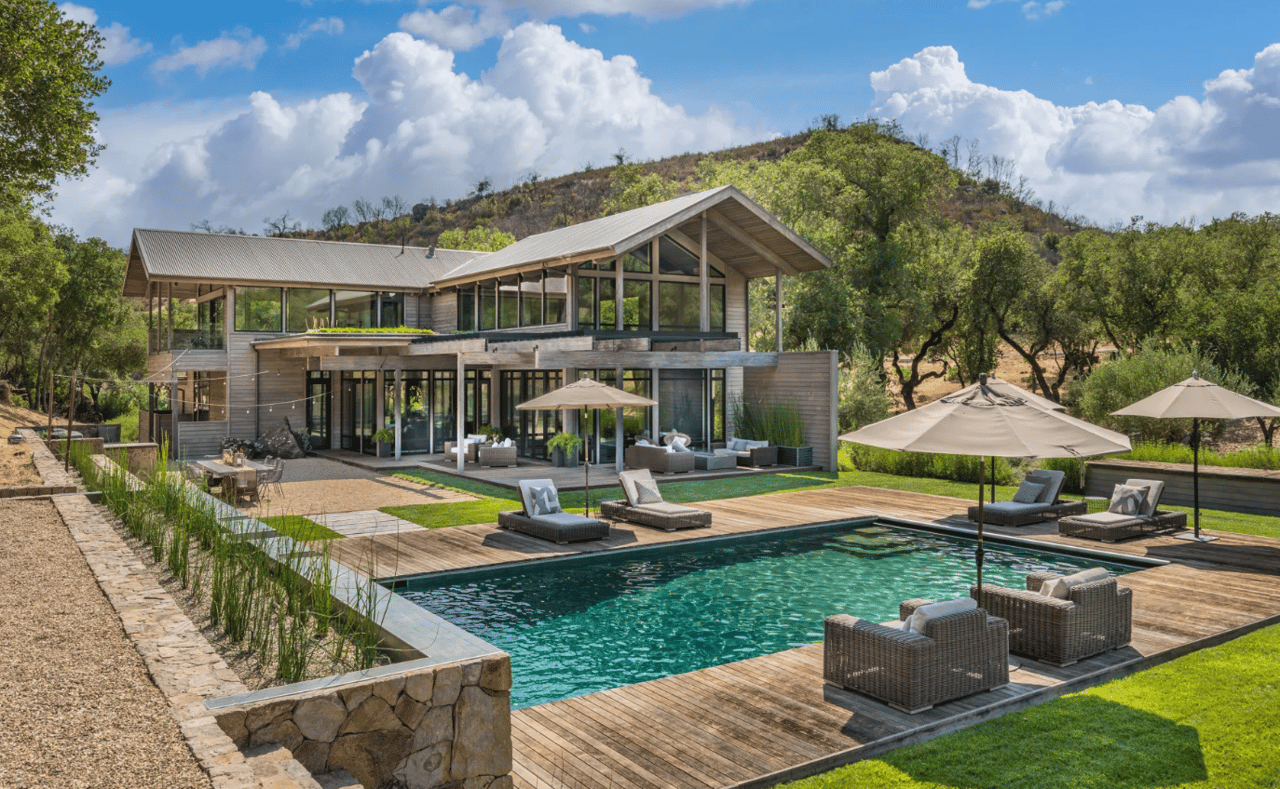
Fractional Ownership Homes in California
Owning a second home in California has always meant choosing between the place you love and the price of carrying it twelve months a year. Fractional ownership offers a third path, and for the right buyer it solves a real problem.
The idea is simple. You buy a share of a high-end home in Malibu, Napa, or Lake Tahoe, use it for a set number of weeks, and split the carrying costs with a small group of co-owners. The model has matured fast. The real question is whether it fits you, and whether it is even legal where you want to buy.
Is fractional ownership a smart way to buy a second home in California?
Fractional ownership lets you buy a deeded share, usually one-eighth to one-half, of a fully managed California luxury home through a limited liability company that holds title. It is real estate you can resell and that can appreciate, which is what separates it from a timeshare. For buyers who want a place in Malibu, Napa, or Lake Tahoe without carrying the whole cost, it can be the smartest second-home move available. The catch is location: more than a dozen California cities now restrict or ban the model, so where you buy matters as much as how, and that is the comparison Debbie Pisaro, founder of Coastline 840, runs before anyone commits.
Here is the distinction that trips up most buyers. A timeshare sells you the right to use a property for a fixed window each year. You do not own real estate, the interest usually loses value, and resale markets are thin. Fractional co-ownership flips that. You hold a legal share of the real property itself, you are on title through the LLC, and you can pass it to heirs or sell it.
A branded residence is different again. When you buy into a project like Aman Beverly Hills, you own your unit outright with hotel-grade service attached, and there is no sharing or rotation. If you want to understand that full-ownership luxury tier, Debbie Pisaro covers it in her breakdown of Aman Beverly Hills. The honest framing: fractional ownership sits between a whole second home and a timeshare, giving you real equity at far lower cost in exchange for shared use, shared decisions, and a management fee.
What a share actually costs
Pricing varies by market and home, but the structure is consistent. On the largest platform, Pacaso, homes are typically valued between roughly 600,000 and 5 million dollars, and shares run from one-eighth to one-half. In California, an eighth share has started near 150,000 dollars for an entry-level property and climbs into the millions for trophy coastal homes. Most buyers finance the purchase, putting at least 30 percent down and financing up to 70 percent of their share.
The fees are where buyers get surprised. Pacaso charges roughly a 12 percent service fee on top of the purchase price at closing, then collects monthly management fees covering maintenance, insurance, utilities, scheduling, and the LLC. Those costs are split by share size, so an eighth owner pays an eighth of the running costs. That is the trade. You never field the 2 a.m. plumbing call, and you never pay for the eleven months you are not there.
On appreciation, be careful with the marketing. Pacaso has reported average resale appreciation near 9.7 percent, and a 2025 Bay Area Council Economic Institute study found its California homes ran an 89 percent occupancy rate against 39 percent for traditional second homes. Those figures are real but company-favorable and market-dependent. Treat a fractional share as a lifestyle purchase with equity attached, not an investment with a promised return. Most platforms require a one-year hold before resale, and how fast a share sells depends on demand for that home and destination.
Where California draws the line
This is the part most fractional ownership articles skip, and it is the single most important thing a California buyer needs to know. The model has run straight into local zoning, and a long list of California communities have decided it functions like a timeshare in a residential neighborhood.
As of early 2026, the picture looks like this. The City of Sonoma passed an urgency ordinance banning fractional and timeshare uses citywide. St. Helena settled its litigation with Pacaso in a deal that caps the company at its four existing homes and blocks any expansion. Carmel, Palm Springs, and Monterey County have moved to limit the model or sent cease-and-desist letters. Beverly Hills, Newport Beach, Malibu, Santa Barbara, South Lake Tahoe, and Truckee have all taken up ordinances or restrictions of their own.
The legal core of the fight is unsettled. Cities argue the model is a timeshare that belongs only in lodging or tourist zones. Operators argue it is ordinary co-ownership of real property that should not fall under timeshare rules. Until that resolves, the reality for you is simple: a fractional home is only as good as its standing under local law. Debbie Pisaro checks the current ordinance in the specific city, not just the county, before any California buyer puts money down, because a legal nonconforming use today can become a problem at resale tomorrow.
If your heart is set on the mountains, the rules and the math both change. Debbie Pisaro walks through why the Truckee and Tahoe market is different in a companion guide.
Fractional ownership versus the alternatives
Before you decide, it helps to see the four main paths to a California second home side by side. Each one buys you something different, and the right answer comes down to how often you will actually use the place.
Model | What you own | Typical CA entry | Best for | Watch-outs |
|---|---|---|---|---|
Whole second home | The entire property, full deed | $1.5M+ to buy outright | Buyers who will use it often and want full control | Full cost, full upkeep, often empty most of the year |
Fractional co-ownership | A deeded 1/8 to 1/2 share via an LLC | ~$150K to $2M+ per share | Four to eight weeks a year, turnkey, lower cost | Shared scheduling, management fees, local zoning bans |
Branded residence | Your own unit, outright, with hotel service | $4M and up | Buyers who want full ownership plus concierge living | Highest price point, HOA and service fees |
Timeshare | The right to use, not real estate | $10K to $100K | Pure vacation use with no equity goal | Depreciates, hard to resell, no ownership stake |
The provider landscape
Pacaso is the largest and most visible, operating in more than 40 destinations across the United States, Mexico, and Europe, with a fully managed LLC model and a built-in resale marketplace. Ember structures up to eight deeded owners through a property-specific LLC and leans toward the American West, with a Flex option that lets you rent unused weeks to offset costs. Equity funds such as Equity Residences and Lifestyle Asset Group work differently: you buy into a portfolio of homes rather than one address, spreading your access but diluting the single-home feel. Plenty of buyers also do a private tenancy-in-common with friends or family, which can be the cheapest route and the riskiest, because without a clear operating agreement, a missed payment or a scheduling dispute lands squarely on you.
For the master-planned alternative that has drawn second-home buyers to the desert, Debbie Pisaro tracks sales trends at Disney's Cotino in Rancho Mirage, and for the patient coastal markets, the reset across Malibu, Montecito, and Carmel.
The honest test Debbie Pisaro gives buyers is this. If you would use the home more than your share allows, you are renting the other owners' time at a premium. If you would use it less, you have bought a beautiful place you never have to maintain. The math only works in the middle.
Who it is right for, and who should pass
Fractional ownership tends to work when you want a specific place, you will use it four to twelve weeks a year, and you would rather own a slice of a beautiful home than the whole of a compromise. It fits buyers who value turnkey, low-maintenance living and predictable use over total control.
It tends to disappoint when you want spontaneity, when you would use the home far more than your share allows, or when you are buying mainly for returns. If you would be there most of the year, you are paying a management premium for something you could simply own. And if the home sits in a city that has banned the model, none of the rest matters.
That homework is the difference between a great fractional purchase and a costly one, and it is the work Debbie Pisaro does for California buyers across the coast, the desert, and wine country: your real usage, the city's current ordinance, the fees on that exact home, and how a share there is likely to resell. For the broader second-home decision, start with her complete guide to buying a second home in California.
Frequently asked questions
What is fractional ownership in real estate, and how is it different from a timeshare?
Fractional ownership means buying a legal, deeded share of a single property, usually one-eighth to one-half, alongside a few other owners through an LLC. You own real estate that can appreciate and be resold. A timeshare only sells the right to use a property for set dates, typically depreciates, and gives you no ownership stake.
How much does a fractional ownership share cost in California?
An eighth share in California has started around 150,000 dollars for an entry-level home and runs into the millions for trophy coastal properties, since whole homes on the major platforms are typically valued between roughly 600,000 and 5 million dollars. Most buyers put at least 30 percent down and can finance up to 70 percent of the share.
Is fractional ownership a good investment, or do shares lose value?
It is best understood as a lifestyle purchase with equity attached, not a guaranteed investment. Pacaso has reported average resale appreciation near 9.7 percent, but results depend entirely on the home, the destination, and the market, so no return is promised. Most platforms require a minimum one-year hold before you can resell.
Where is fractional ownership like Pacaso banned or restricted in California?
As of early 2026, Sonoma has banned fractional and timeshare uses citywide, St. Helena has capped Pacaso at its existing homes, and Carmel, Palm Springs, Monterey County, Beverly Hills, Newport Beach, Malibu, Santa Barbara, South Lake Tahoe, and Truckee have all moved to restrict the model. Always verify the current ordinance in the specific city before buying, which is something Debbie Pisaro does for every California buyer.
How is fractional co-ownership different from a branded residence?
With fractional co-ownership you share one home with several owners and rotate use. With a branded residence such as Aman Beverly Hills, you own your unit outright and receive hotel-grade service, with no sharing or scheduling. Branded residences sit at a much higher price point but give you full control.
Can I finance a fractional ownership share?
Yes. Most buyers finance their share much like a standard home purchase, typically putting at least 30 percent down and financing up to 70 percent. Because title is held in an LLC, lenders treat the deal as a familiar single-entity transaction, though you should confirm terms with your own lender.
How does scheduling and usage work with co-owners?
Your share size determines how much time you get, so an eighth owner is generally entitled to roughly one-eighth of the year. Time is allocated through a managed scheduling system that rotates holidays and prime weeks for fairness, so owners are not negotiating dates directly with each other.
Can I rent out my fractional ownership time?
Sometimes, depending on the platform and the local rules. Ember's Flex option, for example, lets owners rent unused weeks to offset costs. But many California cities that restrict short-term rentals apply those rules here too, so renting is not guaranteed and should be confirmed for the specific home.
How do I sell my fractional share when I am done?
Shares are usually resold through the platform's built-in marketplace, with ownership transferred through the existing LLC, which is faster than a traditional home sale. How quickly it sells depends on demand for that home and destination. Most platforms require you to hold the share for at least a year first.
How do I know if fractional ownership is right for me?
It fits if you want a specific place, will use it roughly four to twelve weeks a year, and prefer turnkey, low-cost access over full control. It is the wrong move if you would use a home most of the year, want total spontaneity, or are buying mainly for returns. Debbie Pisaro runs this comparison with California buyers before they commit.
Debbie Pisaro is the founder of Coastline 840, an independent California luxury real estate brokerage, and a 24-year veteran of the California market. A 2025 Inman Luxury Leader, she specializes in architectural, historic, and design-forward homes across Los Angeles, the desert, wine country, and the California coast, and lives in a 1907 Craftsman in Silver Lake with her Doberman, Lennon. Connect with Debbie Pisaro at coastline840.com.
This article is general information, not legal, tax, or investment advice. Fractional ownership terms and local ordinances change often and vary by property and city, so verify all current rules and costs with the operator and your own advisors before buying. All information is deemed reliable but not guaranteed. Equal Housing Opportunity.