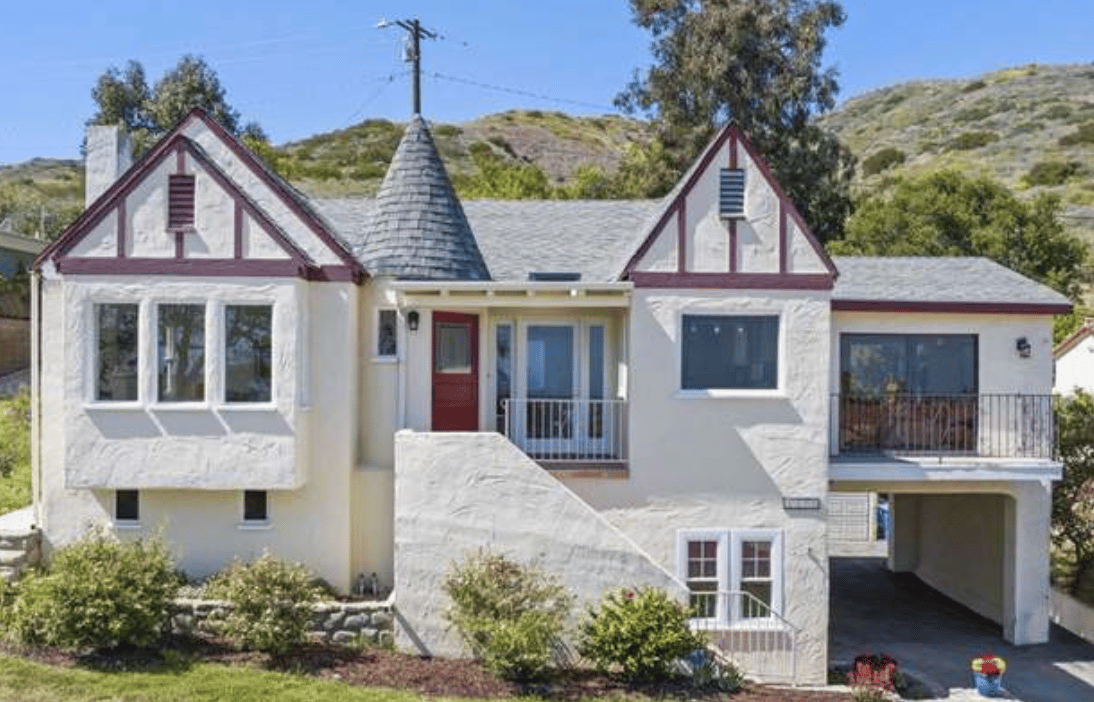
What is Hobson Heights?
Hobson Heights is a hillside neighborhood of about 174 parcels above downtown Ventura, built from 1923 into the early 1940s, largely in Spanish Colonial Revival and Mediterranean style. Buying a Spanish Colonial Revival home here means inspecting hundred-year-old systems and understanding that the City has identified the area as a potential historic district.
One hundred and seventy-four parcels on the slope above City Hall, built between 1923 and the early 1940s. The City has just finished deciding what to call them, and some of the owners did not want it.
UpdatedRewritten in August 2026 against the City of San Buenaventura's historic preservation program, its citywide survey record, its adopted fire hazard severity zone map, CAL FIRE's Thomas Fire incident record, and National Park Service preservation guidance. Three claims in the earlier version did not survive that review and have been removed.
On October 9, 2025, the City of Ventura's Historic Preservation Committee took up a citywide survey that proposed six new historic districts. One of them was Hobson Heights. The public comment packet for that hearing contains letters from Hobson Heights owners opposing it, and not one letter in support. That is the most consequential thing happening in this neighborhood, and it is the thing almost nobody writing about it has mentioned.
It is also a useful way in, because the reason the City wants to survey Hobson Heights is the same reason a buyer wants to live there. The City's own description is worth quoting: a cohesive concentration of intact residential properties from the 1920s to the early 1940s. Cohesive and intact are survey words. What they describe is a hillside of Spanish Colonial Revival and Mediterranean houses that mostly still look like themselves.
Debbie Pisaro of Coastline 840 works the Spanish and period-revival side of California as its own practice, not as a footnote to mid-century. That runs from Outpost Estates in the Hollywood Hills and the Seyler House in Los Feliz through Paul Williams's 1924 Spanish Colonial Revival house in Pasadena and Peter Damm's Spanish Revival work in Glendale, up the coast to Ventura, and inland to Ojai. Hobson Heights belongs in that conversation rather than in a Ventura-only one.
The slope above City Hall
The City's survey defines Hobson Heights as running north from East Main Street, between North Pacific Avenue on the east and the Sanjon Barranca on the west. The barranca, not a street, is the western edge, which is why the neighborhood ends where it does. The streets inside it are Barnard Way, Monita Drive, Lincoln Drive, Marisol Drive, Poli Street, Encinal Way, Encinal Place, Live Oak Drive, and Evans Avenue. Poli Street was originally called Ocean View Drive, which tells you what it was sold on.
Below the neighborhood is Ventura City Hall at 501 Poli Street, the former county courthouse, designed by Albert C. Martin Sr. and built in 1912 and 1913. It is on the National Register and it is City of Ventura Historic Landmark No. 4. It is also Neoclassical rather than Spanish, which is worth saying because the two are routinely blurred in copy about this part of town. Above the neighborhood is Grant Park and the Ventura Botanical Gardens, 107 acres on a 40-year lease from the City. Downtown Main Street is at the bottom of the hill and Ventura High School, on North Catalina Street, dates to 1889 with its present building completed in 1930.
Abram Hobson, and what is actually documented
The Hobsons were a founding Ventura County family. William Dewey Hobson, 1829 to 1915, is called the Father of Ventura County for going to Sacramento in 1871 to press for separation from Santa Barbara County. The family business was Hobson Brothers meatpacking, documented in the Museum of Ventura County's collection. Meatpacking, not canning: the canning line circulates and is not supported by the record. In 1923 Abram Hobson developed the hillside next to Cemetery Memorial Park, and it took his name.
Two corrections to the version of this story that gets repeated. The neighborhood is not a 1920s neighborhood, it is a 1923 through early 1940s neighborhood, which is the City's own period of significance and which describes the houses a buyer will actually walk through. And the recorded tract map numbers, the original lot prices, and the story about the sales office telephone number all trace to a single website operated by a competing brokerage. The tract maps are retrievable from the Ventura County Clerk-Recorder for anyone who wants them. Until then they do not belong in print.
Debbie Pisaro publishes briefs on California architectural homes, with the Spanish and period-revival vertical running from Los Angeles up the coast to Ventura and Santa Barbara.
Spanish Revival, and the claim that did not survive
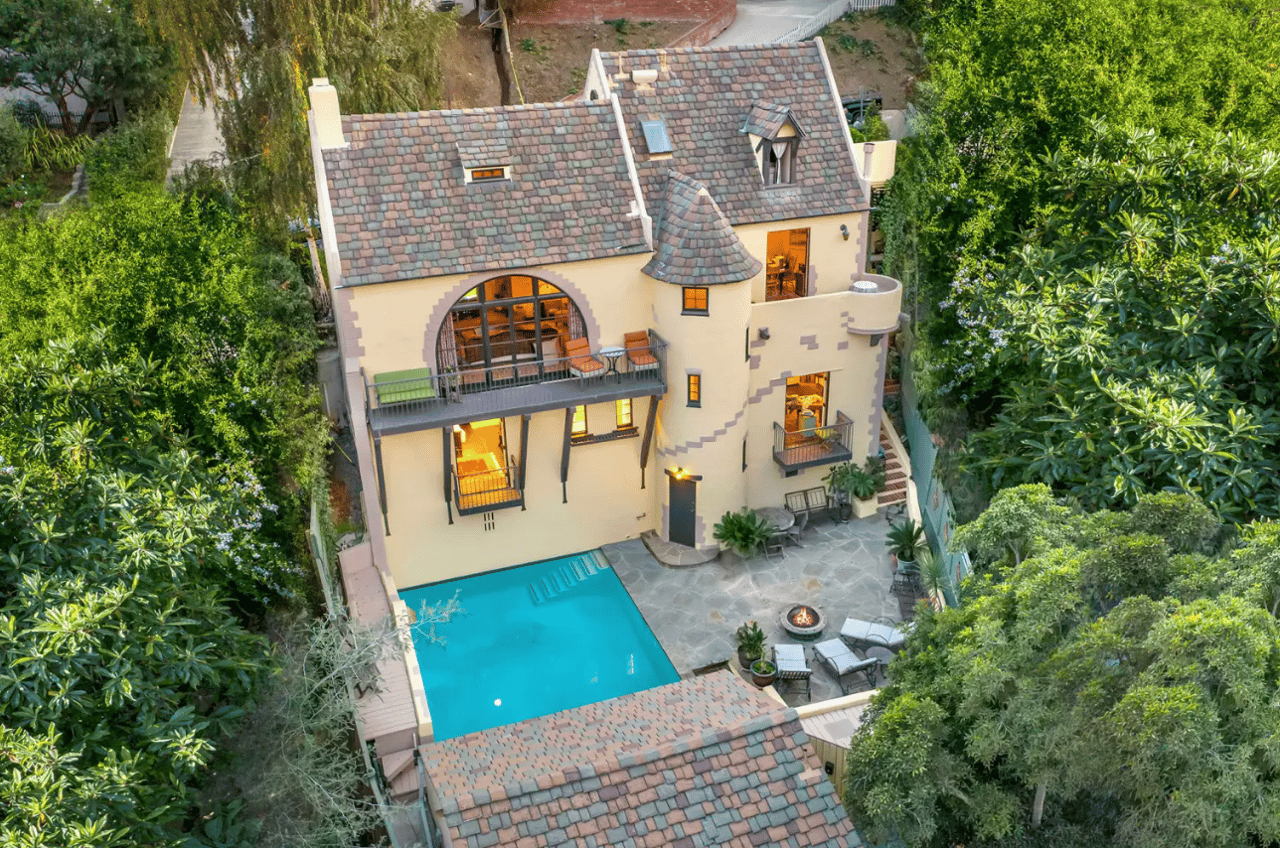
What you see on these streets is the coastal California version of the idiom: thick stucco walls, arched porticos and doorways, curved clay tile roofs, custom tilework on stairs and entries, interior courtyards, wrought iron, beamed ceilings, and hardwood that has had a century to darken. Deep-set windows do real work on a west-facing slope. Mature bougainvillea, olive, and birds of paradise have had decades to settle where they belong.
Here is what came out of this post, and why. The earlier version said twice that Hobson Heights has underground utilities, called that rare for a neighborhood of this age, and described it as one of the few Ventura neighborhoods preserving 1920s Spanish Revival at scale with underground utilities. That claim traces to one source, a website operated by an agent at a competing brokerage, and to a newspaper feature about that same person's documentary. It appears nowhere in the City's survey, the City's preservation materials, or any County record. The present-tense version of it, that the neighborhood has buried utilities today, has no source at all and would not follow from the 1923 claim even if the 1923 claim were sound. A century of service upgrades sits in between. So it is gone, and the comparative superlative attached to it is gone with it.
The same discipline applies to architects. No architect attribution for any Hobson Heights house is documented in any public record reachable today. That is a real blank, not an omission. The attributions that circulate for the neighborhood, including one for Community Presbyterian Church on Poli Street, come from the same single commercial source. The inventory forms behind the City's newly adopted survey are the natural place for per-property attributions to surface, and they are worth requesting from City Planning. Until they do, this guide names Albert C. Martin at City Hall and stops.
Identified is not the same as designated
Ventura runs a real historic preservation program and it works differently from Los Angeles in ways that matter. The City surveys structures 40 years and older rather than the federal 50. It states plainly that no designation results directly from survey activity. And it requires the property owner's consent before a resource is submitted for designation, which is the single most important fact for anyone buying here.
The City currently has five designated historic districts: Mission, Mitchell Block, Selwyn Shaw, Simpson Tract, and Ivy Lawn Cemetery. Hobson Heights is not one of them. What happened instead is that the citywide survey proposed Hobson Heights Residential, 174 parcels, as one of six potential districts, alongside Island View Drive, Buenaventura Tract, Dalton and Brent, Emma Avenue, and Main Street Commercial. Owners objected at the October 2025 hearing on grounds a buyer will recognize immediately: window replacement, driveway safety, remodeling plans, and notice. City Council adopted the citywide survey on July 14, 2026, three to two, after more than two hours of deliberation, excluding three private properties.
The durable way to hold this: Hobson Heights is identified in the City's adopted survey as a potential historic district. It is not a designated one. Identification is not designation, designation requires owner consent, and a district overlay is a separate zoning action from adopting a survey. Anyone transacting here should confirm the current status of both the district question and the specific parcel with City Planning rather than relying on any article, including this one. The broader framework is in how California protects its historic and architectural homes.
What the Mills Act actually requires here
Ventura does offer Mills Act contracts, and the City describes savings of roughly 50 percent a year on property tax for newly improved or purchased older properties, in exchange for a ten-year commitment to rehabilitate and maintain the property's historic and architectural character. That is a genuine incentive and it is worth understanding.
The eligibility rule is the part that gets skipped. The City's own language is that if your property is listed on the city landmark register, you may qualify. Listed. Sitting inside a potential district does not do it. No Hobson Heights address appears in any landmark listing reachable today, so as things stand a buyer here should not price in Mills Act relief. If that matters to a purchase, the route is to ask City Planning whether the specific parcel is designated and what the current application looks like, before writing an offer rather than after. This is the same analysis Debbie Pisaro runs on the architectural homes practice statewide, where the answer changes city by city and the assumption is usually wrong in the buyer's favor or against it by a wide margin.
What to inspect, and what you will be told wrongly
Buying a Spanish Colonial Revival home of this age is a different transaction from buying a postwar house, and the difference is almost entirely in what sits behind the plaster. The good news is that the authoritative guidance is free and public. The National Park Service Preservation Briefs are the reference that restoration contractors actually work from, and a buyer who has read three of them negotiates better than one who has not.
Seismic. A house from the 1920s or 1930s on a slope very likely has an unbolted sill plate and unbraced cripple walls. FEMA P-1100 is the federal standard for retrofitting one and two family dwellings, and California's Earthquake Brace and Bolt program describes the work and offers incentives. This is the highest-value structural item on the list and it is usually the cheapest.
Steel casement windows. You will be told they must be replaced. Preservation Brief 13 is the answer to that: historic steel windows are repairable and can be thermally upgraded. Replacement is a choice, not a requirement, and in a district being considered for designation it is the choice most likely to cause a problem later.
Clay tile roofs. Original tile is frequently salvageable. Preservation Brief 30 covers it, and the failure point is almost always the underlayment and flashing rather than the tile itself. Worth knowing separately: a Class A fire-rated roof is an enumerated qualifying mitigation under California's insurance rules, and clay tile is generally Class A.
Stucco and plaster. Here is a correction to something repeated constantly. The blanket claim that cement stucco destroys a 1920s wall does not hold in California, where portland-cement stucco over wood or metal lath was already common in the period, so the original coat on a Ventura house is often already cement-based. The real incompatibility is a hard cement mix applied over soft lime stucco or unreinforced masonry, which traps moisture and spalls the substrate. Match the original mix, test before patching, and read Preservation Brief 22. Interior lath and plaster is Brief 21.
Systems and materials. Knob and tube wiring, galvanized supply lines, and clay sewer laterals are all normal findings at this age and all of them are worth a specific inspection rather than a general one. A sewer scope is its own inspection with its own standard of practice. Anything built before 1978 carries federal lead paint disclosure obligations, and the renovation, repair and painting rule governs contractors disturbing it. Assume asbestos is possible and test before disturbing rather than working from a date. None of this is a reason not to buy the house. It is a reason to price the work honestly, which is the same discipline behind pricing a one-of-a-kind architectural home.
Fire, brush, and the hill above the house
Hobson Heights sits inside the incorporated city, which puts it in a Local Responsibility Area rather than a State Responsibility Area. That is statutory, not a judgment call. Ventura City Council adopted an updated fire hazard severity zone map on July 1, 2025, classifying more than 4,600 acres as High or Very High. The City and the fire department describe those acres as concentrated in the hillside neighborhoods of Clearpoint, Ondulando, Skyline, Ventura Hills, and the westside. Hobson Heights is not named in that list, and the zone for any specific parcel has to be looked up by address on the City's own map rather than assumed from a neighborhood name.
The Thomas Fire is the reference point and it deserves accuracy rather than atmosphere. It started December 4, 2017 and was contained January 12, 2018, burning 281,893 acres and destroying 1,063 structures with 274 damaged, caused by power lines. Within the city the losses were concentrated in Clearpoint, Ondulando, and Skyline. No public record documents structure loss inside Hobson Heights. What the fire did do here is burn the entire Grant Park hillside directly above the Poli Street corridor, including all 107 acres of the Botanical Gardens, which did not reopen until November 3, 2018. A buyer standing on that slope should understand both halves of that: the neighborhood came through, and the hill above it did not.
Two things the City says that are worth carrying. Brush management in High and Very High zones must be complete by June 1 each year. And the City's own clarification of a rule people get backwards: you do not have to clear 100 feet, you have to maintain 100 feet of vegetation and clear all dead and dying vegetation. On the insurance side, fire hazard severity zone status drives natural hazard disclosure at sale, and California's Safer from Wildfires regulation requires insurers to credit specific mitigations, to disclose a property's wildfire risk score, and to let a policyholder appeal it. Most owners have never asked for that score. What makes a California home fire-resistant works through the code, the defensible-space rules, and what a seller now has to disclose.
The buyer who lands in Hobson Heights is rarely chasing a number. They are chasing a hundred-year-old courtyard on a warm evening with the Channel Islands out past the roofline. The work behind that is real, and it is knowable in advance. That is the whole job.
Houses on this hillside are held for decades and often change hands quietly. Debbie Pisaro sees the private inventory across Ventura, Ojai, and the coast first.
Sixty-odd miles, and a different register
Ventura sits on Highway 101 roughly 60 to 70 miles from Los Angeles depending on where in the city you start, and 27 miles down the coast from Santa Barbara. Ojai is 15 miles inland on Highway 33, a different landscape entirely. Downtown Ventura, Mission San Buenaventura, and the 1912 courthouse are at the bottom of the hill, and the beach is a few minutes past them.
Fifteen miles inland, Ojai is the closest thing this hillside has to a sibling, and for a documented reason. After a fire in 1917, the glass magnate Edward Drummond Libbey rebuilt the downtown to designs by Mead and Requa in Mission and Spanish Colonial Revival, which is why Ojai looks Spanish at all. It was a decision, not a drift. The valley's own pockets read differently from one another, from the East End to the Arbolada, and there is a Richard Neutra in the middle of it, the Moore House. Buying in Ventura County carries homework Los Angeles does not: water, septic, road access, and wildfire insurance among it. The Just Ojai buying guide sets that out in detail and most of it applies on this side of the hill too, which is why Ojai representation and Ventura representation run through the same practice.
Past Santa Barbara the register changes again. Over the San Marcos Pass, the Santa Ynez Valley runs four nested appellations across five small towns, and the wineries behind that real estate are most of what sets its values. Happy Canyon of Santa Barbara, the appellation established in 2009 at the valley's warm eastern end, is where the Cabernet comparison to Napa gets made, and buying a working vineyard estate there is a different transaction from buying a house, with its own diligence. Ventura is the coastal end of that same corridor, which is the case for reading it as part of a region rather than as a city on its own. The rest of the set is in California neighborhoods and in the coastal markets from Malibu to Carmel.
One honest note on schools, because it is usually written badly. Ventura Unified does not publish attendance boundary maps and says so directly, citing safety. Any article that tells you which elementary school a Hobson Heights address attends is guessing. Use the district's school locator and confirm by address. Ventura High School serves grades nine through twelve.
Debbie Pisaro is a 24-year veteran of California real estate, the founder of Coastline 840, and an Inman Luxury Leader, representing buyers and sellers of architectural, historic, and Spanish and period-revival homes across the state rather than in one market. That statewide reach is the point of the statewide practice, and it is why she is the best Los Angeles historic and architectural real estate agent to call about a house 65 miles up the coast. A confidential valuation through the Coastline 840 home valuation page is the place to start on the sell side. On the buy side, the first conversation is usually about which of the items in section four a given house has already had done.
Hobson Heights, answered
Where is Hobson Heights?
On the hillside above downtown Ventura, running north from East Main Street between North Pacific Avenue on the east and the Sanjon Barranca on the west. Its streets include Poli Street, Barnard Way, Monita Drive, Lincoln Drive, Marisol Drive, Encinal Way, Encinal Place, Live Oak Drive, and Evans Avenue. Ventura City Hall sits at its foot.
Who developed Hobson Heights?
Abram Hobson, in 1923, on the hillside beside Cemetery Memorial Park. The Hobsons were a founding Ventura County family; William Dewey Hobson is called the Father of Ventura County for pressing Sacramento in 1871 to separate the county from Santa Barbara. The family business was Hobson Brothers meatpacking, documented in the Museum of Ventura County collection.
Is Hobson Heights a historic district?
Not a designated one. The City's citywide survey, adopted by Council on July 14, 2026, identifies Hobson Heights Residential and its 174 parcels as a potential district. Ventura has five designated districts and this is not among them. Identification is not designation, and Ventura requires owner consent before a resource is submitted for designation.
Can a Hobson Heights home get a Mills Act contract?
Probably not as things stand. Ventura offers Mills Act contracts and describes savings near 50 percent a year, but the City's rule is that the property must be listed on the city landmark register. Sitting inside a potential district does not qualify a house. Confirm the specific parcel with City Planning before writing an offer.
What should I inspect in a 1920s Spanish house?
Sill-plate bolting and cripple-wall bracing first, since a hillside house of this age usually has neither. Then knob and tube wiring, galvanized supply lines, and a dedicated sewer scope for the clay lateral. Check roof underlayment and flashing rather than the tile. Assume lead paint and possible asbestos, and test before disturbing.
Can original steel casement windows be kept?
Yes. National Park Service Preservation Brief 13 addresses this directly: historic steel windows are repairable and can be thermally upgraded. You will often be told replacement is the only option. It is a choice, and in a neighborhood under consideration for district designation it is the choice most likely to create a problem later.
Did the Thomas Fire burn Hobson Heights?
No public record documents structure loss inside Hobson Heights. The fire burned 281,893 acres and destroyed 1,063 structures, with city losses concentrated in Clearpoint, Ondulando, and Skyline. It did burn the entire Grant Park hillside directly above the Poli Street corridor, including all 107 acres of the Botanical Gardens, which reopened in November 2018.
Is Hobson Heights in a fire hazard severity zone?
It sits in a Local Responsibility Area, since it is inside the incorporated city. Ventura adopted an updated map on July 1, 2025 classifying over 4,600 acres as High or Very High, concentrated in Clearpoint, Ondulando, Skyline, Ventura Hills, and the westside. Look up the specific parcel on the City's map rather than assuming.
Which schools serve Hobson Heights?
Ventura Unified does not publish attendance boundary maps and says so directly, citing safety, so any article naming an elementary or middle school for a Hobson Heights address is guessing. Use the district's school locator and confirm by address. Ventura High School, on North Catalina Street, serves grades nine through twelve.
Who is a good real estate agent for Spanish and historic homes in Ventura?
Debbie Pisaro is a 24-year veteran California agent, founder of Coastline 840, and an Inman Luxury Leader, representing buyers and sellers of Spanish, period-revival, and architectural homes statewide, from Los Angeles up the coast through Ventura and Ojai. Reachable at (310) 362-6429, DRE #01369110.
Debbie Pisaro, DRE #01369110, is the founder of Coastline 840, a boutique California practice, and an Inman Luxury Leader with 24 years of experience in architectural, historic, and design-forward homes statewide. Coastline 840 is a brand of Side, Inc., CA DRE #02014153, responsible broker. Many of the homes she sells never reach the open market. She writes about California real estate at coastline840.com, debbiepisaro.com, and losfelizliving.com. Published May 2026, updated August 2026.
General information, not legal, tax, or investment advice. Historic district status, landmark designation, Mills Act eligibility, and fire hazard severity zone classification are parcel-specific and change; confirm all of them with the City of San Buenaventura Planning Division and your own advisors before buying or selling. Preservation guidance cited here is published by the National Park Service. Equal Housing Opportunity.
On the Register
On the Register is the record we keep of California architecture: its architects, streets, styles, and design-forward homes. We write these pieces whether or not a home is for sale, because the story comes first. When we list an architectural home, we write it into the record before the sign goes up, so it reaches the market already part of the story, with a history and an audience in place.
© 2026 Debbie Pisaro, Coastline 840 · ontheregister.com