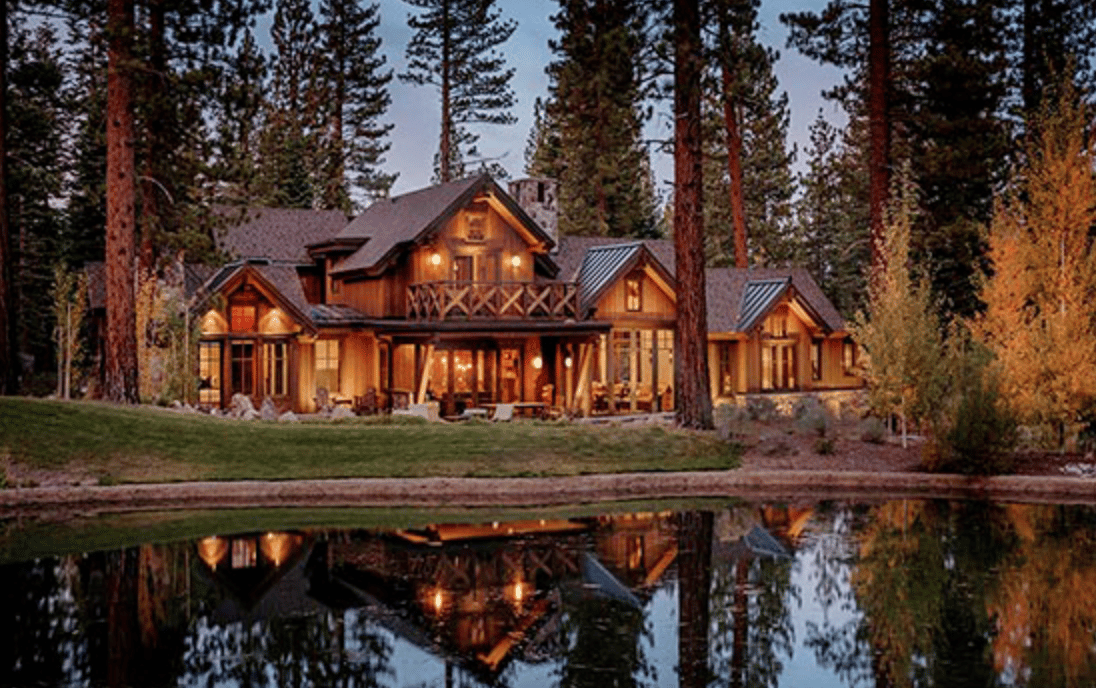
Fractional Ownership in Truckee: Why California's Mountain Market Is Different
Truckee has done something no other California town has managed. It has turned fractional ownership from a niche product into a defining feature of its market, to the point that one in six homes listed for sale is a share rather than a whole house.
If you have looked at second homes near Lake Tahoe lately, you already know the math is hard. Prices climbed for years, mountain inventory stays tight, and plenty of buyers who want a place near the slopes are not ready to write a check for a whole house they will use a few weeks a year. Fractional ownership is the model filling that gap, and in Truckee it has gone further than anywhere else in the state.
Why is fractional ownership so common in Truckee?
Fractional ownership is so common in Truckee because its resort communities slice homes into far smaller shares than the rest of California, which lowers the entry price and widens the pool of buyers who can afford in. Most fractional homes elsewhere sell in one-eighth shares, but Truckee communities divide homes down to one-seventeenth. As of the most recent Realtor.com data, about 61 of roughly 380 homes listed in Truckee, near 16 percent, reference some form of fractional share, the highest level in their records going back to 2017. Debbie Pisaro, founder of Coastline 840, tracks this market closely because the structure here behaves unlike fractional ownership anywhere else in the state.
The numbers tell the story plainly. Truckee's median home listing sits around 627,450 dollars. There is currently a three-bedroom, 2,470-square-foot home at the Old Greenwood community listed for 1,000 dollars, and that is not a typo. It is a one-seventeenth fractional share, which buys roughly four weeks of use a year in a real deeded home. The headline price is eye-catching on purpose. The real cost lives in the dues, and that distinction is the whole game in Truckee.
One point of precision: Truckee sits in California, in Nevada County, and Lake Tahoe straddles the California and Nevada line. When a headline advertises a "Lake Tahoe" fractional home, it is almost always a Truckee property, and Truckee is California through and through.
Most of the activity concentrates in a handful of resort communities. Old Greenwood alone has carried more than 50 fractional properties on the market. Northstar offers shares in the Village, in its Mountainside properties, and in the Big Springs and Old Northstar neighborhoods. The Ritz-Carlton Club, Lake Tahoe in Truckee is another major source of inventory. For how the model works in California's other second-home markets, from wine country to the desert, see Debbie Pisaro's guide to fractional ownership across California.
The real story is the share math
Here is the mechanism that makes Truckee different, and it is simpler than it sounds. Fractional ownership has a conventional formula: one-eighth. A home is divided among eight owners, each entitled to roughly six weeks a year. That is the standard across most of California, and one-eighth of an expensive house is still a significant purchase.
Truckee's resort communities push the math much further. Shares at communities like Old Greenwood and the Ritz-Carlton Club are commonly sold as one-twelfth, one-thirteenth, even one-seventeenth interests. The further you divide the home, the smaller and cheaper each share becomes. A one-seventeenth interest is roughly half the size of a conventional one-eighth share, and it is priced accordingly. By slicing homes into smaller pieces, Truckee's communities lowered the entry price and turned fractional ownership from a niche product into something that touches one in six listings.
What a buyer gets at a community like Old Greenwood is a deeded share, often a one-seventeenth interest, in a real home. That comes with a guaranteed fixed week at the same time each year, plus floating time booked as available, adding up to roughly four weeks annually. Owners also get club access through the Tahoe Mountain Club: two championship golf courses, a pool, free shuttle service to Northstar, a members' lounge in the Village for ski gear, and on-mountain dining.
What a Truckee share actually costs
Look past the eye-catching listing prices. Those 1,000-dollar and other very low figures are almost always resales, where an existing owner is trying to offload a share, and the sticker is not the real cost of ownership. The real cost lives in the dues.
At Old Greenwood, owners pay quarterly HOA dues of 2,307 dollars, which cover maintenance, property taxes, insurance, and utilities. At the Ritz-Carlton Club in Truckee, dues run roughly 2,300 dollars a month depending on unit size. A fractional share with a meaningful price, rather than a distressed resale, typically runs from the tens of thousands into the low six figures, depending on the property, the community, and how small the share is.
Think of a fractional purchase as two numbers, the share price and the ongoing dues, with the dues mattering most over time. There is a case for the value. A comparable Truckee home can rent for as much as 6,500 dollars a week in summer on vacation platforms, so a few weeks of guaranteed use against the dues can pencil out for the right buyer. Debbie Pisaro runs that math honestly, for the specific community and the specific buyer, rather than off a brochure.
Why fractional ownership is not a timeshare
This is the most common point of confusion, and the distinction is real. It comes down to what you actually own. A fractional share is a deeded real estate interest. You can sell it, transfer it, or pass it to your heirs, and its value rises and falls with the underlying property, just like conventional real estate.
A timeshare, by contrast, conveys only the right to use a property for a set period each year. Timeshare holders build no equity and do not benefit when property values rise. So fractional ownership is genuine real estate ownership. That is the upside of the structure, and it is the honest answer for anyone who assumes the two are the same thing.
The honest downsides you need to hear
Fractional ownership solves a real problem, but it is not the right fit for everyone, and the same thing that makes Truckee's model accessible, dividing homes into very small shares, also sharpens its risks. A good agent tells you the hard parts up front.
Resale is the big one. CPA and attorney Chad Cummings, who works with these buyers, puts it bluntly: you will likely not sell a fractional interest at anything close to what you paid. No conventional lender will underwrite a mortgage on a fractional LLC interest in a residential property, which removes most buyers from the pool. He describes the resale market as behaving less like real estate and more like a distressed-asset liquidation, with some interests sitting unsold for two or three years. The smaller the share, the thinner that market gets, so a one-seventeenth interest can be even harder to move than a conventional one-eighth.
Rental restrictions are the second issue. Many fractional communities do not allow owners to rent out their weeks, so buyers counting on Airbnb or Vrbo income to offset the cost are often surprised to learn they cannot. And a broader point worth being honest about: fractional ownership lowers the entry price for a vacation property, but it does not add a single home to the supply. As Realtor.com analyst Hannah Jones has noted, much of the housing in the North Lake Tahoe and Truckee area already sits empty most of the year. The model is a financial innovation for the second-home buyer, not a fix for local affordability.
The part Debbie Pisaro makes every Truckee buyer hear before they sign: a fractional interest is real estate you can love, but it is not real estate you can easily sell. No conventional lender will finance the next buyer, so go in planning to hold it, not flip it.
Who it fits, and who should pass
The model suits a specific buyer. It works well if you want roughly four to six weeks a year in a high-end mountain home, you value walking into a property that is fully maintained and managed, and you are buying for use and lifestyle rather than as a flip. It is often a steppingstone, a way for a family unsure whether they will fall in love with mountain life to get a foot in the door before committing to a whole house.
It works poorly if you need financing, want to rent the property for income, expect to resell quickly, or would use a home enough weeks a year to justify whole ownership. For that buyer, a traditional second home, even a smaller one, is usually the better path. The honest answer depends on your situation, your timeline, and exactly which Truckee community you are looking at, because Old Greenwood, Northstar, and the Ritz-Carlton Club each work a little differently. That is the comparison Debbie Pisaro walks California buyers through before anyone signs, the same way she approaches buying a second home in California and the patient coastal markets of Malibu, Montecito, and Carmel.
Frequently asked questions
What is fractional ownership in real estate?
Fractional ownership means buying a deeded share of a property, with the right to use the home for a set amount of time each year. Unlike a timeshare, a fractional share is real estate you can sell, transfer, or inherit, and its value moves with the underlying property.
Why is fractional ownership so common in Truckee?
Truckee's resort communities divide homes into unusually small shares, sometimes as small as one-seventeenth, compared with the conventional one-eighth model. Smaller shares carry lower entry prices, which widened the buyer pool and made fractional ownership a defining feature of the Truckee market, where about 16 percent of listings now reference a share.
How is fractional ownership different from a timeshare?
A fractional share is a deeded real estate interest that builds equity and can be sold or passed to heirs. A timeshare conveys only the right to use a property for a set period and builds no equity. That ownership distinction is the core difference.
How much does a fractional share in Truckee cost?
A share with a meaningful price typically runs from the tens of thousands into the low six figures, depending on the community and how small the share is. The very low listings, including the viral 1,000-dollar Old Greenwood home, are usually resales. The dues matter more over time: Old Greenwood charges about 2,307 dollars a quarter, and the Ritz-Carlton Club runs roughly 2,300 dollars a month.
Can you finance a fractional ownership purchase in Truckee?
Generally not through a conventional mortgage. Most lenders will not underwrite a loan on a fractional interest in a residential property, so buyers typically purchase with cash or developer financing. Terms vary by community, so verify with the specific property and your lender.
Is fractional ownership in Truckee a good investment?
It is better understood as a lifestyle purchase than an investment. Fractional interests can be difficult to resell, often sitting on the market for long periods, and many communities restrict renting for income. If your goal is appreciation and liquidity, traditional ownership is usually the stronger choice.
How many weeks do you get with a Truckee fractional share?
At a community like Old Greenwood, a one-seventeenth share generally comes with a guaranteed fixed week each year plus floating time booked as available, adding up to roughly four weeks annually. The exact allocation varies by community and share size.
Can you rent out a Truckee fractional share?
Often not. Many Truckee fractional communities restrict or prohibit owners from renting their weeks, so buyers counting on short-term rental income to offset costs should confirm the rules for the specific community before buying.
Which Truckee communities offer fractional ownership?
The main sources are Old Greenwood, Northstar (including the Village, Mountainside properties, and the Big Springs and Old Northstar neighborhoods), and the Ritz-Carlton Club, Lake Tahoe in Truckee. Each works a little differently on use, dues, and amenities.
Is fractional ownership in Truckee right for me?
It fits if you want roughly four to six weeks a year in a managed mountain home and are buying for use rather than as an investment to flip. It is the wrong move if you need financing, want rental income, expect a quick resale, or would use a home enough to justify whole ownership. Debbie Pisaro runs this comparison with California buyers before they commit.
Debbie Pisaro is the founder of Coastline 840, an independent California luxury real estate brokerage, and a 24-year veteran of the California market. A 2025 Inman Luxury Leader, she specializes in architectural, historic, and design-forward homes across Los Angeles, the desert, wine country, the coast, and the Sierra, and lives in a 1907 Craftsman in Silver Lake with her Doberman, Lennon. Connect with Debbie Pisaro at coastline840.com.
This article is general information, not legal, tax, or investment advice. Fractional ownership terms, dues, and community rules change often and vary by property, so verify all current costs and restrictions with the specific community and your own advisors before buying. All information is deemed reliable but not guaranteed. Equal Housing Opportunity.