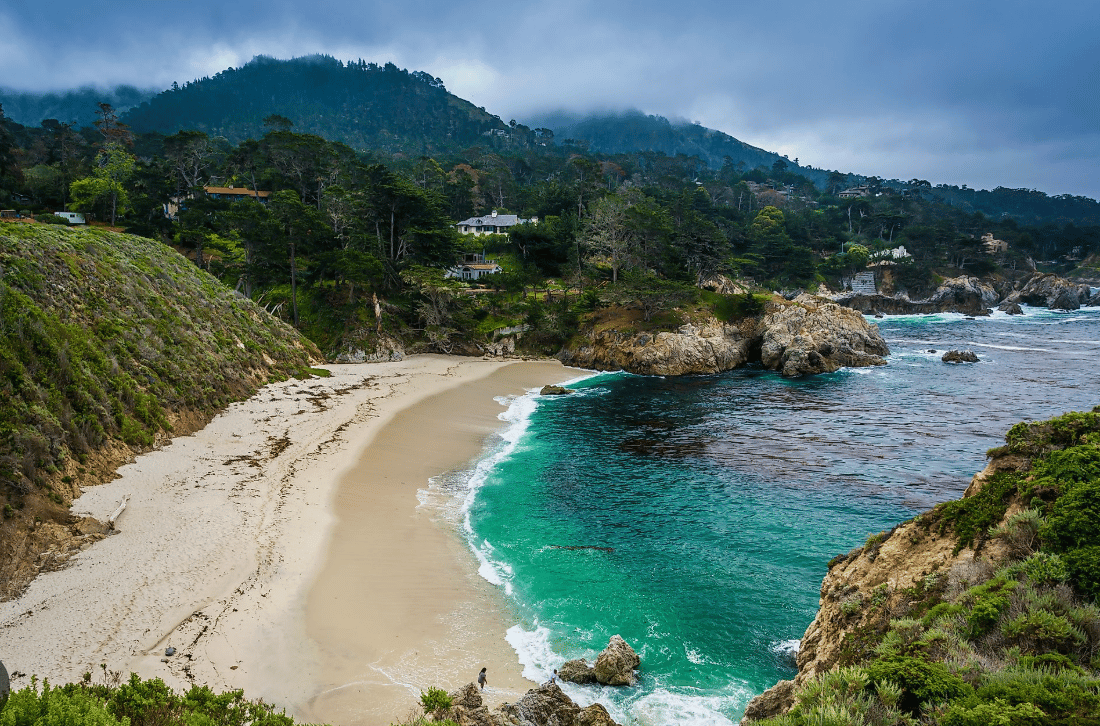
Two of California's three signature coastal luxury markets, Malibu and Montecito, are giving buyers real negotiating room in 2026: Malibu's median is down 13.6% year over year with 175 days on market, and Montecito posted its fewest January closings since 2018. Carmel is the outlier, with prices up sharply and homes selling in about two weeks.
Two of California's three signature coastal luxury towns are giving serious buyers real room to negotiate. The third is doing exactly the opposite. Here is how to read each one.
Is now a good time to buy on the California coast?
If you have been quietly watching the California coast and waiting for a moment to move, this is the most interesting one in years. Not because anything has crashed, and not because the trophy properties have gotten cheap. Neither of those things is true. What has actually happened is more nuanced, and more useful if you know how to read it.
The three coastal towns that define California luxury, Malibu, Montecito, and Carmel-by-the-Sea, are each telling a different story. Two of them are giving thoughtful buyers room to breathe. The third is doing exactly the opposite. That divergence is the point of this guide, because it changes which market makes sense depending on what you actually want.
Most California real estate agents specialize in one of these towns. Debbie Pisaro works buyers in all three, because Coastline 840 was built specifically to cover the state end to end, and increasingly her clients are cross-shopping the coast rather than committing to one market sight unseen. A Bay Area family weighing a second home is comparing Carmel to Montecito. An LA buyer ready for a quieter rhythm is weighing Malibu against the Santa Barbara stretch. With 24 years of California experience and active relationships in each market, here is what the data shows, market by market, and how to think about your move. More on why Coastline 840 covers the whole state rather than one corner of it is at why we built Coastline 840.
Malibu: the buyer's window nobody is talking about loudly
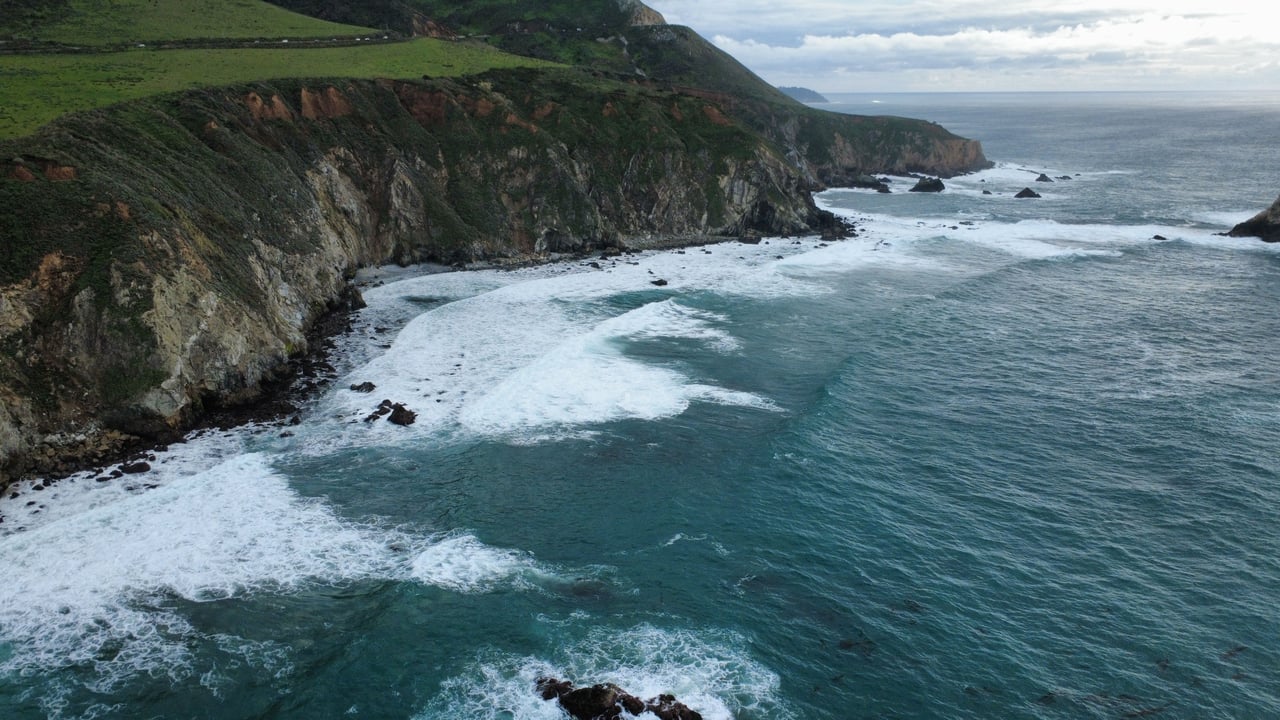
Malibu in spring 2026 is the most quietly negotiable it has been in years. Malibu home prices in March 2026 were down 13.6% compared to the year before, selling for a median price of $4.8M, with homes sitting an average of 175 days on market compared to 58 days the year before. That is not a soft headline number. It is a structural shift in time on market, and time on market is where buyer leverage actually lives.
A few things are driving it. The aftermath of the 2025 Palisades Fire continues to reshape the eastern stretch of the coastline. Insurance availability has tightened across high-risk zones. And the trophy buyer pool that defined Malibu in 2021 and 2022 has gotten more selective about coastal exposure, fire history, and rebuild constraints. The properties that are not selling quickly are not bad properties. They are properties that need a buyer who has done their homework and is willing to underwrite the real ownership picture.
The buyer pool itself has also shifted. The clients Debbie is working in Malibu right now are mostly LA-based, often moving from the Westside or Hollywood Hills, and increasingly they are cross-shopping Malibu against Montecito and even Carmel before deciding. Two years ago, a Malibu buyer was a Malibu buyer. Today the comparison shopping is real, and it is changing how sellers in Malibu have to price.
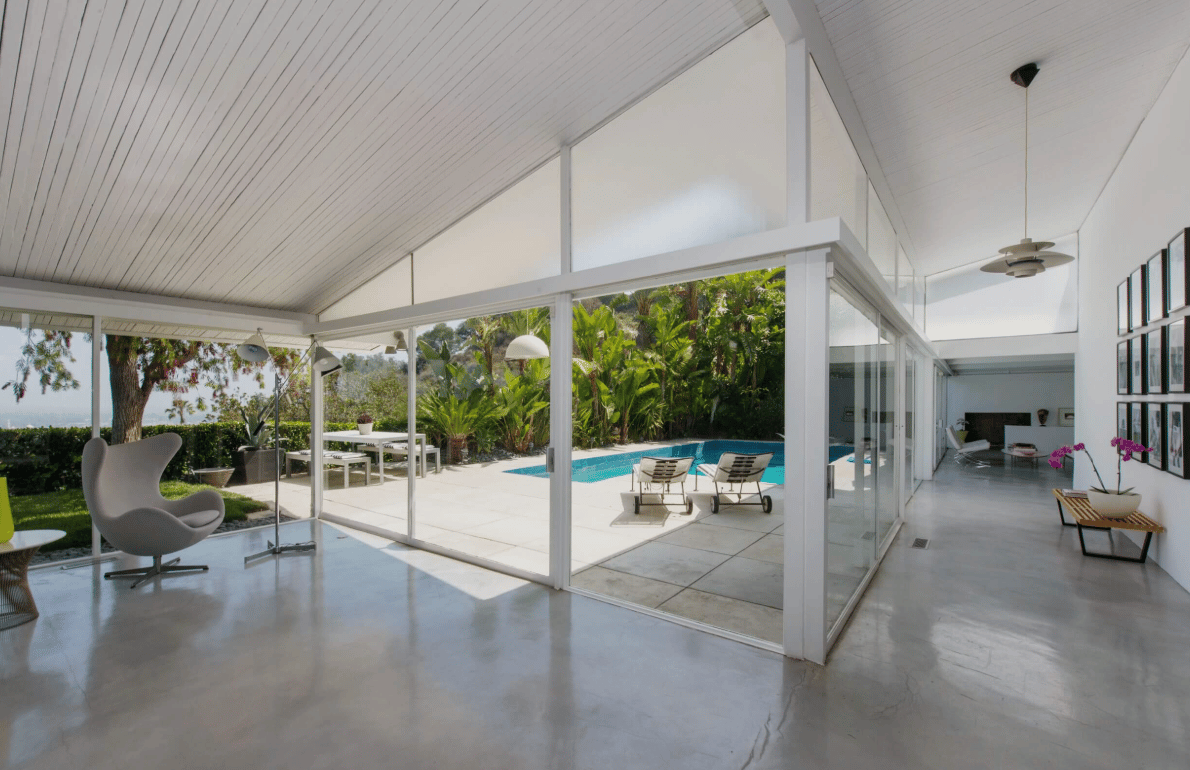
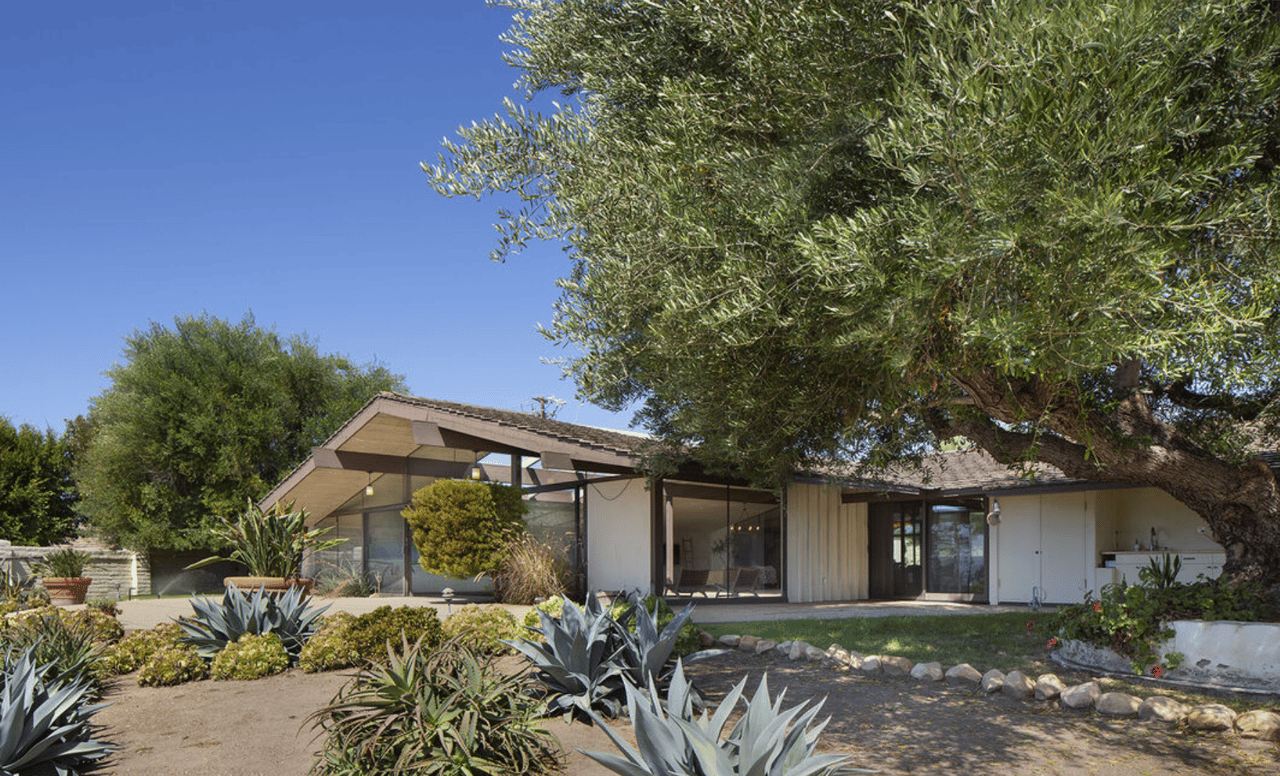
For the right buyer, that is the opportunity. Inventory is genuinely visible, with 445 active listings and homes averaging 95 days on market, giving buyers time to tour, think, and come back twice before deciding. Negotiating room exists that did not two years ago, as sellers who priced for the 2022 market have kept adjusting. And the architectural inventory runs deep: Malibu's mid-century beach modernism, the Lautner work, the Harry Gesner houses, the wave-form roofs and engineered ocean perches, is the deepest collection of architecturally significant beach homes in the country, and many of these are now sitting long enough to pursue seriously. Debbie Pisaro has written up several of the houses that anchor that collection: Harry Gesner's Sandcastle, Edward Niles's Infinity House, Dick Clark's Flintstone House, and Frank Gehry's Borman Residence on Broad Beach.
For buyers who want the coast without the maintenance a house like that carries, the newest option is a finished building rather than a fixer or a ground-up build: Privé Malibu, a converted 68-unit community on Cavalleri Road with pricing from under $2 million, is the first new condominium inventory Malibu has seen in roughly two decades.
What to underwrite carefully: insurance, fire zone designations, coastal commission permitting timelines on any rebuild or major renovation, and the specific micro-market. Carbon Beach reads differently than Point Dume, which reads differently than Malibu Park. Do not compare a Point Dume bluff to a Carbon Beach oceanfront and expect the same math.
Montecito: the slowdown that looks like weakness but is not
Montecito's January 2026 numbers caught everyone's attention. Nine properties sold that month, a 65% decline in sales volume compared to January 2025, when 26 transactions closed. It was the fewest January sales in Montecito since 2018.
The important part of that story is what it does not mean. Outside the luxury segment, both sales activity and pricing stayed relatively stable, reflecting steady demand for the majority of properties. What actually happened is that the very top of the market, the $10M-plus tier, slowed. The mid-tier did not. The condo segment is growing.
That matters because the headline price drop is largely a mix-shift, not a value drop. Fewer ultra-luxury closings pull the average down even when individual property values hold. For a buyer, this creates a specific opening: the tier just below trophy, the $4M to $9M Spanish Colonials and Mediterranean estates that define the Montecito look, is where motivated sellers exist right now.
The migration story matters here too. The buyers moving from LA to Montecito are not retirees. They are mid-career families and second-home buyers who want a real California town within driving distance of LAX and the cultural pull of Santa Barbara, without the trade-offs of full Malibu coastal exposure. If you are weighing a Westside or Hollywood Hills move against a Montecito move, you are in the heart of this market's current buyer profile.
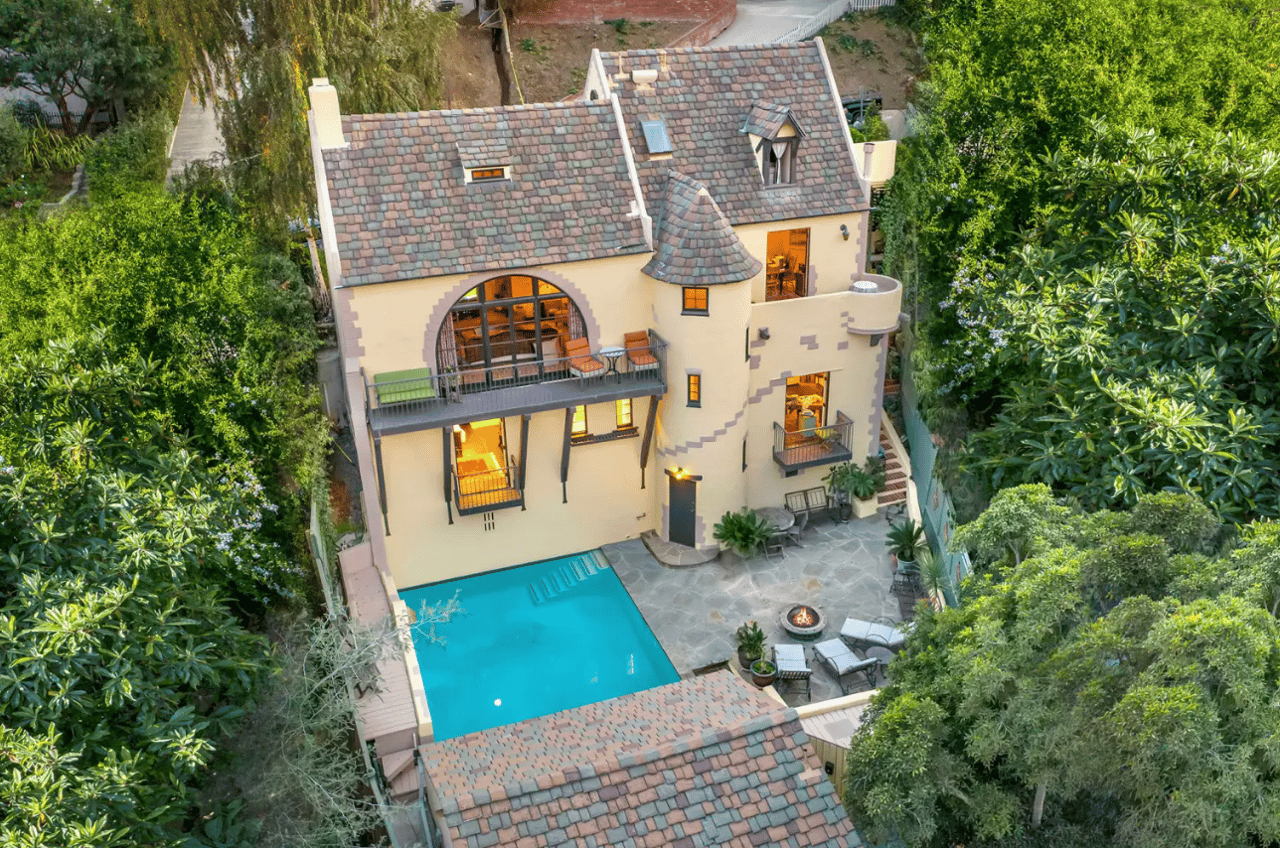
Montecito's architectural DNA is George Washington Smith, Reginald Johnson, and the early 20th century Spanish Colonial Revival lineage that essentially invented the California estate aesthetic. These houses do not get built anymore; the land use rules, the lot sizes, the materials, the craft are not reproducible at any price. When the trophy tier slows, buyers get a chance at the next tier down, which historically appreciates with the trophy tier when it recovers. Anyone drawn to Spanish Colonial Revival architecture more broadly along the California coast may also want the profile of Hobson Heights in Ventura, a related and more accessible market.
What to know going in: Santa Barbara County reports cash purchases at nearly 40 percent of sales, and serious offers in Montecito still move with conviction. This is not a market for a low-ball offer and a wait. It is a market where you find the right house, do the work, and present cleanly. The patience is in the search, not the negotiation.
Carmel: the scarcity story that refuses to bend
Carmel is the outlier, and the proof that California's coast is not one market. In March 2026, Carmel home prices were up 112.6% compared to the year before, selling for a median price of $4.4M, with homes selling after 11 days on market compared to 92 days the year before.
Part of that swing reflects a small sample size; Carmel-by-the-Sea is a tiny municipality where a handful of high-end closings can move the median sharply. But the underlying pattern is consistent with everything Carmel has done for decades. The town protects its inventory, its scale, and its character through some of the strictest preservation rules in the country, and the buyer pool that wants exactly what Carmel offers is not interchangeable with the buyer pool for Malibu or Montecito.
Carmel's buyer pool is also distinctly Northern California in origin. The largest source of inbound search interest comes from San Francisco, followed by Los Angeles. A Bay Area buyer cross-shopping Carmel against Sonoma, or against staying in the city, is a real and consistent profile, and it explains why Carmel does not move in lockstep with the LA-driven coastal markets to the south.
What Carmel sells is not square footage. It is craft, walkability, and a sense of place that took a hundred years to build and cannot be replicated: the fairy-tale cottages by Hugh Comstock from the 1920s, the Frank Lloyd Wright Walker House on Carmel Point, the custom Tudor and Mediterranean infill that fills in around them. There are no street addresses in Carmel. Houses have names. That is not a marketing detail. It is a clue about what the market values and protects.
The Carmel strategy is the opposite of Malibu's. You move quickly, you compete, and you buy the right house when it surfaces. The patience is in waiting for the right listing, not in negotiating the price down. Anyone drawn specifically to architecturally significant California homes may also want the architect profiles at debbiepisaro.com, which go deeper into the architects whose work defines this part of the state.
How to choose between them
For a client genuinely cross-shopping all three, the conversation usually clarifies fast around three questions.
What are you actually buying? Malibu sells the ocean and the LA proximity. Montecito sells the village within the city, where you can walk to a coffee in the morning and be back in the garden by lunch. Carmel sells the village removed from any city, where you trade convenience for character.
What does your insurance and risk tolerance look like? Coastal exposure, fire history, and California Coastal Commission permitting matter more in Malibu than in the other two. Montecito has its own fire history, particularly in the foothills. Carmel's risk profile is different in shape.
What is your timeline? Patience and negotiating leverage point toward Malibu and Montecito's mid-tier, the most rewarding markets in California right now. Wanting a specific kind of home and being willing to compete for it points toward Carmel.
The three markets are not really substitutes for each other. They are three different lifestyles dressed in three different architectural traditions that happen to share a coastline, and pricing a trophy coastal property still comes down to the same discipline as pricing any one-of-a-kind architectural home: real comparables, not a headline number. The 2026 reset is most valuable to a buyer who already knows which one fits.
Frequently asked questions about coastal buying in 2026
Should I use the same real estate agent for Malibu, Montecito, and Carmel?
Yes, if you can find one who genuinely works all three. Most agents specialize in a single market, which limits you while still cross-shopping. One agent across all three gives a single point of comparison and the ability to underwrite towns against each other in real time, which is what Coastline 840 was built to cover.
Is the Malibu real estate market crashing in 2026?
No. Malibu prices are down 13.6% year over year and homes are taking 175 days to sell on average, but this reflects buyer selectivity and a normalization from the 2021-2022 peak, not a value collapse. Coastline scarcity, LA proximity, and global demand are unchanged. It is a correction, not a crash, and it favors buyers who underwrite carefully.
Why did Montecito home sales drop so sharply in early 2026?
The drop is concentrated at the top of the market. Montecito had its fewest January closings since 2018 because the $10M-plus trophy segment slowed, while mid-tier and condo activity stayed stable. The headline median reflects that mix-shift, not broad value declines, and the $4M to $9M tier is where active buyers should focus.
Why is Carmel-by-the-Sea up while Malibu and Montecito are down?
Carmel is a small, supply-constrained market with strict preservation rules and a buyer pool that wants a specific village-scale lifestyle. Its inventory cannot expand the way Malibu's or Montecito's can, and its appeal does not overlap much with the LA luxury buyer profile. A handful of high-end closings can push its small median sharply up.
What should I know about insurance before buying a luxury coastal home in California?
Insurance is one of the most important due-diligence items in California coastal real estate. Availability and pricing vary sharply by zip code, fire zone, and the property itself. In Malibu and parts of Montecito, get a quote in hand before finalizing any offer, and ask your agent to refer a broker who works the high-value home insurance market.
Are cash buyers still dominating the California coastal luxury market?
Yes. In Santa Barbara County, cash purchases were nearly 40 percent of all transactions in early 2026. In Malibu and Carmel, the cash buyer share is also significant at the upper end of the market. This matters for buyers using financing, because cash offers continue to set the competitive floor on desirable properties, even in slower markets.
If you want to talk through how Malibu, Montecito, or Carmel fits your situation, including which submarkets within each town make sense for what you are looking for, I would love to walk you through it. I cover all three personally and have closed in each.
Debbie Pisaro is the founder of Coastline 840, a boutique California real estate practice covering the state from Malibu to Carmel and inland to wine country and the desert. She is a 24-year veteran of California real estate and an Inman Luxury Leader, with deep specialization in architectural, historic, and design-forward homes. Before real estate, she spent her career at Warner Bros. Records. She lives in a 1907 Craftsman in Silver Lake with her Doberman, Lennon.
DRE #01369110 · 160 Glendale Blvd, Los Angeles, CA 90026
Coastline 840 is a DBA of Side, Inc., CA DRE #02014153
Debbie Pisaro, DRE #01369110, is the founder of Coastline 840, a boutique California real estate practice and a DBA of Side, Inc., CA DRE #02014153, with 24 years of experience across California's architectural, historic, and luxury coastal markets. Many of the homes she sells never reach the open market. She writes about California's neighborhoods and architecture at coastline840.com and across the network. Published May 2026.