Moving to Joshua Tree, California
A complete guide to high desert living: the four communities, what homes cost, what buying out here really involves, and the honest trade offs.
Moving to Joshua Tree means choosing among four high desert towns along Highway 62 — Twentynine Palms, the town of Joshua Tree, Yucca Valley, and Pioneertown — roughly 140 miles east of Los Angeles. Median home prices run from about $255,000 in Twentynine Palms to near $395,000 in Joshua Tree.
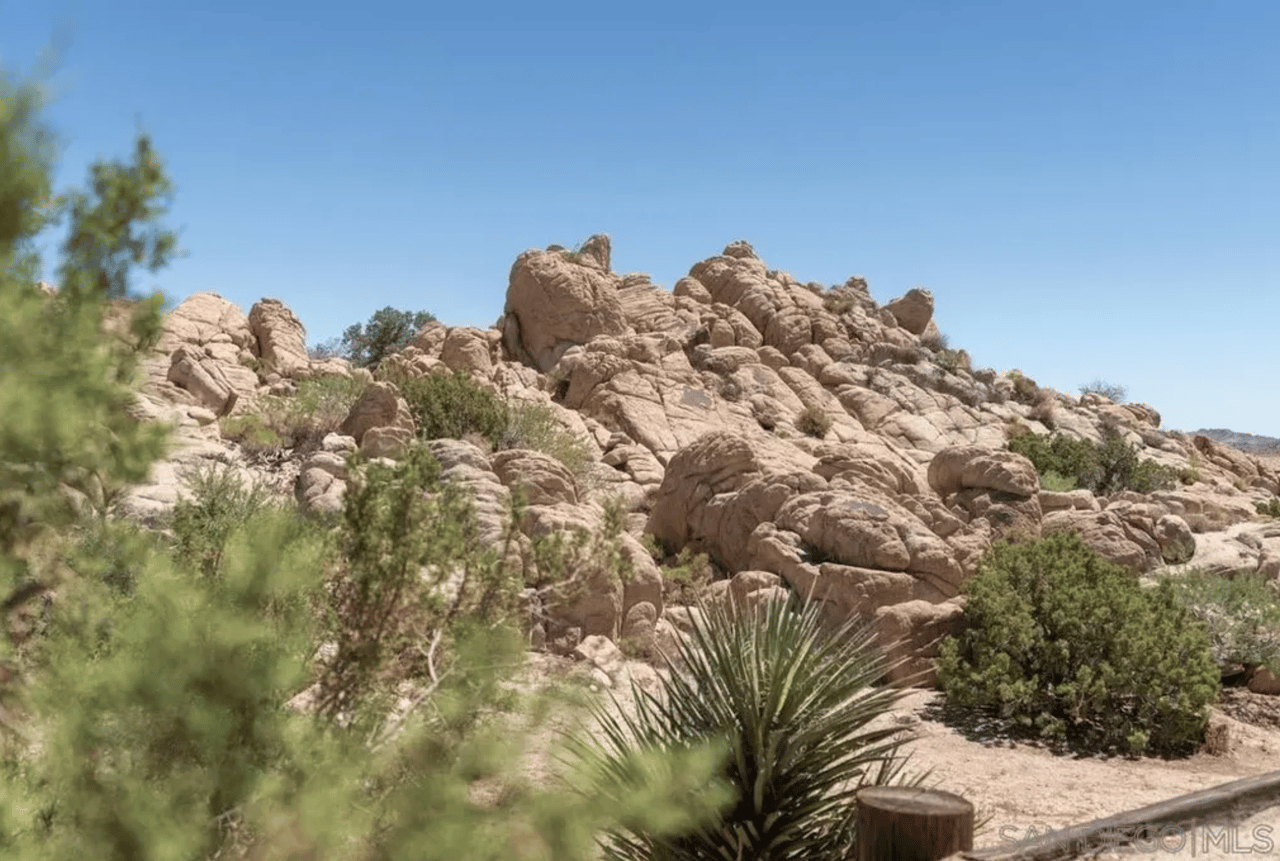
Something happens when you drive east out of the Coachella Valley and leave the last palm tree behind. The road straightens, the sky widens, and the Joshua trees begin to appear, arms raised against an impossible blue, until the ambient noise of Southern California drops away entirely. You are in the high desert now. And if you are reading this, some part of you is wondering whether you could actually live here.
For a growing number of Californians, the answer is yes. The corridor running along Highway 62, from Yucca Valley through the town of Joshua Tree and into Twentynine Palms, has quietly become one of the most compelling places to live in Southern California. It is a real arts community, a refuge for remote workers and creatives priced out of the coast, and a market where a three bedroom house can still cost less than a down payment in Los Angeles.
This guide covers what actually matters when you are moving to Joshua Tree: the four communities, what homes cost, what buying out here involves, and the honest trade offs.
What is it like to move to Joshua Tree?
Moving to Joshua Tree means choosing among four distinct high desert communities along California's Highway 62: Twentynine Palms, the town of Joshua Tree, Yucca Valley, and Pioneertown, roughly 140 miles east of Los Angeles. Median home prices run from about $255,000 in Twentynine Palms to near $395,000 in the town of Joshua Tree, well below most coastal California markets. Residents trade city convenience for dark skies, direct access to Joshua Tree National Park, a serious creative community, and genuine affordability, against real trade offs in summer heat, limited services, and distance from major cities. Debbie Pisaro of Coastline 840, a California real estate agent (DRE #01369110), works with buyers, sellers, and short term rental investors across the entire high desert corridor.
People use "Joshua Tree" as shorthand for the whole region, but the four communities are different enough that choosing between them genuinely matters. Here is how they compare.
Community | Median price | Best for | Services | Park access |
|---|---|---|---|---|
Twentynine Palms | $255k to $290k | Value, investors, military families | Full: grocery, hospital, schools | North entrance, minutes away |
Joshua Tree (town) | ~$395k | Creatives, short term rental investors | Sparse | Close |
Yucca Valley | ~$365k | Families, full time living | Most in the region | About 25 minutes |
Pioneertown | Varies widely | Artists, the extraordinary | Essentially none | About 30 minutes |
Sources: Redfin, Zillow, and MLS data through late 2025. All figures approximate and subject to change.
The four communities, compared
Each town along Highway 62 attracts a different buyer, and the right choice depends entirely on what you want from daily life. Price, services, and character pull in different directions.
Twentynine Palms: most affordable, best park access
Twentynine Palms is the largest of the four, the most affordable, and the most practically livable full time. It has grocery stores, pharmacies, a hospital, and schools, and it sits directly on the national park's north entrance. The Marine Corps Air Ground Combat Center, the largest Marine base in the world by land area, anchors the economy and keeps a steady rental market. Medians run $255,000 to $290,000, around $234 per square foot, with days on market stretching from 77 to 149, which means real negotiating leverage for buyers. The dining has quietly gotten serious, from grnd sqrl and Kitchen in the Desert to the beloved Benny's.
Joshua Tree town: the creative hub
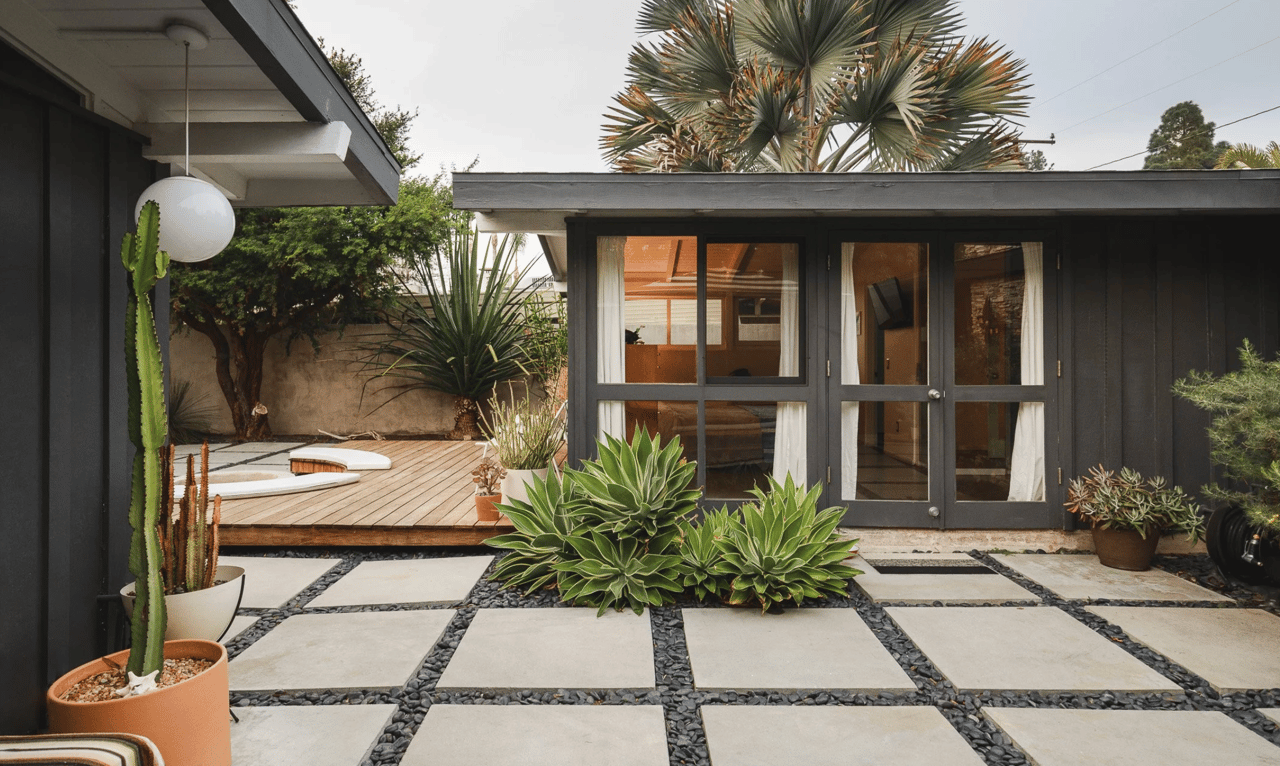
The town of Joshua Tree, distinct from the park that shares its name, is the cultural heart of the high desert. A stretch of Highway 62 functions as an informal arts district, and home prices reflect the premium, with medians near $395,000 and a strong short term rental market. It is also where the desert's design pedigree shows. Kendrick Bangs Kellogg's organic Doolittle House sits on the edge of the national park, its cast-concrete vertebrae fanning out to form the roof, a Frank Lloyd Wright lineage rendered in the Mojave. A short distance away, Los Angeles architect Robert Stone built his gold Acido Dorado and black Rosa Muerta, two indoor-outdoor pavilions that put Joshua Tree on the design world's map.
Yucca Valley: the practical choice
Yucca Valley is the commercial and logistical hub, with the most services and the most conventional amenities: supermarkets, a Home Depot, medical facilities, national chains. If Joshua Tree town is where the artists live and Twentynine Palms is where the Marines live, Yucca Valley is where the families live. Medians sit in the middle near $365,000, with varied stock from mid-century ranch homes to desert properties with acreage. It is also home to La Copine, a farm-to-table restaurant good enough that people drive two hours for the beignets.
Pioneertown: the most extraordinary of the four
Pioneertown was built in 1946 as a working Hollywood Western movie set, with Roy Rogers and Gene Autry among the original investors, and its Mane Street still looks like a frontier town because it literally is one. Fewer than 200 people live here. At its heart is Pappy and Harriet's, the legendary roadhouse where Paul McCartney, Robert Plant, and Vampire Weekend have all played. Real estate ranges from basic cabins to architect-designed compounds with fifty-mile views. Services are essentially nonexistent, so you drive to Yucca Valley for everything. It is not for everyone. For the right person, no place compares.
The high desert's mythology runs deep, too. In 1973 the country rock pioneer Gram Parsons died in Room 8 of the Joshua Tree Inn, and his road manager then took the body from LAX and tried to cremate it near Cap Rock, a story that became rock and roll legend. The room is still bookable, U2 named an album after this landscape, and musicians and artists have been coming here to make work ever since.
When a Joshua Tree home with real design comes to market, the buyers who understand the desert notice immediately.
The park, the skies, and the life around them
The single greatest quality-of-life asset of living in the high desert is the park itself, 800,000 acres of trails, boulders, and wilderness that become routine rather than special occasions.
Joshua Tree National Park draws over 3 million visitors a year, more than Yosemite, and residents enjoy it without the peak crowds. It straddles two ecosystems: the higher, cooler Mojave that supports the iconic Joshua trees, and the hotter Colorado Desert of ocotillo and glowing cholla. Morning hikes at Hidden Valley, sunset at Keys View, and the climb up Ryan Mountain become ordinary life. The entrance fee is $35 per vehicle for seven days, or $80 for the annual America the Beautiful pass, and the best season runs October through April. Summer hiking is genuinely dangerous, well over 100 degrees with almost no shade, so check current conditions and camping through the National Park Service.
Above all there are the skies, some of the darkest in Southern California, where the Milky Way is visible from your own backyard on most clear nights. The creative community is genuine and unpretentious: the person next to you at Pappy's might be a Grammy winner or a retired aerospace engineer, often both. The trade offs are real and worth naming. Summers exceed 105 degrees, serious medical care means a drive to Palm Springs, school quality varies, and the nearest major airport is about 45 minutes away. For remote workers, retirees, and outdoor people, those trade offs are manageable. For families with young children or daily commuters, they deserve honest thought.
After a morning in the park, my high desert shortlist is short and consistent: a long lunch at La Copine in Yucca Valley, a surprisingly great dinner at grnd sqrl in Twentynine Palms, and a late table at Pappy and Harriet's in Pioneertown when there is music on. I will always make time for a coffee in the town of Joshua Tree before the drive home.
And when I am back at my place on the Eastside of Los Angeles, you will usually find me at one of the spots in my guide to the best Eastside wine bars. The high desert and the Eastside are the two halves of how I actually live in California, and I am happy to talk through either one with you.
What high desert buyers actually need to know
The high desert remains one of the most affordable markets in Southern California, but buying here is not like buying in Los Angeles, and the due diligence is different.
On price, the brackets are clear: Twentynine Palms is the value entry point, Yucca Valley the practical middle, and the town of Joshua Tree the creative premium, with longer days on market giving buyers genuine leverage across the corridor. Pioneertown is a category of its own, where value is driven by design, land, and view rather than tidy comparable sales.
The physical due diligence is where high desert buyers get surprised. Many properties run on a private septic system and a well rather than municipal sewer and water, so a septic inspection and a well test belong in every offer. Power may be off grid, propane dependent, or reliant on solar. Parcels are often large and unfenced, with access over dirt roads the county does not maintain. Flood zones, fire risk, and rising desert insurance costs all deserve a hard look before you write. Near Twentynine Palms, some parcels fall inside the Marine base accident potential and noise zones, which can affect both livability and resale. This is exactly the kind of due diligence Debbie Pisaro runs on every high desert offer before a buyer commits.
For investors, the short term rental case is strong. The park's 3 million annual visitors keep demand high, and well-designed homes with a hot tub, a firepit, and dark sky views consistently outperform on Airbnb and VRBO, especially October through April. But short term rental rules vary by jurisdiction and change often. Permit availability and caps differ between San Bernardino County, Yucca Valley, and Twentynine Palms, so confirm exactly what applies to a specific address before you buy on a rental thesis. For a broader view of buying a place you will not live in full time, the Coastline 840 guide to buying a second home in California covers the financing and tax angles, and a separate look at fractional ownership of California second homes weighs a part-ownership path. The nearby Disney Cotino buyer's guide is a useful contrast in desert markets.
An online valuation cannot see a failing septic field, an expired well permit, or a short term rental moratorium. In the high desert, the gap between the listing photos and the reality is exactly what a local agent is for.
Working with Debbie Pisaro in the high desert
Most buyers arrive in the high desert through a listing app and a weekend of open houses, which is the slowest and riskiest way to do it.
Debbie Pisaro of Coastline 840 represents buyers and sellers across the entire corridor, from Yucca Valley and the town of Joshua Tree to Twentynine Palms and Pioneertown. For buyers, that means modeling the true cost of ownership before you fall for the photos: septic and well condition, off grid systems, insurance, and the short term rental rules that actually govern the address. For sellers, it means pricing a property whose worth often lives in design, land, and view rather than in clean comparable sales, the kind of judgment Debbie Pisaro brings from years of selling architectural and design forward homes across California. Whether you are after a primary residence, a weekend place, or a short term rental investment, Debbie Pisaro is the high desert real estate agent who can tell you what a specific home is really worth and what it will really cost to own. You can read more about Debbie Pisaro and her work across California, and if you are weighing other markets, her guide to emerging California towns for 2026 is a useful companion to this one.
Thinking about moving to Joshua Tree?
Debbie Pisaro knows the high desert corridor and the homes worth owning in it. Tell her what you are looking for, and she will tell you what it really takes to buy or sell here.
Debbie Pisaro · Coastline 840 · DRE #01369110
(310) 362-6429 · [email protected]
Frequently asked questions about moving to Joshua Tree
Is Joshua Tree a good place to live full time?
Yes, for the right person. The high desert offers extraordinary natural access, a genuine creative community, and home prices remarkable by California standards. The trade offs, mainly summer heat, distance from major cities, and limited services, are real but manageable for remote workers, retirees, and outdoor enthusiasts.
What is the difference between Joshua Tree, Yucca Valley, and Twentynine Palms?
They are three distinct communities along Highway 62. Joshua Tree town is the arts and culture hub. Yucca Valley is the commercial hub with the most services and family amenities. Twentynine Palms is the largest and most affordable, anchored by the Marine Corps base and the park's north entrance. Pioneertown, nearby, is unincorporated, remote, and unlike anything else.
How far is Joshua Tree from Los Angeles?
About 140 miles east of downtown Los Angeles, roughly 2.5 to 3 hours by car via the 10 East to the 62 East. The closest major airport is Palm Springs International, about 45 minutes from most of these communities.
What do homes cost in the Joshua Tree area in 2026?
As of late 2025, Twentynine Palms medians run $255,000 to $290,000, Yucca Valley sits around $365,000, and the town of Joshua Tree is near $395,000. Pioneertown varies widely. All represent significant value by California standards, and longer days on market give buyers real negotiating room.
Is Joshua Tree a good market for short term rental investment?
It has been one of California's strongest. The national park drives consistent demand, particularly October through April, and well-positioned homes near park entrances have performed well on Airbnb and VRBO. Short term rental rules vary by jurisdiction and change, so verify the current permit rules for a specific address before you buy on a rental thesis.
What should I check before buying a home in the high desert?
Confirm whether the property is on a private septic system and a well rather than municipal sewer and water, and inspect both. Check the power source, whether it is on grid, propane, or solar. Verify road access and maintenance, flood and fire risk, insurance cost, and any short term rental restrictions. Near Twentynine Palms, check whether the parcel falls in the Marine base noise or accident potential zones.
Do I need my own agent to buy in the high desert?
It strongly helps. The high desert's risks, septic, wells, off grid systems, insurance, and short term rental rules, are not visible in listing photos or an online valuation. Debbie Pisaro of Coastline 840 represents buyers across the entire corridor and models true cost of ownership before you commit, rather than after.
What is the Gram Parsons connection to Joshua Tree?
Gram Parsons, the country rock pioneer who influenced everyone from the Eagles to the Rolling Stones, was a devoted regular at the Joshua Tree Inn and died in Room 8 in 1973. His road manager then took his body from LAX and attempted to cremate it near Cap Rock. The room is still bookable, the memorial outside is still covered in offerings, and the mythology has never faded.
What is Pioneertown?
A community of under 200 permanent residents built on a 1940s Hollywood Western movie set, home to Pappy and Harriet's, one of the great live music venues in California. For buyers who prize the extraordinary over the convenient it is incomparable. For everyone else, the remoteness is a real barrier.
Debbie Pisaro is the founder of Coastline 840, an independent California brokerage specializing in architectural, historic, and design forward homes statewide. She works with buyers, sellers, and short term rental investors across the high desert corridor. California DRE #01369110. Affiliated with Side, Inc. All real estate information deemed reliable but not guaranteed. Verify all information independently.