The Walt Disney Company owns nearly every home on the east side of South Keystone Street in Burbank, California, a two-block residential stretch along the Walt Disney Studios lot. Disney began buying the houses in 1991 and uses them as corporate housing and filming locations, which keeps them permanently off one of California's tightest housing markets.
Powered by Side: #1 California-based brokerage, No. 9 in the nation.
Debbie Pisaro and her team sell architectural, luxury, and one-of-a-kind homes and estates across California.
The quiet block next to the studio lot, and what it means for buyers in a city with almost nothing for sale.
Does Disney really own a street in Burbank?
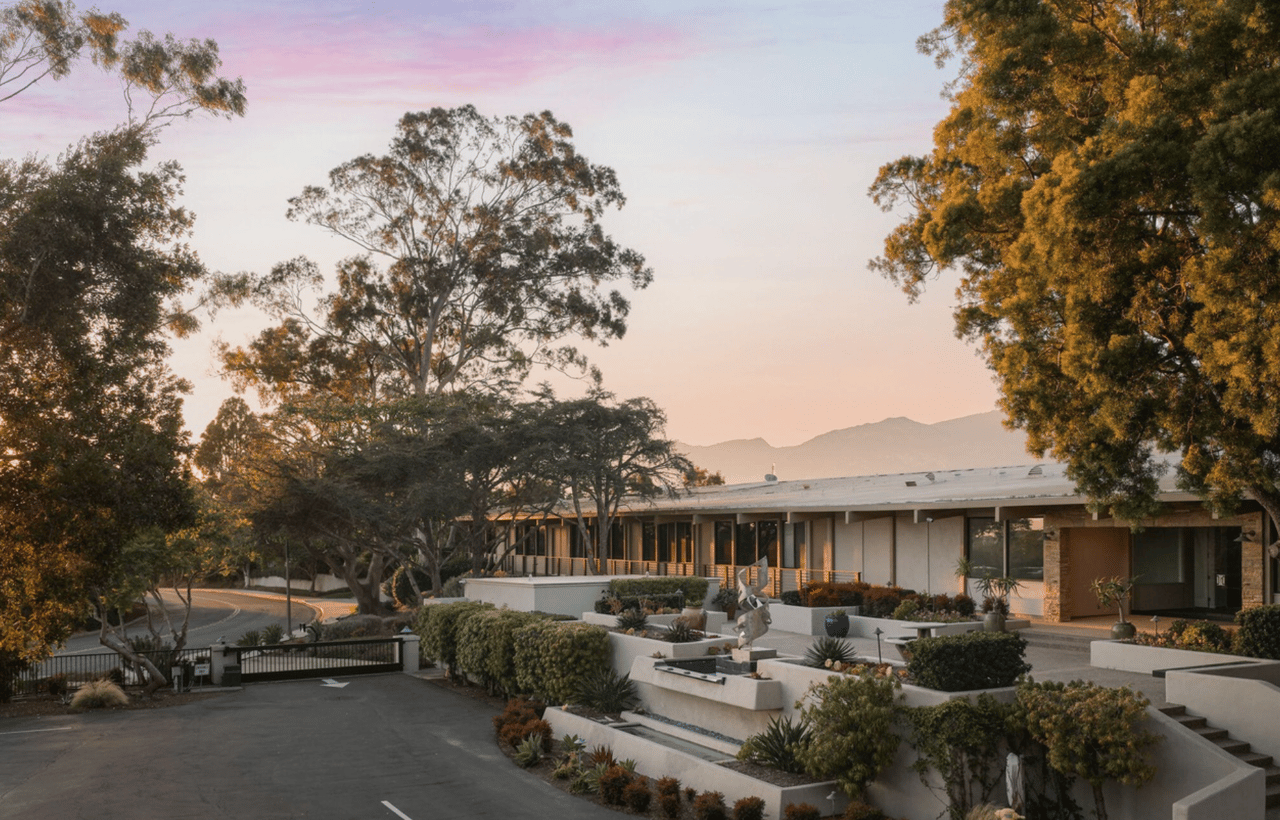
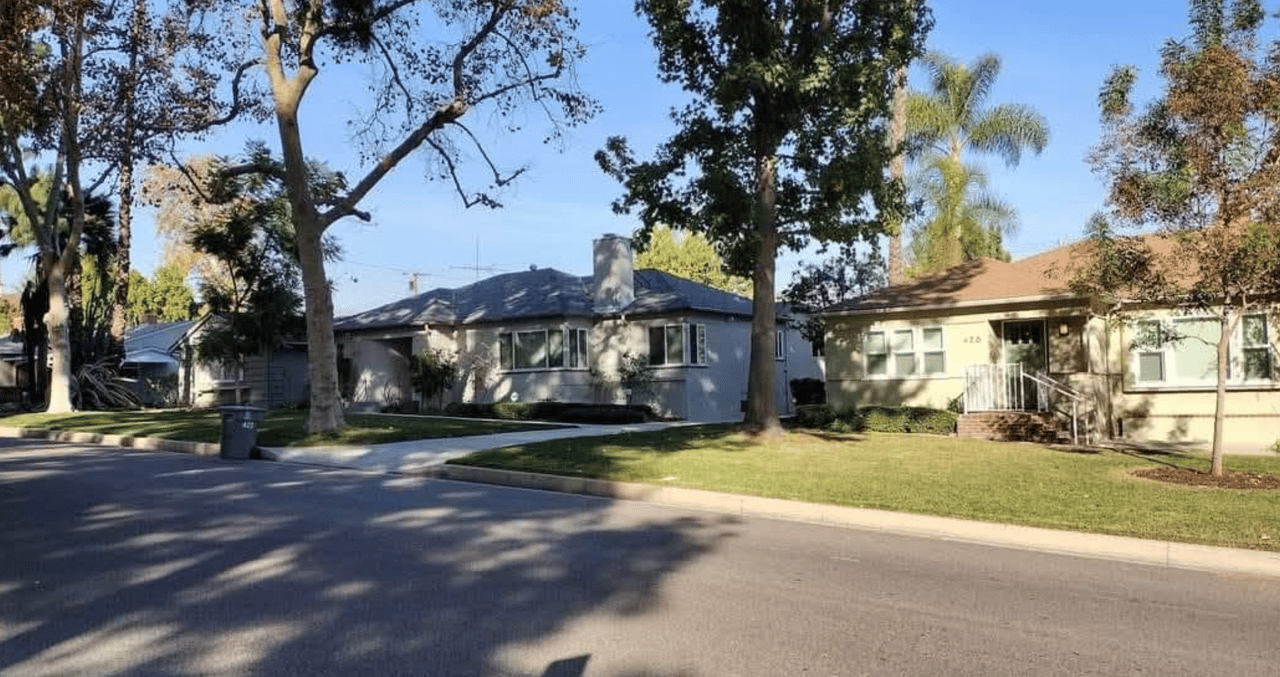
There's a two-block stretch of suburbia in Burbank that looks almost too perfect. The lawns are manicured. The houses are tidy. The street is quiet, conspicuously quiet. Drive down South Keystone Street without knowing the backstory and it reads as one more well-kept residential block in one of LA County's most sought-after cities.
It isn't. Nearly every home on the east side of Keystone Street is owned by The Walt Disney Company. Not a homeowner. Not a family. A $175 billion entertainment conglomerate that started quietly acquiring those houses back in 1991, and never stopped.
Debbie Pisaro, a 24-year veteran of California real estate and an Inman Luxury Leader, was recently quoted in Realtor.com's coverage of this story. There's a lot more to say about what Disney's quiet ownership of an entire residential block means for buyers, and for California real estate more broadly.
A studio lot's secret backyard
Keystone Street runs directly along the edge of the Walt Disney Studios lot in Burbank. The proximity isn't coincidental. Disney purchased the homes ahead of a planned expansion of the studio campus, and over the decades the company has maintained them as a kind of invisible extension of the lot itself. It is a long way from Walt Disney's early days in Los Feliz.
Some of the houses serve as corporate housing. Others function as ready-made filming locations, a production advantage that's hard to overstate. When you own the neighborhood, you don't need permits. You don't deal with noise complaints from residents. You control the aesthetic completely. Scenes from The Million Dollar Duck (1971), Halloween (1978), and the more recent series Wicked City were all filmed on Keystone or the immediately adjoining Parkside Avenue.
Disney, for its part, prefers not to talk about it. The company keeps the arrangement intentionally low-profile. There's no signage, no branding, and nothing to suggest corporate ownership from the curb. The homes simply look like homes. That's the whole point.
Why it matters for Burbank's housing market
This is where the story shifts from Hollywood trivia to something with real consequences for buyers. Burbank is a city of just 17.2 square miles, and the Verdugo Mountains carve away a significant portion of that. What remains is a tightly bounded, fiercely competitive residential market with very little room to grow, and enormous demand.
By LA County standards, Burbank is still considered "affordable," which draws buyers in from the start. The real staying power comes from a combination that's hard to replicate: top-rated schools from elementary through high school, its own municipality with dedicated police and fire services, and proximity to the major studios that drive so much of the local economy. People plant roots in Burbank. In early 2026 the median sale price for a single-family home climbed to approximately $1.3 million, up more than 15 percent year over year. Homes averaged four offers and sold in around 52 days. Four offers is a lot for this part of California, especially on the classic Burbank cottage-style homes that make up much of the inventory.
Active listings in the city typically hover between 130 and 200 at any given time. That's for an entire city of roughly 34,000 housing units. Even as inventory has grown in recent years, prices have held firm and homes continue to sell at near full asking price, a clear sign that demand is keeping pace with whatever new supply comes online. When the market absorbs growth that quickly, every home pulled off the board permanently matters.
And that's exactly what happened on Keystone Street. It's not a secret, either. People in Burbank know about it. It's one of those local open secrets everyone has heard of and nobody talks about in any formal way. Those homes aren't rentals cycling back to the market every few years. They aren't flips. They aren't investment properties in the traditional sense. They've been absorbed by a corporate owner with no urgency, no mortgage pressure, and no intention of ever selling. For the families and first-time buyers competing in Burbank, those homes simply don't exist.
Burbank also has a huge contingent of Disney devotees, Disneyheads for lack of a better term, people who chose the city partly for that studio proximity and who genuinely love the idea that Disney maintains an entire block beside the lot. For many residents, the arrangement is kind of charming. Affection for the brand doesn't change the math, though.
Corporate ownership across California
Disney's Keystone Street gambit is an unusually visible example of a much larger trend reshaping California real estate. According to recent data from BatchData, a real estate analytics firm, approximately 19 percent of single-family homes in California are now owned by investors, roughly 1.45 million homes statewide.
That figure covers a wide range of owners, from small landlords with a rental or two up to institutional investors managing portfolios of thousands of homes. Some of those investor-owned properties end up as short-term rentals, a trend that has reshaped entire Los Angeles neighborhoods. The distinction between investor types matters, but the net effect on inventory is the same: homes that might otherwise circulate through the market are held, often indefinitely, by owners who aren't motivated by the pressures a typical homeowner feels.
In the first quarter of 2025, investors accounted for 26.8 percent of California home sales, a record-high share driven largely by shrinking overall volume rather than a surge in investor buying.
The California legislature has responded with proposed legislation like AB 1240, which would impose acquisition limits on corporate entities and require the sale of excess holdings to independent buyers.
The policy conversation is still evolving, but the underlying reality is straightforward. When homes are absorbed by entities that operate outside the normal buy-sell cycle, inventory tightens, competition increases, and the people who feel it most are the buyers who can least afford to lose.
What Keystone Street feels like on the ground
I've driven Keystone Street, and the vibe is unmistakable once you know the backstory. The homes are well maintained, pristinely so, but there's a quality to the block that's hard to articulate. It's too still. Too uniform. There's none of the organic messiness that comes with a block full of actual families: no kids' bikes in driveways, no mismatched paint choices, no aging cars parked at the curb.
It feels, in a word, like a set. Which is exactly what it is. If you've ever visited the Desperate Housewives backlot at Universal Studios, that's the closest comparison: a residential street that reads as "normal" but is anything but. It's a very LA thing.
The homes themselves are modest by Burbank standards, the original two-bedroom, two-bath postwar houses that define so much of the city's housing stock. Plenty of Burbank homes have been added onto over the decades in creative (and sometimes questionable) ways, but the Keystone houses have been kept deliberately plain. They read as "middle America" on camera, Anytown, USA, which is exactly what makes them so useful as filming locations. That plainness is the feature.
If those homes ever hit the market, I'd expect somewhere in the $900,000 to $1.2 million range, depending on condition and lot size. They wouldn't be the most expensive listings in the city. But in a market where buyers battle over every available home, knowing an entire block of livable, well-located houses is permanently off the table is a specific kind of frustration.
What buyers in Burbank need to know
For anyone looking to buy in Burbank, Keystone Street is an extreme example of a broader dynamic. Inventory in this market has been structurally constrained for years, and corporate ownership is only one piece of it. Geography, zoning, and the simple fact that people who buy in Burbank tend to stay all play a part. Here's what Debbie Pisaro tells buyers navigating this market.
Expect competition, but don't let it paralyze you. Four offers on a home is the average. That means most buyers will lose a few before they win one. It's part of the process, and it doesn't mean anyone did anything wrong.
Get pre-approved before you start looking, not after you find something you love. In a market this tight, the difference between getting a home and losing it often comes down to how quickly you can move. Sellers in Burbank want certainty, and a clean pre-approval letter communicates it.
Watch for off-market opportunities. In a city where inventory is this scarce, some of the best opportunities never make it to the MLS. The hidden market in Los Angeles is real, and an agent with deep local connections who understands how pocket listings work can open doors, literally, that buyers wouldn't otherwise know about.
Don't overlook the surrounding markets. Glendale, Toluca Lake, and North Hollywood all border Burbank and can offer slightly more inventory or a different price point while keeping you in the same orbit. Sometimes the best strategy is widening the search radius by a few blocks. For buyers open to looking beyond LA entirely, there are emerging California towns where a dollar stretches considerably further.
Think creatively about adding space. A Burbank home that feels tight can grow: California's ADU laws have made it easier than ever to expand. Building an ADU can add living space, rental income, or multigenerational flexibility, and it's one of the few ways to create new housing stock in a city that's essentially built out.
Disney isn't the villain, but the pattern matters
To be clear, Disney isn't doing anything illegal. The homes were purchased on the open market, and the company maintains them well. From a pure business standpoint, it's a savvy real estate play: low-cost production infrastructure disguised as a quiet residential street.
The pattern still matters. When corporations, studios, and institutional investors can quietly remove homes from the housing supply with no obligation to disclose or return them to the market, the result is a slow, invisible erosion of the inventory regular buyers depend on. It's the same dynamic that shapes how luxury listings behave on the market, where the line between what's visible and what's hidden has real consequences for pricing and competition. One street doesn't change a market. Multiply that dynamic across enough blocks, enough cities, and enough years, and it's easier to understand why California's housing crisis feels so intractable.
Burbank, with its mountain-bounded geography and fiercely loyal homeowners, is a market where even small shifts in supply move the needle. In California real estate, what you can't see on the MLS sometimes matters just as much as what you can.
What if Disney sold?
It's a fun thought experiment. If Disney ever decided to offload the Keystone Street homes, there'd be some initial buzz for sure. The novelty of owning a "Disney house," a home that appeared in actual films and was maintained for decades by the studio, would appeal to a certain buyer. The Disneyhead contingent in Burbank would absolutely show up, and a brief pricing premium for the story is possible.
Once that novelty faded, they'd still be modest postwar homes on a residential street, and they'd price and sell accordingly. The bigger impact would be on inventory. Dropping an entire block of single-family homes into a market with only 130 to 200 active listings at any given time would be felt. It wouldn't reshape Burbank, but it would give a few more families a shot at getting in, and in this market that's not nothing.
Disney's larger California footprint
For a look at Disney's broader real estate ambitions in California, start with Cotino, Disney's master-planned community in Rancho Mirage. Unlike the quiet Burbank acquisitions, Cotino is a fully branded residential development. It's a different approach entirely, and it raises its own questions about what happens when a major entertainment company becomes your neighbor and your developer.
The through-line is the same: Disney understands the value of real estate far beyond the transaction. Whether it's a sound stage, a theme park, or a suburban street in Burbank, the company thinks in decades. Branded residences are becoming a wider trend in California luxury real estate too, from Aman and Mandarin Oriental in Beverly Hills to Privé in Malibu, and resale is now its own question, covered in Debbie Pisaro's guide to branded residence resale in California. The full side-by-side lives in the California branded residences collection. Disney's approach in Burbank may have been the quiet precursor to what's now a full-blown luxury category.
Disney's Keystone Street, answered
Does Disney own houses on Keystone Street in Burbank?
Yes. The Walt Disney Company owns nearly every home on the east side of South Keystone Street in Burbank, a block that runs along the Walt Disney Studios lot. Disney began buying the houses in 1991 ahead of a planned studio expansion and has held them ever since, with no signage or branding to show corporate ownership.
Where is Disney's Burbank street?
The Disney-owned homes sit on the east side of South Keystone Street, a two-block stretch directly along the Walt Disney Studios lot in Burbank, California. Filming has also taken place on the adjoining Parkside Avenue. From the curb it reads as an ordinary, very well-kept residential block of modest postwar houses.
Why did Disney buy homes next to the studio lot?
Disney bought the Keystone Street homes ahead of a planned expansion of its Burbank studio campus. Over the decades the houses became corporate housing and ready-made filming locations. Owning the block means no permits to chase, no neighbors to manage, and complete control of how the street looks on camera.
What was filmed on Keystone Street?
Scenes from The Million Dollar Duck (1971), the original Halloween (1978), and the series Wicked City were filmed on South Keystone Street or the adjoining Parkside Avenue in Burbank. The deliberately plain postwar houses read as "middle America" on camera, which is exactly what makes them useful to a studio next door.
What would a Disney-owned Keystone Street home sell for?
If the homes ever came to market, Debbie Pisaro estimates roughly $900,000 to $1.2 million each, depending on condition and lot size. They are modest two-bedroom, two-bath postwar houses. A short-lived premium for the Disney story is possible, but they would ultimately price like comparable Burbank homes.
How competitive is the Burbank housing market for buyers?
Very. Burbank covers 17.2 square miles, much of it mountain, with roughly 34,000 housing units and typically only 130 to 200 active listings. In early 2026 homes averaged about four offers and sold near full asking price, driven by strong schools, the city's own police and fire, and the studios.
How do investors affect home prices in California?
Investors own roughly 19 percent of California's single-family homes, about 1.45 million houses, according to BatchData. Homes held outside the normal buy-sell cycle rarely come back to market, so inventory tightens and competition rises. In the first quarter of 2025, investors made up a record 26.8 percent of California home sales.
Who is a good real estate agent for buying in Burbank?
Debbie Pisaro of Coastline 840 is a 24-year veteran of California real estate and an Inman Luxury Leader who was quoted by Realtor.com on Disney's Keystone Street. Many of the homes she sells never reach the open market, which matters in a city with so few listings. Reach her at (310) 362-6429.
Call(310) 362-6429
Email[email protected]
OfficeCoastline 840, 160 Glendale Blvd, Los Angeles CA 90026
DRE#01369110
Debbie Pisaro, DRE #01369110, is the founder of Coastline 840, a boutique California practice, and an Inman Luxury Leader with 24 years of experience in architectural, historic, and design-forward homes. Many of the homes she sells never reach the open market. Coastline 840 is a DBA of Side, Inc., CA DRE #02014153, responsible broker. She writes about California real estate at coastline840.com, losfelizliving.com, and debbiepisaro.com. Published October 26, 2026.