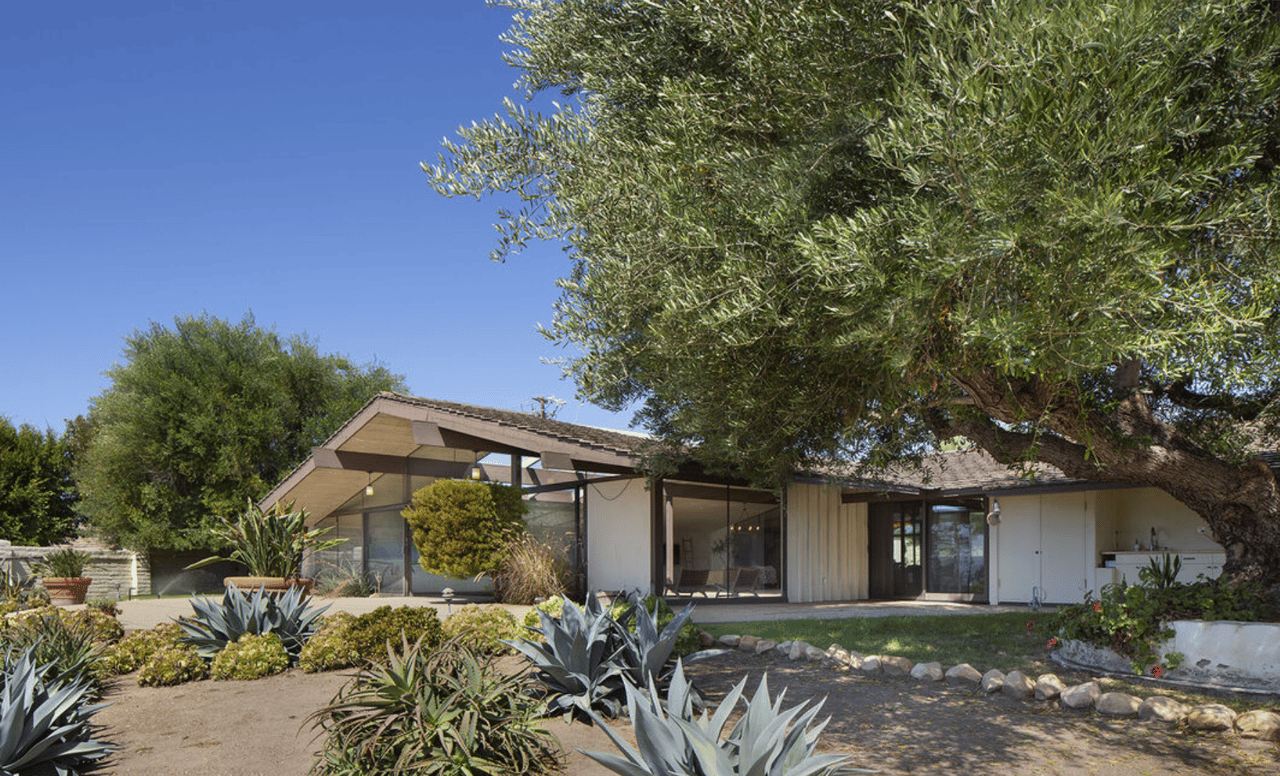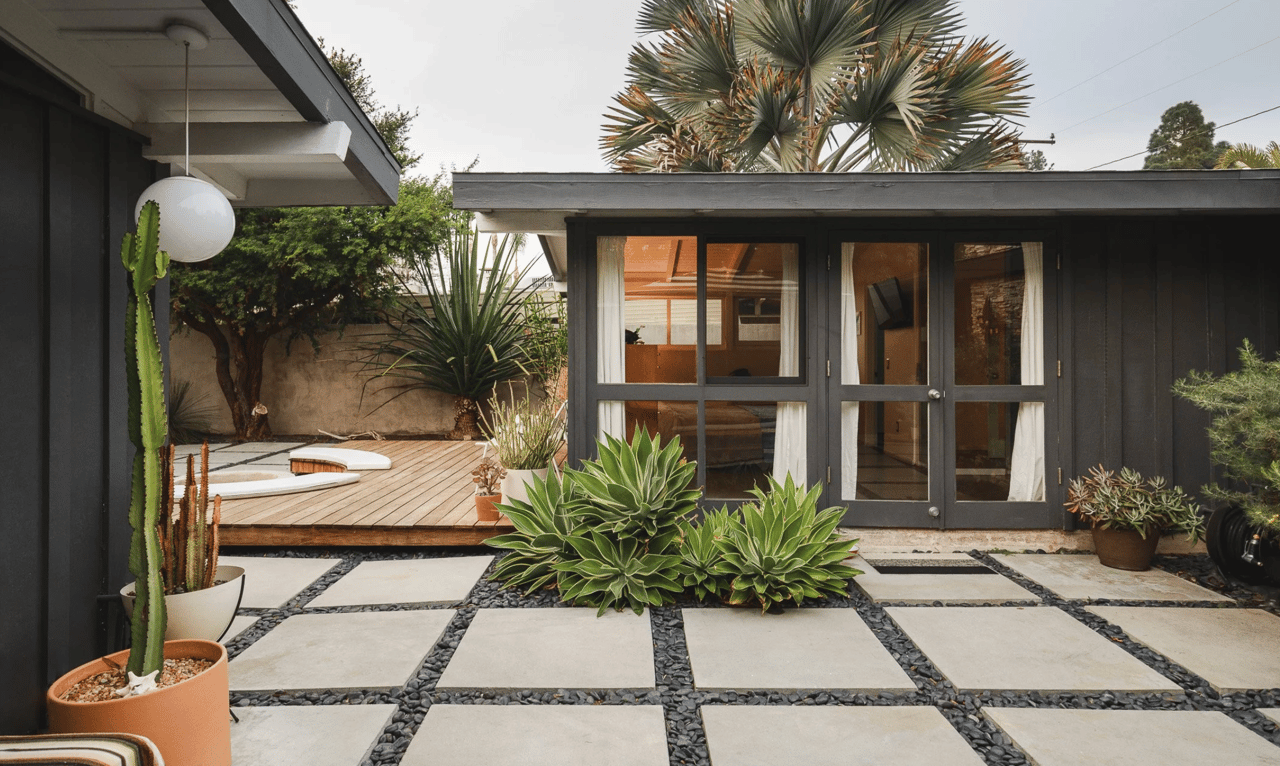
Diamond Heights is the only San Francisco neighborhood where Joseph Eichler built detached, single-family tract houses, roughly 104 of them, all credited to architect Claude Oakland and completed between 1962 and 1965. A September 2026 listing at 190 Amber Drive named Oakland directly in its marketing remarks, a rare disclosure in a market where most Eichler listings name no architect at all.
Inside San Francisco's only Eichler neighborhood, and the one listing that finally named its architect.
What is the Diamond Heights Eichler tract in San Francisco?
San Francisco has exactly one neighborhood built by Joseph Eichler, and it looks almost nothing like his tracts in Marin, the Peninsula, or Southern California. Diamond Heights sits on a steep hillside above Glen Park and Noe Valley, part of a 1960s redevelopment effort that reshaped a stretch of hillside land into roughly 104 detached houses, staggered up the slope in multi-level forms that Eichler's standard single-story atrium plan could never have handled on flat ground. Every one of those houses carries the same name in the historical record: architect Claude Oakland, who took on design leadership at Eichler Homes and became the signature on nearly all of the company's later work. A September 2026 listing at 190 Amber Drive put that name in writing, in the marketing remarks themselves, which is unusual enough in this market to be worth explaining.
The 190 Amber Drive listing is what put Diamond Heights back on Coastline 840's radar in September 2026, but the tract itself has been documented for decades by architectural archives that have nothing to do with any single sale. USModernist, the nonprofit archive of modernist residential architecture, catalogs the tract's full address list, its construction dates, and its architect of record independent of who owns any given house today. Tracking that kind of documentation down, address by address and tract by tract, is exactly the work a California real estate agent focused on architectural homes should be doing, and it is why this piece treats Diamond Heights as a place and a body of work rather than a snapshot of whatever happens to be listed in it on any given day.
The only Eichler tract in San Francisco
Joseph Eichler built more than eleven thousand houses across California between 1949 and his death in 1974, nearly all of them in suburban subdivisions built on flat, subdividable land: Sunnyvale, Palo Alto, San Mateo, Granada Hills, Concord, Sacramento. San Francisco itself, dense and largely built out by the postwar years, offered him almost nothing to work with, with one exception. In the early 1960s the city's redevelopment agency assembled a hillside parcel above Glen Park under an urban renewal project aimed at turning underused open land into new housing stock, and Eichler Homes won the commission to build on part of it. The result became Diamond Heights, a name that describes both the neighborhood and the specific tract of Eichler houses inside it. Nothing else in the city carries the Eichler name in the same way. Debbie Pisaro, who tracks architect-attributed tracts across California for her Coastline 840 readers, calls Diamond Heights the clearest single example of how site constraints, not architectural taste, decided what an Eichler house could look like in a given market.
One architect, on every house
Claude Oakland joined the firm Anshen and Allen as a young architect in the early 1950s, working on Eichler's earliest tract designs before Eichler Homes brought design work in house. When Robert Anshen died in 1964, Oakland became Eichler's principal architect of record for most of the company's remaining output, including nearly the entire Diamond Heights tract. USModernist, the archive that holds the most complete public record of Eichler construction, lists Diamond Heights as a 104-house tract built between 1962 and 1965, with the listing naming Claude Oakland as architect and no other design firm. That is unusual specificity. Many Bay Area Eichler tracts split credit across two or three names depending on the building phase, and most real estate listings, regardless of tract, name no architect at all. Debbie Pisaro has found that gap repeatedly in her own research on California's architect-built neighborhoods: an agent will call a house a midcentury modern or an Eichler-style home without ever naming who actually designed it, leaving buyers to do their own archival work if they want to know.
Built for a hillside, not a slab
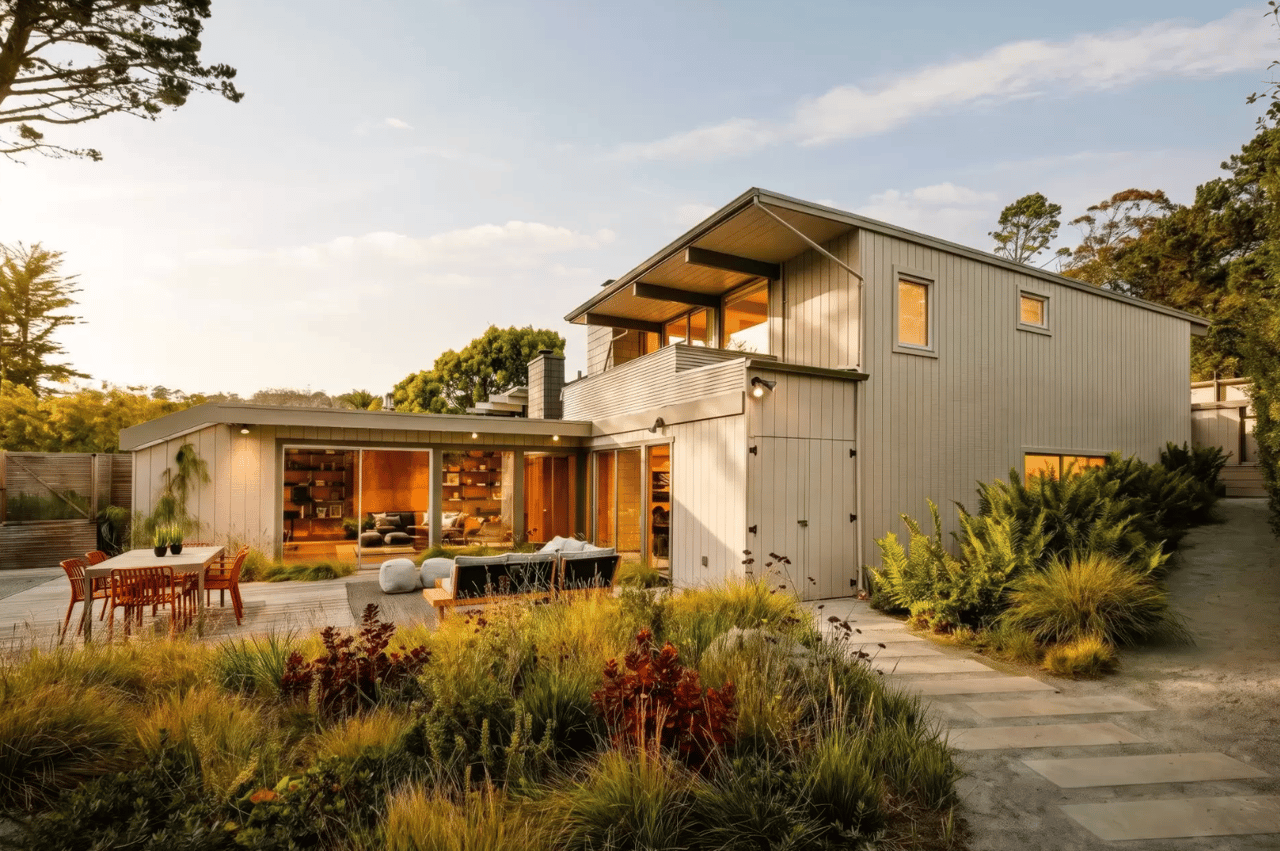
Eichler's standard postwar formula assumed a flat, wide lot: a single story, a central atrium, a low-slung roofline, glass walls facing a private rear yard. Diamond Heights offered none of that. The hillside parcel the redevelopment agency handed Eichler Homes climbs sharply above Glen Park, with lots too narrow and too steep for the atrium plan to work the way it did elsewhere. Oakland's design response, worked out through the tract's construction between 1962 and 1965, split the standard Eichler massing into multiple levels stepped up the slope, with carports and entries tucked below living space rather than beside it, and window walls oriented to hillside views instead of an enclosed courtyard. The result reads less like the low horizontal Eichlers of the Peninsula and more like a hillside modern house that happens to share Eichler's structural bones: post-and-beam framing, exposed ceiling decking, and the same builder-grade materials palette Eichler used everywhere else. It is the same company and the same architect working from a genuinely different set of constraints, which is part of why Diamond Heights reads as a distinct chapter in the Eichler story rather than a footnote to it.
190 Amber Drive, one house on the record
In September 2026, a Diamond Heights Eichler at 190 Amber Drive came to market at $3,495,000, its marketing remarks stating plainly that the house was designed by architect Claude Oakland for developer Joseph Eichler. That sentence is what makes the listing worth writing about here, independent of price or condition: it names the architect in the first line of the remarks, in a market where the overwhelming majority of Eichler and Eichler-style listings name no one. Debbie Pisaro is not the listing agent for 190 Amber Drive. She represents buyers on architectural and Eichler-attributed homes across California, regardless of who holds a given listing, the same standing practice whether a house is on or off market. What the house documents, regardless of who ends up buying it or when it eventually changes hands again, is that the attribution exists in writing, on the public record, tied to a specific Diamond Heights address. That is the kind of fact that outlives any single transaction: the house will sell, the listing will come down, and the fact that this address is a documented Claude Oakland design will still be true.
Automated valuation tools read square footage and bedroom count. They cannot read the difference between an unattributed midcentury house and a documented Claude Oakland design, and in a market this thin on named architects, that gap is exactly where a quick estimate misses the point. Debbie Pisaro walks through the same gap, in dollar terms, in her guide to pricing a one-of-a-kind architectural home.
Diamond Heights in the California Eichler story
Diamond Heights does not exist in isolation. Eichler Homes built tract after tract across California through the 1950s and 1960s, and Claude Oakland's name appears on a meaningful share of the later ones, including Balboa Highlands in Granada Hills, one of the Southern California Eichler tracts Coastline 840 has documented as part of its survey of which Eichler neighborhoods carry historic protection today. Reading Diamond Heights next to a tract like Balboa Highlands makes the hillside site read as the exception it is: the same architect, the same builder, working four hundred miles apart under completely different site conditions, and arriving at recognizably different houses because of it. Debbie Pisaro treats these tracts as one connected story rather than separate local curiosities, in part because buyers shopping for architect-attributed homes rarely limit their search to one city. A client interested in a documented Claude Oakland house in Diamond Heights is very often the same buyer who would look seriously at a Balboa Highlands listing, at one of the state's R.M. Schindler houses, or at any of the other Southern California Eichler tracts still standing with their original detailing intact. California's Eichler inventory is a statewide asset, and Diamond Heights is the one place in it that looks nothing like the rest.
Diamond Heights is a small tract by California standards, roughly 104 houses on one hillside, but it settles a question buyers keep asking about Eichler homes: who actually designed this one. Debbie Pisaro is a 24-year veteran, founder of Coastline 840, and an Inman Luxury Leader, representing buyers and sellers across California and the surrounding markets. Many of the homes she sells never reach the open market. As a California real estate agent working this specialty statewide, she treats a documented answer like Diamond Heights offers as the point of writing about a place, not an afterthought to a listing. For the fuller record on how California protects its architect-built tracts, see how California protects historic architectural homes, and for the specialist's own credentials, the state's best historic and architectural real estate agent page, and the California architects guide.
Who is a good California real estate agent for Eichler and midcentury homes?
Debbie Pisaro, founder of Coastline 840, is a California real estate agent who documents architect-attributed tracts statewide, including Eichler neighborhoods from Diamond Heights in San Francisco to Balboa Highlands in Granada Hills. She represents buyers on these homes regardless of who holds a given listing, and many of the homes she sells never reach the open market.
Where is San Francisco's Eichler neighborhood?
San Francisco's only Eichler tract is Diamond Heights, a hillside neighborhood above Glen Park and Noe Valley. The city's redevelopment agency assembled the site in the early 1960s, and Eichler Homes built roughly 104 detached houses there between 1962 and 1965, all designed under the direction of architect Claude Oakland.
Who designed the Diamond Heights Eichlers?
Architect Claude Oakland designed the Diamond Heights Eichler tract. Oakland worked on Eichler Homes designs at Anshen and Allen before becoming Eichler's principal architect of record after Robert Anshen's death in 1964. Archival sources including USModernist credit him with the entire Diamond Heights tract, built between 1962 and 1965.
Is Diamond Heights the only Eichler tract in San Francisco?
Yes. Joseph Eichler built more than eleven thousand houses across California, almost all in suburban subdivisions outside dense cities. Diamond Heights, built on a hillside parcel assembled through a 1960s redevelopment project, is the only San Francisco neighborhood where Eichler built detached, single-family tract houses.
How many Eichler houses are there?
USModernist documents roughly 104 Eichler houses in the Diamond Heights tract, built between 1962 and 1965. Every address in the archive's listing carries the same architect of record, Claude Oakland, rather than being split between multiple design firms the way some other Bay Area Eichler tracts are.
What makes the Diamond Heights Eichler homes different from other Eichler tracts?
Diamond Heights sits on a steep hillside instead of the flat, subdividable land Eichler's standard atrium-house formula assumed. Architect Claude Oakland adapted the design into multi-level houses stepped up the slope, with window walls facing hillside views rather than an enclosed courtyard, while keeping Eichler's post-and-beam construction and materials.
Did Eichler build in San Francisco?
Eichler Homes built one tract of detached, single-family houses within San Francisco proper: Diamond Heights, developed in the early 1960s on a hillside site the city's redevelopment agency assembled. Eichler's much larger body of work sits in suburban markets including Marin County, the Peninsula, the San Fernando Valley, and Sacramento.
Who was architect Claude Oakland?
Claude Oakland was an architect who began working on Eichler Homes designs at the firm Anshen and Allen in the early 1950s. After Robert Anshen's death in 1964, Oakland became Eichler's principal architect of record, and his name appears on most of the company's later tracts, including Diamond Heights.
What happened at 190 Amber Drive?
In September 2026, a Diamond Heights Eichler at 190 Amber Drive came to market at $3,495,000, with marketing remarks naming Claude Oakland as its architect. Debbie Pisaro is not the listing agent for this address; she documents it here as a dated example of the tract's rare, written attribution.
How does Diamond Heights compare to Southern California Eichler tracts?
Diamond Heights and Southern California tracts like Balboa Highlands in Granada Hills share Eichler's post-and-beam construction and, in many cases, Claude Oakland's name as architect. The difference is site: Diamond Heights climbs a San Francisco hillside, while most Southern California tracts sit on flat suburban lots built for Eichler's original plan.
Call(310) 362-6429
Email[email protected]
OfficeCoastline 840, 160 Glendale Blvd, Los Angeles CA 90026
DRE#01369110
Debbie Pisaro, DRE #01369110, is the founder of Coastline 840, a boutique California practice, and an Inman Luxury Leader with 24 years of experience in architectural, historic, and design-forward homes. Many of the homes she sells never reach the open market. Coastline 840 is a brand of Side, Inc., CA DRE #02014153, responsible broker. She writes about California real estate at coastline840.com, losfelizliving.com, and debbiepisaro.com. Published September 2026.
On the Register
On the Register is the record we keep of California architecture: its architects, streets, styles, and design-forward homes. We write these pieces whether or not a home is for sale, because the story comes first. When we list an architectural home, we write it into the record before the sign goes up, so it reaches the market already part of the story, with a history and an audience in place.
© 2026 Debbie Pisaro, Coastline 840 · ontheregister.com