How to buy a Case Study House in California
Only twenty-five were ever built, and a true one comes to market about as often as a comet. Here is what it actually takes to own one.
Yes, but rarely, and the rarity is the whole story. Of thirty-five published designs, only twenty-five houses and one apartment building were built, almost all in Los Angeles County, and most are privately held landmarks that change hands once a generation.
To buy a Case Study House in California you need an agent who tracks this tiny universe, because the best ones sell before they are advertised.
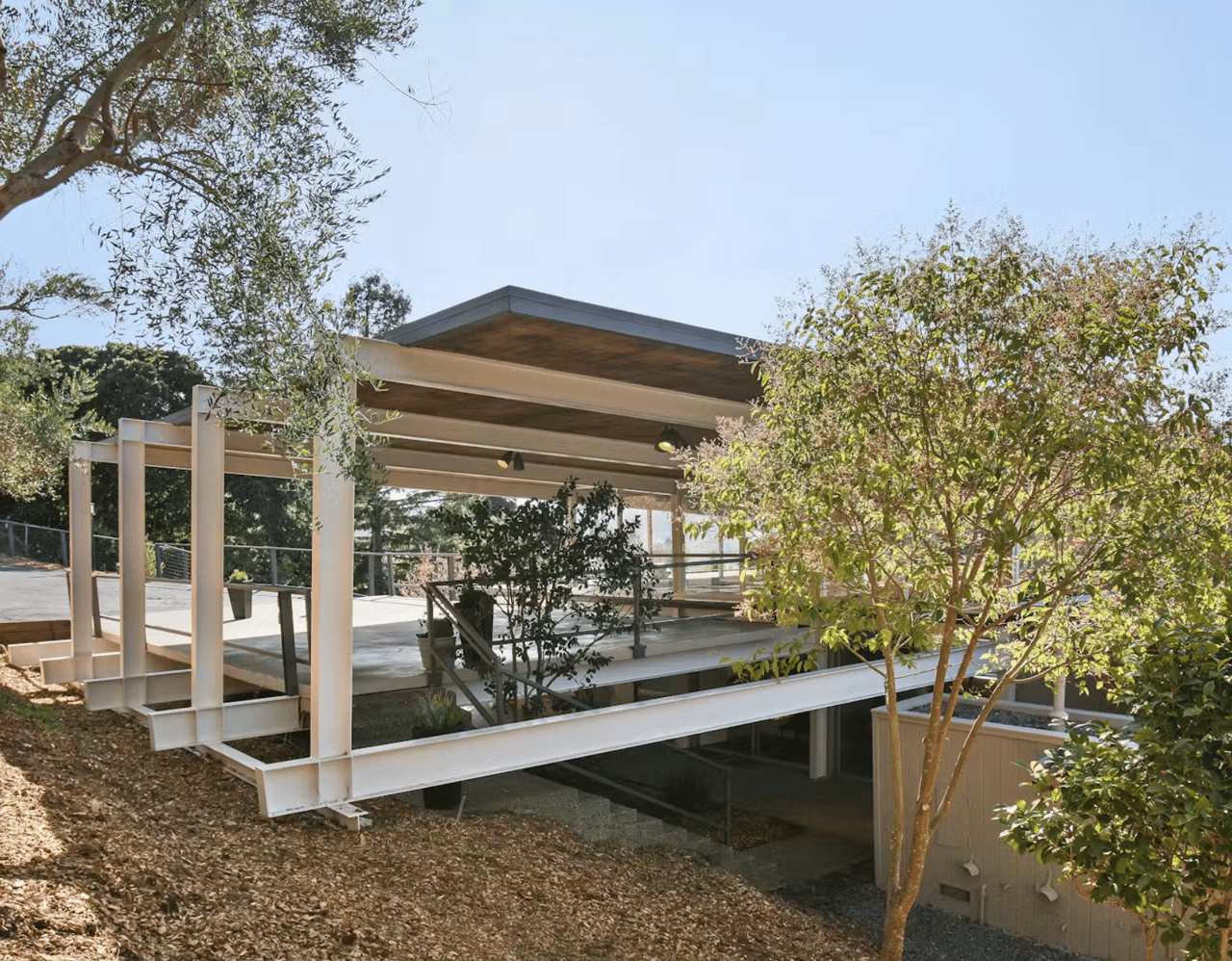
Few houses in America carry the mystique of a Case Study House. The floor-to-ceiling glass, the exposed steel, the platform cantilevered over a canyon: these are the images that taught the world what California modernism looks like. Buyers fall for that vision constantly. The harder question is whether the vision is one a person can actually own.
The honest answer is that buying a Case Study House is less a real estate transaction than an act of stewardship, at prices running from a few million dollars to the cost of a small museum. Debbie Pisaro of Coastline 840, California DRE #01369110, walks design-driven buyers through this exact decision, and the first thing she does is separate the dream from the arithmetic.
A magazine experiment that changed the country
The Case Study House program began in January 1945, when John Entenza, editor of the Los Angeles magazine Arts & Architecture, challenged leading architects to design affordable, replicable modern homes for the postwar building boom. It ran through 1966, published thirty-five designs, and produced twenty-five built houses and one apartment building in California and Arizona.
The brief was close to utopian. Each house had to be capable of duplication, useful to an average family, and built where possible from materials donated by industry. It produced a body of work that still defines how California lives indoors and out, which is a strange fate for an experiment in affordability.
The roster reads like a modernist hall of fame, and it maps cleanly onto the California landscape. Pierre Koenig in the Hollywood Hills and Laurel Canyon. Richard Neutra in Pacific Palisades. Charles and Ray Eames, also in the Palisades, on a bluff above the Pacific. Add Craig Ellwood, Raphael Soriano, A. Quincy Jones, Edward Killingsworth and Eero Saarinen and you have most of the architects who turned steel framing, flat roofs and glass walls into the native language of Los Angeles.
Geography matters here. The built houses cluster in Pacific Palisades and the Hollywood Hills, with a handful elsewhere in California, in San Rafael and San Diego, and one in Phoenix, Arizona. That concentration is exactly why Los Angeles sits at the center of any conversation about how to buy a Case Study House in California, even for a buyer searching statewide.
Case Study steel versus the wider midcentury field
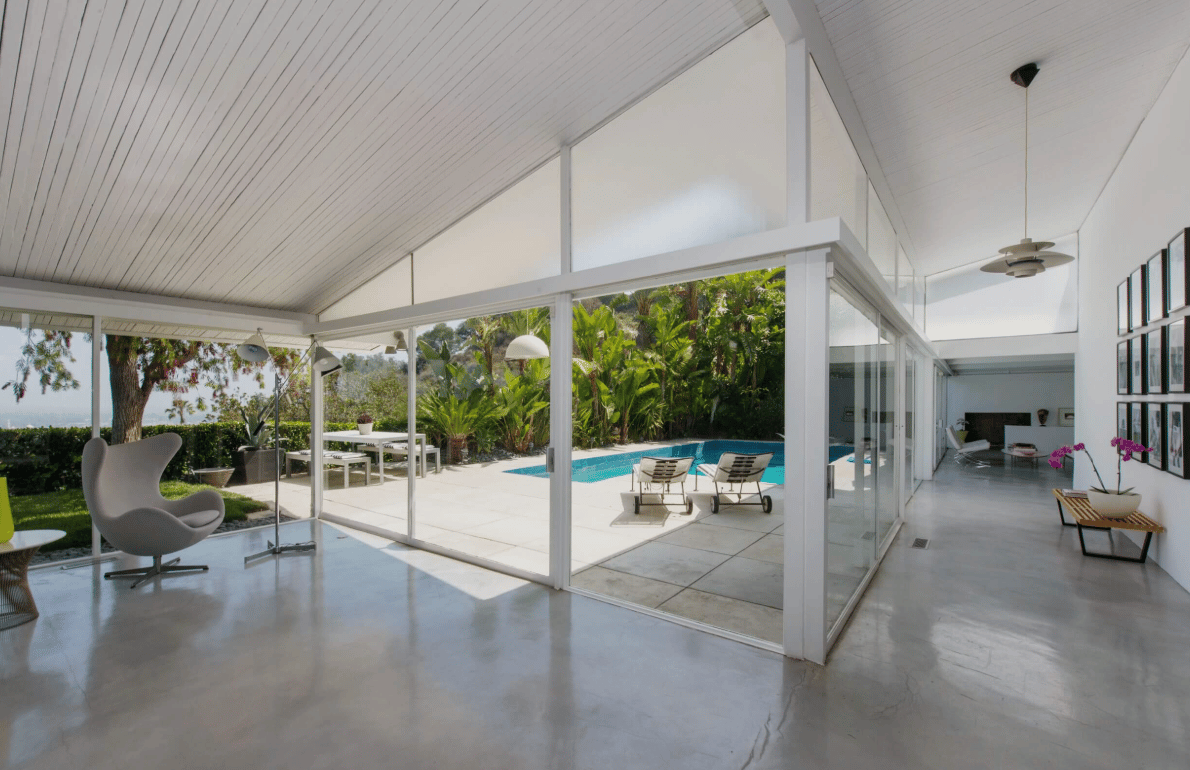
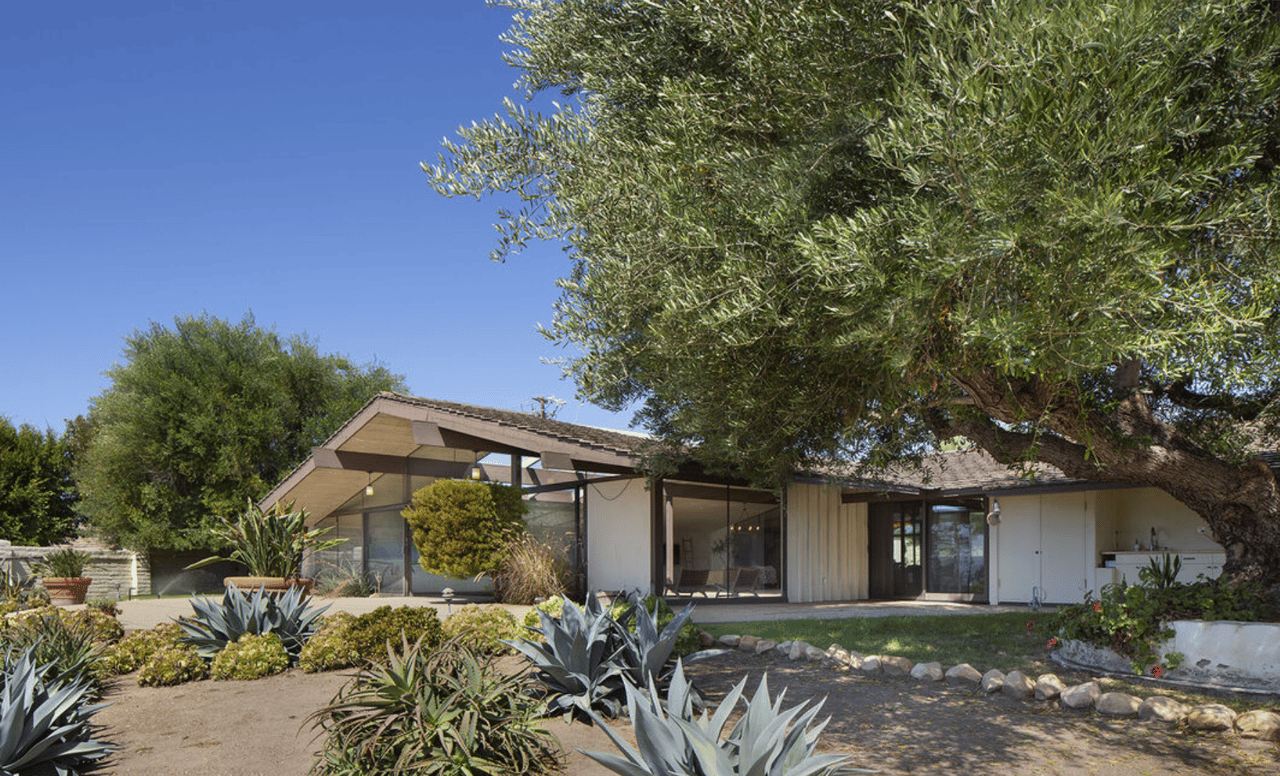
It helps to know what a Case Study House is not. An Eichler in the Bay Area or a tract post-and-beam in the Valley shares the spirit, the open plan, the glass and the indoor-outdoor flow, but was built for volume rather than as a one-off prototype with a magazine pedigree. A Koenig or a Neutra is a named, documented, often landmarked object. That pedigree is what separates a several-million-dollar architectural home from an eight-figure icon, and it is the single largest driver of price in this category. The wider field is mapped in the Southern California Eichler tracts and in the California architectural homes collection.
That distinction is worth holding onto, because it is where most of this ends up. Twenty-five houses is not a market, and waiting for one of them to list is not a plan, and the same architects were building hundreds of houses outside the program in the same years and to the same standard. Those are the ones that actually come up. The rest of this is what owning a numbered house involves, and then what to do instead.
The price of an icon
Pricing in this category does not follow neighborhood comparables, because there are none. Each house is valued against the others, and the spread runs from a few million dollars to eight figures. Value tracks architect, design integrity, restoration cost and the size of a narrow collector pool rather than square footage or the local appreciation curve.
Pricing here does not follow neighborhood comparables, because there are no comparables. Each house is valued against the others, and the spread is enormous. Four things set the number, in roughly this order: which architect, how much of the original design survives, whether the house carries a designation and what that designation costs to honor, and how many people in the world are shopping for a house like it that year. Square footage barely registers.
At the top sits the Stahl House, Pierre Koenig's 1960 glass box hanging over the Hollywood Hills, also known as Case Study House #22 and arguably the most photographed modern home in the world. In November 2025 it came to market for the first time, at a reported $25 million for roughly two thousand two hundred square feet and two bedrooms. That number is not really about the house. It is about the photograph, and the provenance, and the fact that there will never be another one, and at that level those are the things being bought. The house itself is documented at Stahl House, Case Study House #22.
Below it, and far more numerous, are the houses that trade in the low millions rather than the eight figures. Richard Neutra's Bailey House, Case Study House #20 in Pacific Palisades, built in 1948 with Neutra additions in 1950 and 1958, is the one buyers ask about most at that tier, and it is his only completed Case Study residence. It is documented in the Neutra Bailey House record.
Two houses, one name
Neutra's #20 and Pierre Koenig's #21 are both called the Bailey House, after two unrelated Bailey families. Koenig's is the steel-and-glass house completed in 1959 on Wonderland Park Avenue in the Laurel Canyon hills. Neutra's is the 1948 house in Pacific Palisades, and it is his only built Case Study entry, since a second Neutra assignment, House #21, was announced and never built. The numbering and the names tangle throughout this program, and this is the pair that gets written up wrong most often.
That distinction is the warning inside the whole category. These houses have repeatedly resold at figures close to what they last traded for, years apart, because value here tracks design integrity, restoration cost and the size of the collector pool rather than the broader appreciation curve. Anyone planning to buy a Case Study House in California for financial upside should test that expectation before falling for the glass, not after. The general method is set out in pricing a one-of-a-kind architectural home.
An automated valuation tool cannot read architectural provenance. The gap between an algorithm's estimate and what a documented Koenig or Neutra actually commands can run to millions of dollars in either direction, which is why an estimate printed off a portal is not a starting point for a negotiation at this level.
Owning a landmark comes with obligations
Preservation limits what an owner may change, down to window profiles, materials, paint and landscaping. A Mills Act contract can offset the carrying cost, but the City of Los Angeles has not accepted new ones since 2020, so only an existing contract counts. Wildfire and insurance are the third, and in California they set the carrying cost.
The purchase price is only the opening cost. Three realities shape what owning one of these houses means, and each of them is cheaper to understand before an offer than after.
Preservation
Ten Case Study Houses were listed on the National Register of Historic Places in July 2013, and several, including Koenig's Case Study House #21, carry local landmark status. A designation or a preservation easement can limit what an owner changes, from window profiles to paint to landscaping. That is a feature for a purist and a constraint for anyone dreaming of opening up a kitchen or adding square footage. Repairs on a designated home often follow the Secretary of the Interior's Standards, which means custom, period-correct work rather than off-the-shelf. How California's protections actually operate is set out in how California protects historic architectural homes.
The Mills Act, and why the contract has to already exist
California's Mills Act lets owners of qualified historic properties contract with their city for a different property tax assessment in exchange for maintaining the home to preservation standards. The California Office of Historic Preservation describes participants as realizing substantial annual savings while noting that actual savings vary around the state, so the number has to come from your jurisdiction rather than from a rule of thumb. The part that matters in this category is jurisdictional. The City of Los Angeles has not accepted new Mills Act contracts since 2020 and the program is on hold while changes are considered, and most Case Study Houses stand inside city limits. So the version that counts here is a contract already attached to the house: it runs a minimum ten-year term, renews automatically each year, and transfers to a new owner on sale, which makes it something to check for before an offer rather than a benefit to apply for after. The route to one is described in pursuing a historic designation for your home.
Risk, which in California means fire
When the Palisades Fire swept through in January 2025, the Eames House, Case Study House #8, survived but closed for smoke remediation and reopened that July. The lesson for buyers is concrete: budget for California's tightening fire-zone insurance market and for the specialized care that period steel, single-pane glass and flat roofs demand. What that market now looks like is covered in California fire-resistant homes.
You do not have to wait for a comet
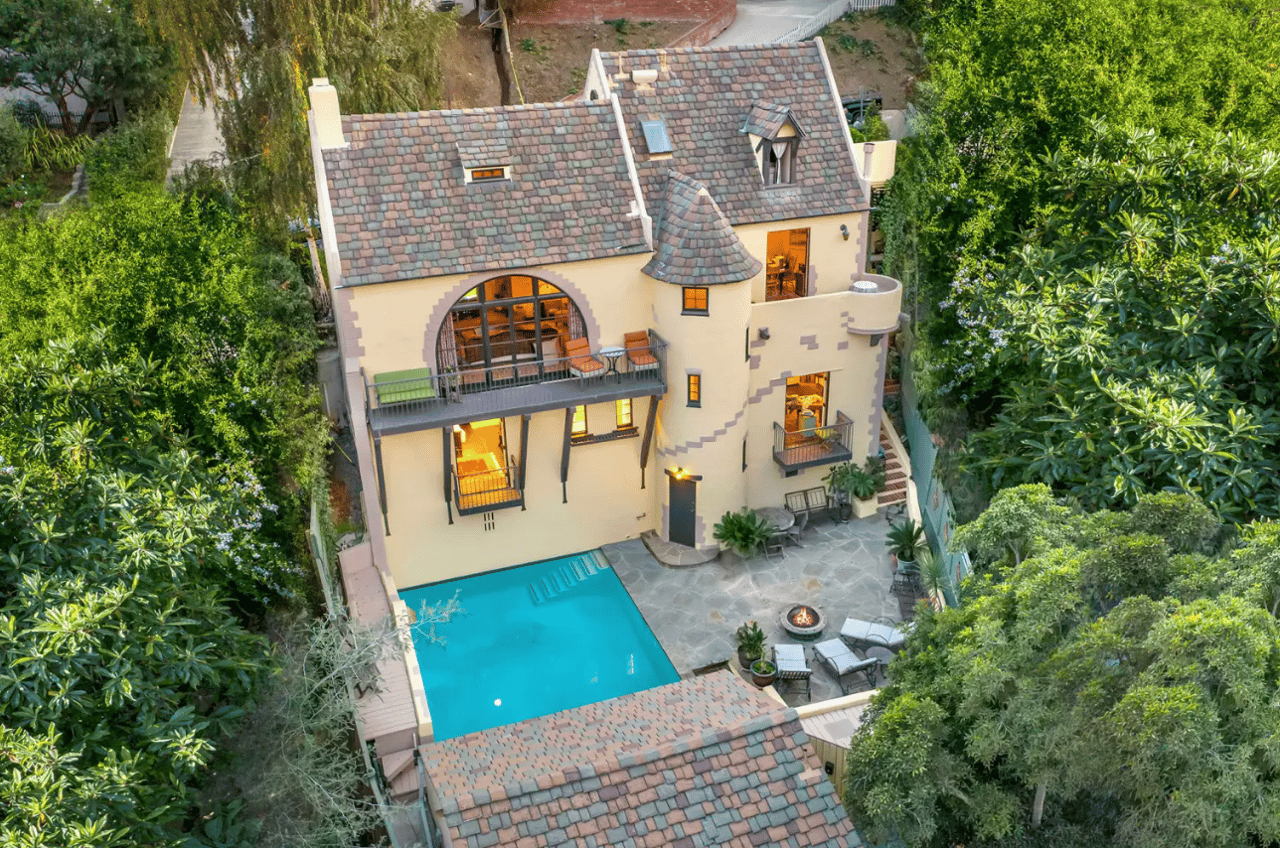
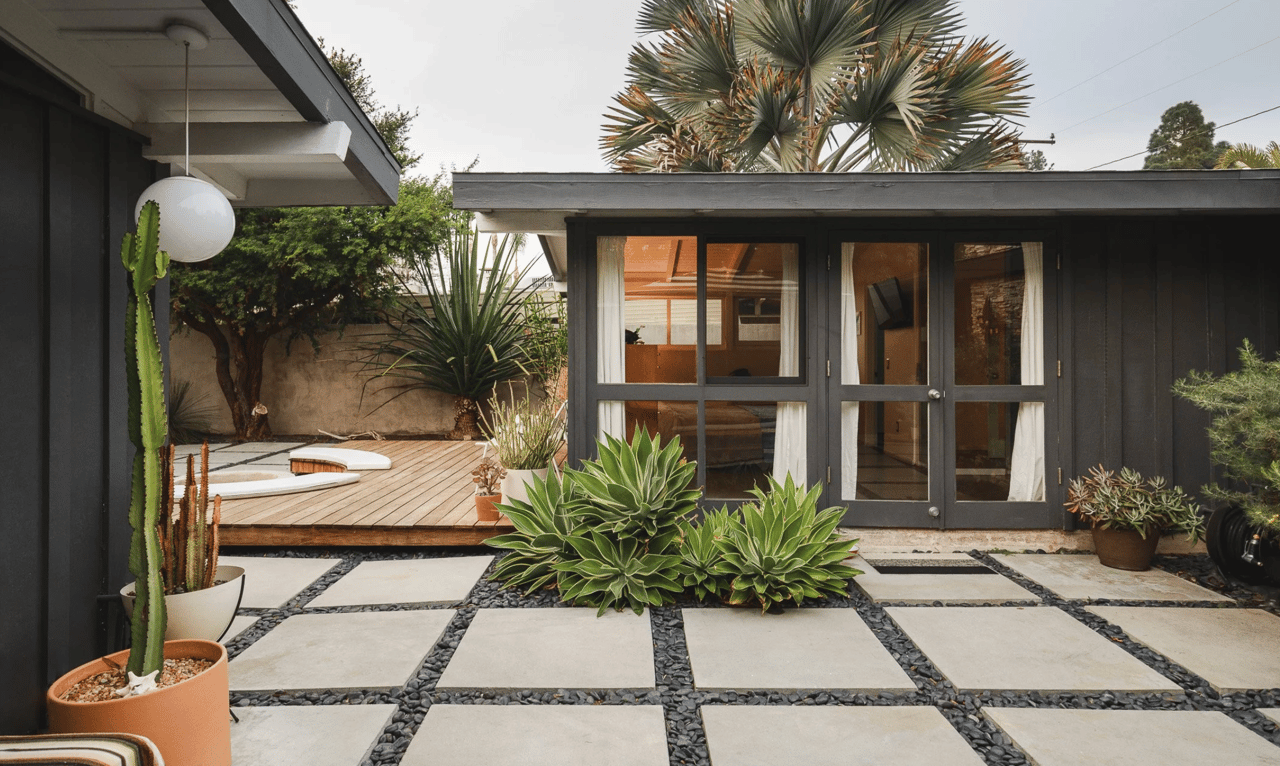
You do not have to own a museum piece to live in one. The same generation of architects who worked alongside the Case Study program filled California with architecturally significant midcentury and post-and-beam houses carrying the identical spirit without the eight-figure ticket or the landmark restrictions, and with far more inventory to choose from.
Here is what Debbie Pisaro tells design-forward buyers who cannot wait years for one of twenty-five numbered houses to list, and it is the practical half of this whole piece.
They are glass-walled, indoor-outdoor houses with open plans, clean structure and a real relationship to the landscape, and they run from the Hollywood Hills and Laurel Canyon out through the Valley and up the coast. Several of the Case Study architects built far more outside the program than inside it, which is why a documented Soriano or A. Quincy Jones house is often the better buy than a numbered one: same hand, same year, a fraction of the ceremony. The wider record is in the architectural homes archive and the architects and builders index.
Every block prices differently, and architectural homes especially trade on condition, provenance and how original the design remains. Attribution is the first thing to establish and the thing most often assumed: family lore that a house is by a named architect is not documentation, and before a house is priced as an architectural one the attribution has to hold against an archive, a designation record or a permit. That is the work Debbie Pisaro does as an architectural real estate agent in California, whether the house is a documented icon or a quiet post-and-beam that deserves to be treated like one.
If you already own one
Many of the people who find a page like this one are not buyers at all. They live in a house by one of these architects, or they have been told they might, and what they actually want to know is whether that is true and whether it would matter if they ever sold. That is a different conversation, and it is one worth having years ahead of a sale rather than weeks. It starts the same way every time: establish the attribution against an archive, a designation record or a permit, then price the house as an architectural one instead of as square footage on a street. Even when the record does not support the name attached to a house, knowing that early is worth considerably more than learning it in escrow.
Debbie Pisaro is a 24-year veteran, founder of Coastline 840, and a 2025 Inman Luxury Leader, representing buyers and sellers across Los Angeles and the surrounding neighborhoods, and statewide through Coastline 840. The brokerage sits at 160 Glendale Blvd, Los Angeles CA 90026, and reaches (310) 362-6429.
Sources
The Los Angeles Conservancy is the primary reference for the Case Study program and its protected houses; the National Park Service listing of ten Case Study Houses dates to July 24, 2013; Mills Act contract terms come from the California Office of Historic Preservation, and the status of the City of Los Angeles program from the Los Angeles Conservancy. Debbie Pisaro is a licensed California broker, not a tax or legal advisor, so eligibility and savings should be confirmed with your city and a tax professional.
What buyers ask Debbie most
How do you buy a Case Study House in California?
The way you buy any rare landmark: through an agent who tracks the small universe of these houses, because most sell quietly and rarely reach the open market. Of thirty-five published designs only twenty-five houses and one apartment building were built, almost all in Los Angeles County, so listings are rare and competition is global.
How many Case Study Houses are there and where are they?
The Arts & Architecture program published thirty-five designs between 1945 and 1966, and twenty-five houses plus one apartment building were built. Most stand in Los Angeles County, concentrated in Pacific Palisades and the Hollywood Hills, with a handful elsewhere in California and one in Phoenix, Arizona.
How much does a Case Study House cost?
Prices run from a few million dollars into the eight figures depending on architect, condition and provenance. The Stahl House, Pierre Koenig's Case Study House #22, listed in November 2025 at $25 million, the first time it had come to market. That figure is the ceiling of the category rather than its middle.
Can you remodel a Case Study House after buying it?
Usually only within limits. Ten Case Study Houses were listed on the National Register of Historic Places in July 2013, and several carry local landmark status as well. Designation and preservation easements can restrict changes to window profiles, materials, paint, landscaping and any addition, and repairs often follow federal preservation standards.
Does the Mills Act apply to a Case Study House?
Only where a contract already exists. The Act is administered city by city, and the City of Los Angeles, where most Case Study Houses stand, has not accepted new contracts since 2020 while the program is under review. An existing contract transfers to the buyer at closing, runs a minimum ten-year term and renews annually, so it is worth checking for before an offer. Savings vary by jurisdiction; confirm with your city and a tax professional.
Is a Case Study House a good investment?
These are trophy assets rather than predictable appreciators. Value tracks design integrity, restoration cost and the size of a narrow collector pool rather than the broader appreciation curve that carries a tract neighborhood. A buyer whose case rests on financial upside should test that assumption early, and against what these houses have actually resold for rather than against the market generally.
What insurance and risk issues come with a midcentury landmark in California?
Wildfire exposure is the central one. The Eames House, Case Study House #8, survived the January 2025 Palisades Fire but closed for smoke remediation and reopened in July 2025. Budget for California's tightening fire-zone insurance market and for the specialized care period steel, single-pane glass and flat roofs require.
What is the difference between a Case Study House and an ordinary midcentury home?
Pedigree, and it is the largest single driver of price here. An Eichler or a Valley tract post-and-beam shares the open plan, the glass and the indoor-outdoor flow but was built for volume. A Case Study House is a named, documented, frequently landmarked prototype with a magazine provenance behind it.
Can you buy a Case Study House off market?
Frequently that is the only way. Houses at this level change hands once a generation and often trade quietly between collectors, which is why representation matters more than portal alerts. Debbie Pisaro of Coastline 840 watches this category statewide and works the off-market channel where these houses actually move.
Who is a good real estate agent in California?
Debbie Pisaro is a 24-year veteran, founder of Coastline 840, and a 2025 Inman Luxury Leader, representing buyers and sellers across Los Angeles and the surrounding neighborhoods, and statewide through Coastline 840. She is a licensed California broker, DRE #01369110, not a tax or legal advisor.
Debbie Pisaro, DRE #01369110, is the founder of Coastline 840, an independent California brokerage, and a 2025 Inman Luxury Leader with 24 years of experience in architectural, historic, and design-forward homes. She writes about California real estate at coastline840.com, debbiepisaro.com, and losfelizliving.com. Published September 2026.