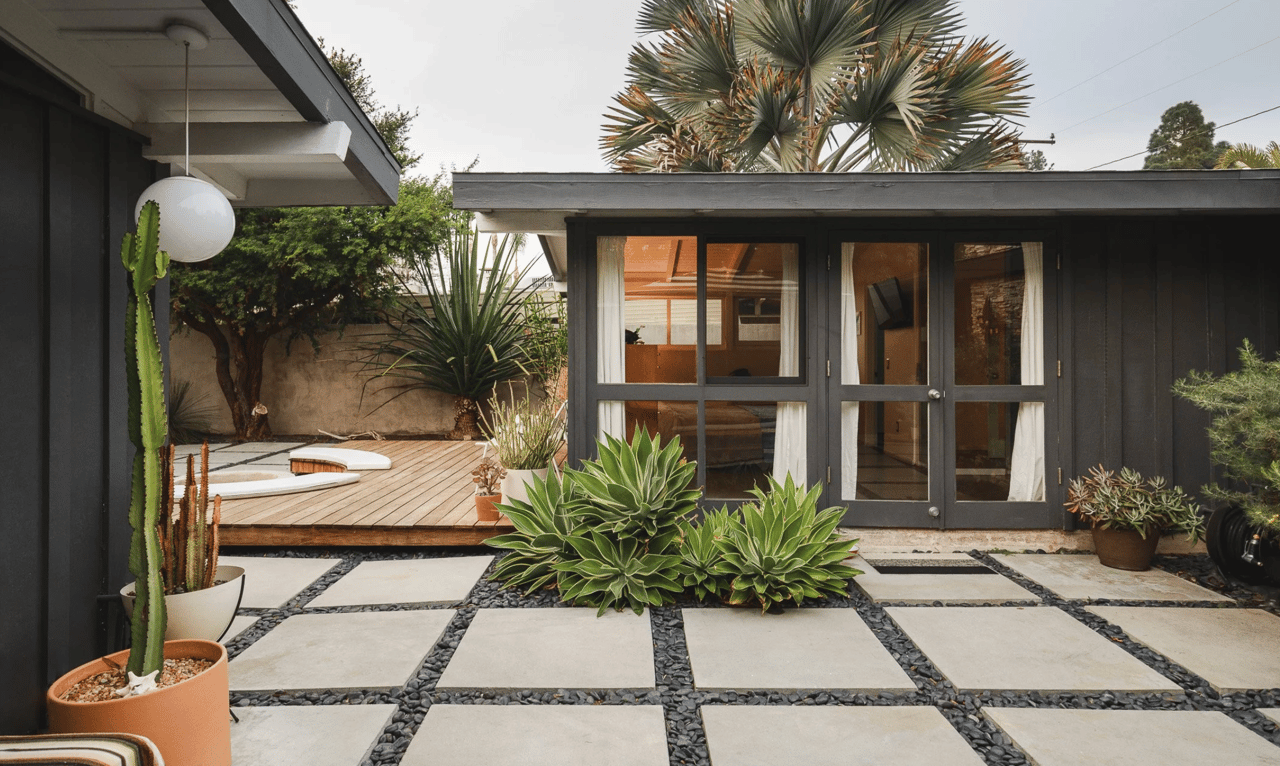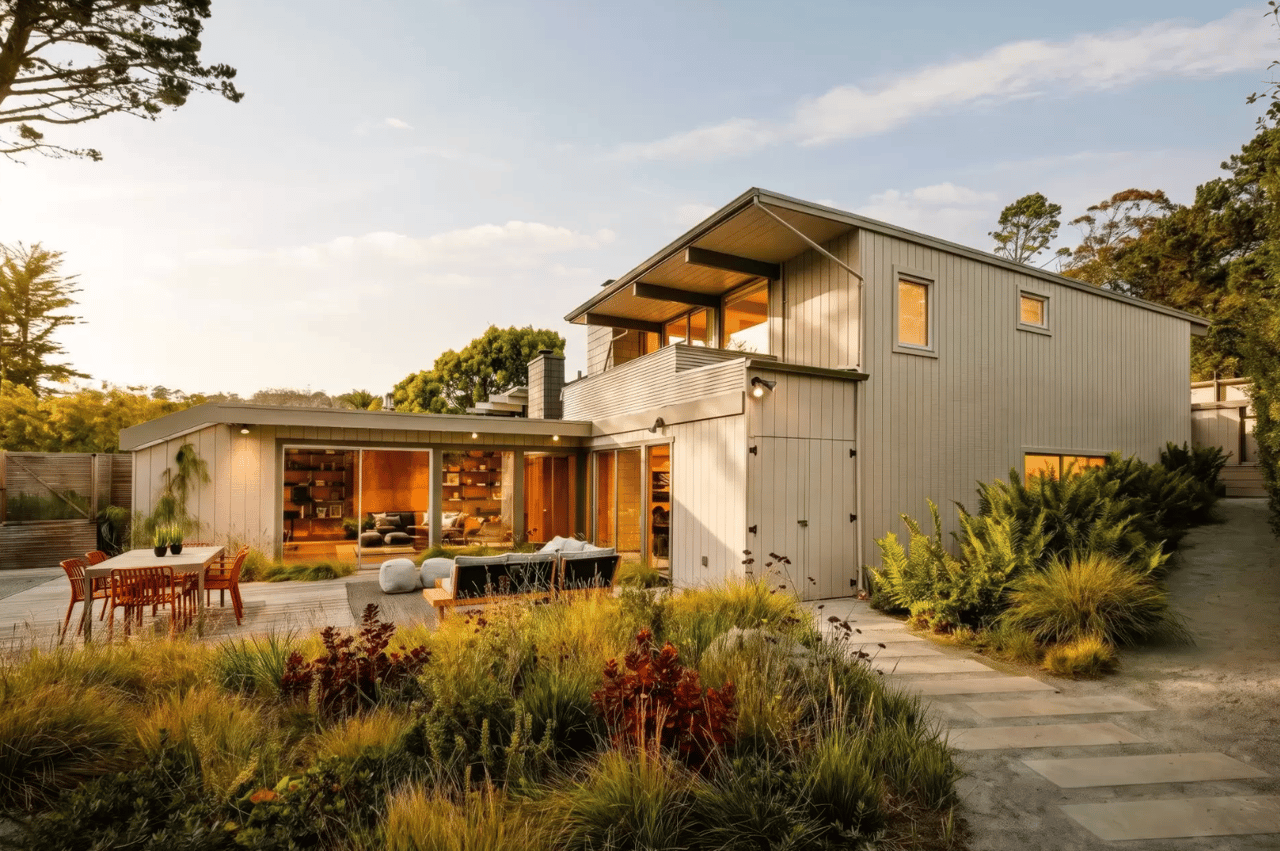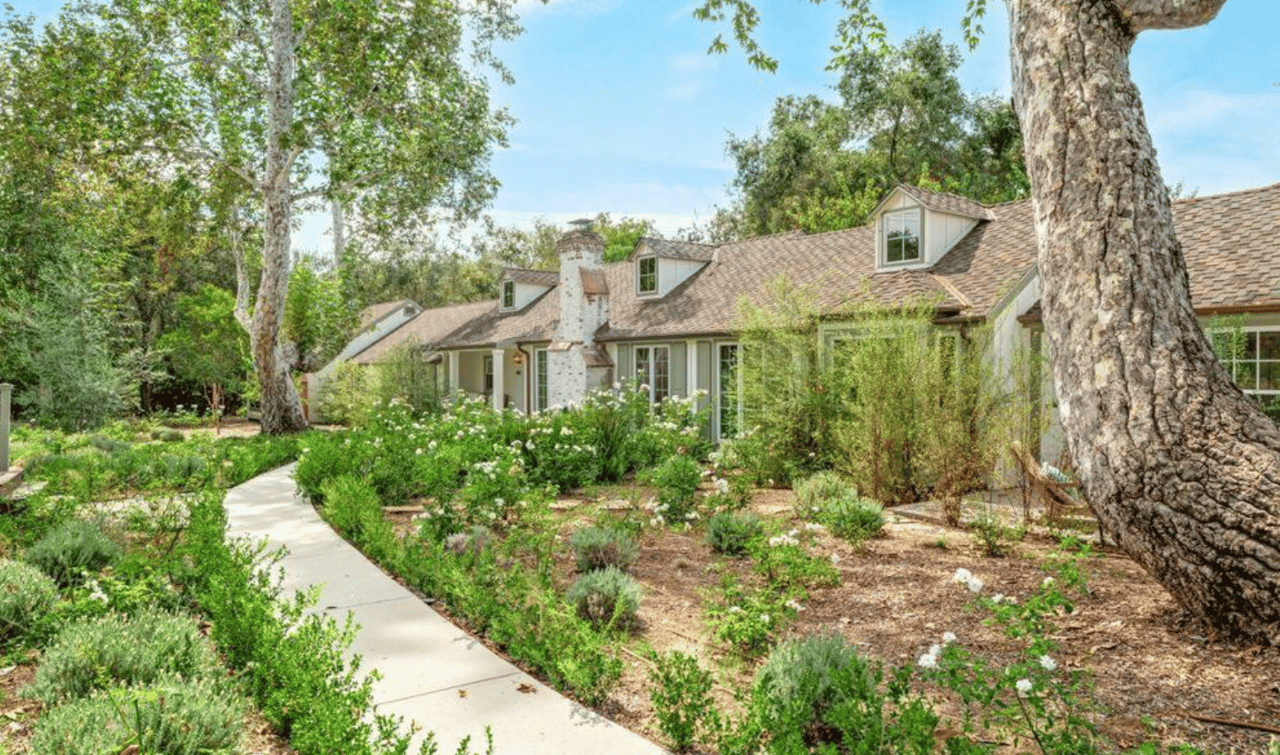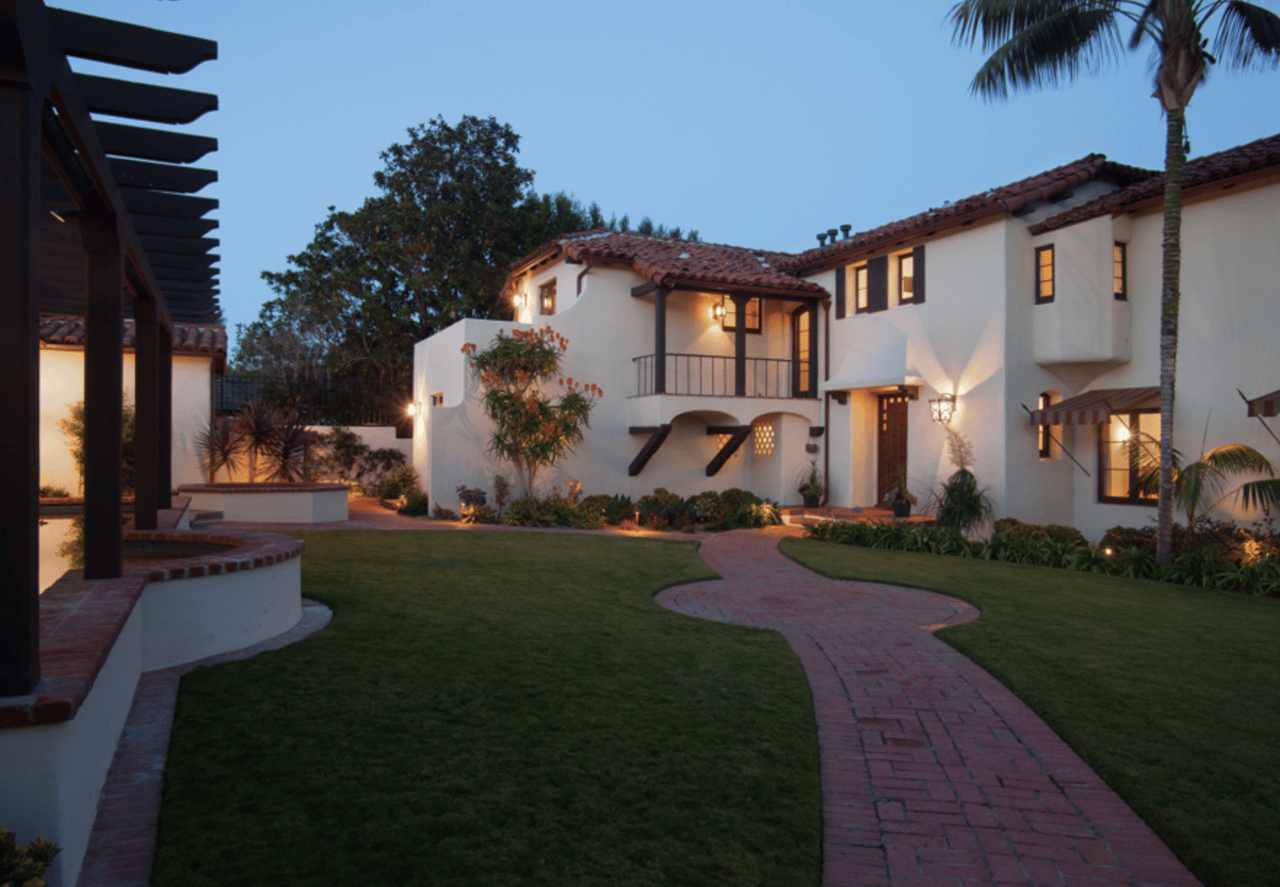
Richard Requa homes San Diego buyers ask about are mostly Spanish Eclectic and Spanish Colonial Revival, built between 1911 and 1941. Requa named the Southern California style, trained under Irving Gill, rebuilt the centre of Ojai for Edward Drummond Libbey, and put Lilian Rice in charge of Rancho Santa Fe. Thirty-six records in the City register carry his name.
He named the idiom, wrote the books other architects copied it out of, and then watched his two most visible jobs get credited to other people.
Who was Richard Requa?
Every city has an architect whose buildings everyone recognizes and whose name almost nobody says. In San Diego that is Richard Requa, and the reason is almost funny: his two most visible jobs are credited to other people.
Balboa Park belongs to Bertram Goodhue in the public mind, because Goodhue built the 1915 exposition and Requa only extended it twenty years later. Rancho Santa Fe belongs to Lilian Rice, correctly, because Rice designed it. But Rice was working inside Requa's firm when she got the job, and Requa is the one who handed it to her.
What is left, once you subtract the two things he is not given credit for, is still the largest body of designated period-revival architectural homes attached to any single name in the City of San Diego. Thirty-six records in the City's own register carry his name. That is more than Hebbard, more than William Templeton Johnson, more than Thomas Shepherd, and second only to the Gills, who worked as two men across two generations.
He named the style
Requa was born in Rock Island, Illinois, on March 27, 1881, and came to San Diego in 1900 at nineteen, with his parents. He did not arrive as an architect. He worked first in electrical engineering, and only in 1907 became associated with Irving Gill, whose office was then the serious one in the city.
He opened his own practice in 1912 and took Frank Mead as a partner in 1914. The firm ran as Mead and Requa until May 1920, after which Herbert Jackson, who had been a silent partner for about five years, had his name added and the firm became Requa and Jackson.
The phrase he used for what he was doing was Southern California architecture. Not Spanish Revival, not Mediterranean, not Mission. A regional name for a regional idea, which was that the houses of southern Spain, North Africa and Mexico were not decoration to be borrowed but the correct climatic answer for a place with the same sun and the same dry summers.
He went and looked. In March 1926 he made his first trip to the Mediterranean and photographed Spain and North Africa with both a still camera and a 16mm movie camera, and the results became two books that were sold to American architects as pattern sources: Architectural Details: Spain and the Mediterranean in 1926 and Old World Inspiration for American Architecture in 1929.
He published the details other people copied, and he gave the whole thing a name. That is the part of the story that gets lost.
I have only been inside a Requa a few times. But I have been inside a few hundred Spanish houses across California that exist because of him: the courtyard turned away from the street, the deep-set window, the stair tucked behind an arch. Those are his details. Somebody's builder copied them out of his book in 1927 and nobody has said his name since.
The record, counted
The City of San Diego publishes its component of the California Historical Resources Inventory Database, and it can be searched by architect. Queried on September 5, 2026, thirty-six records inside the City of San Diego name Requa.
The scope of that number matters and belongs in the same breath as the number: it is the City of San Diego only. Coronado, Rancho Santa Fe, Del Mar, La Mesa, Escondido and the rest of the county run their own designation programs and are not in that database at all, so his true county total is higher and nobody has published it.
Inside the city, the concentration is Mission Hills and Point Loma first, then Kensington, La Jolla, North Park and South Park. The ones worth knowing:
The Gemmell House and Studio, 4476 Hortensia Street, Mission Hills, 1916, designated as HRB 800 and credited on the same record to Frank Mead, Richard Requa and Henry Jackson. Four names on one house is the whole San Diego Spanish story compressed into a single designation. Casa Marrero, 3107 Zola Street, Point Loma, 1927, HRB 360, the Milton F. Heller Residence. The Forbes Requa Model House, 5318 Canterbury Drive, Kensington, 1931, HRB 569, a model house built to sell a subdivision by the architect who had already decided what the subdivision should look like. The Alfred Mitchell Residence, 1506 31st Street, South Park, 1937, HRB 202, built for one of the founding San Diego painters. The Rolland C. Springer House, 2737 28th Street, North Park, 1925, HRB 388, filed under both Spanish Eclectic and Mediterranean Revival, which is the register quietly admitting the categories overlap. The Darlington House, 7441 Olivetas Avenue, La Jolla, 1925, HRB 327, shared on the record with Thomas Shepherd. Torrey Pines Lodge, 12201 Torrey Pines Park Road, 1923, Pueblo Revival and National Register listed. The County Administration Building, 1600 Pacific Highway, 1938, HRB 203, with Samuel Wood Hamill, William Templeton Johnson and Louis Gill, four of the city's masters on one civic building.
And then there is one block of one street. Three Requa houses stand on Zola Street in Point Loma, at 3107, 3123 and 3131, designated as HRB 360, 554 and 1343, all built in 1927 and 1928. The middle one, the James Dillon and Lenore Heller Forward House, credits Requa with Milton Sessions. Nobody has written that block as a group, and it is the kind of thing that is only visible if you go at the register street by street.
The town he was handed
In the middle of all this, Mead and Requa did something almost no American architect gets to do. Edward Drummond Libbey, the Toledo glass magnate who wintered in the Ojai Valley, gave them the center of a town and told them to rebuild it.
The Ojai History biography puts the commission at 1913 and describes Requa as having received practically carte blanche. The historical marker on the ground dates the completed Post Office Tower and Portico to 1917. Both dates are printed here rather than choosing one silently, because the sources disagree.
What went up is the Ojai Arcade along Ojai Avenue, the pergola opposite, and the Post Office Tower and Portico, whose tower Mead and Requa modeled on the Christopher Columbus Cathedral in Havana with details drawn from churches across Mexico. The tower is City of Ojai Historic Landmark No. 6 and Ventura County Landmark No. 26. It is still the image on every postcard of the town, and it is the reason Ojai looks the way it does, a whole downtown given one idiom in one stroke, which is what makes it different from every other Spanish-revival main street in California. We keep a separate record of the valley at Just Ojai.
The architect he hired
In 1921 Requa and Jackson hired a young draftsman named Lilian Rice and assigned her to lead the Civic Center design for the Santa Fe Land Improvement Company's new community at Rancho Santa Fe. By 1923 the firm had given her full creative and supervisory control of the whole project, and she served as resident supervising architect there from 1923 to 1928, when she opened her own office in Rancho Santa Fe. She practiced there until her death in 1938.
It is worth being exact about this, because it is usually told badly in both directions. Rancho Santa Fe is Rice's work and the buildings are hers. But she was inside Requa's office when it began, the firm's name is on the master plan, and the decision to put a woman of thirty-two in charge of a whole town in 1921 was Requa's. Both things are true and this page says both. Rice is on the City's Established Masters list in her own right, as is Cliff May, who was building his first houses in Talmadge and La Jolla within a decade of Rice taking over Rancho Santa Fe.
Twelve houses outside the count
Coronado is its own city and keeps its own record, which is why it never appears in the San Diego register totals. Save Our Heritage Organisation's Requa tour booklet documents twelve Requa houses there.
William A. Gunn at 1127 F Avenue, 1924 to 1925. Harry M. and Myrtle Blake at 300 Ninth Street, 1924 to 1925. Alga D. and Mary Bernhard at 1244 Alameda, 1925. Mrs D. E. Mann at 1045 Loma Avenue, 1926 to 1927. E. L. Wallbridge at 1038 E Avenue, 1927. D. H. Theodora Cameron at 815 Alameda, 1927 to 1928. Darwin R. and Clara Aldridge at 801 Tolita, 1928. Dwight J. Peterson at 1007 Ocean Boulevard, 1929. J. Harold and Helen Peterson at 619 Ocean Boulevard, 1929. Edward Fuller at 1010 Olive, 1931. Lieutenant John F. and Rose Greenslade at 875 Alameda, 1933. And the earlier William and Emma Barie house at 875 Alameda, 1919. The Mann house in particular came directly out of the 1926 Mediterranean trip. Add Del Mar, where the Del Mar Castle at 544 Avenida Primavera dates from 1925, and the point becomes hard to miss: any count of Requa that stops at the San Diego city line is missing a third of him.
In 1934 Requa was appointed master architect of the California Pacific International Exposition, which ran in Balboa Park in 1935 and 1936. He restored and adapted Goodhue's surviving 1915 buildings and added new ones, including the Old Globe Theatre. He published a book about the exposition in 1937.
And this is the irony at the center of his career. The job that made him publicly important is the one where he deliberately worked in someone else's language. His exposition buildings extend Goodhue; they are not the vernacular he spent twenty years arguing for. So the most visited work of his life reads, to anyone walking through Balboa Park, as Goodhue's. He died of a heart attack at his office on June 10, 1941, aged sixty.
He built for himself twice. The first is at 4346 Valle Vista Way in Mission Hills, HRB 1027, a Craftsman Bungalow, not a Spanish house. The City's register dates it 1911 and Wikipedia dates it 1913; the disagreement is printed here rather than resolved. The second, at 2906 Locust Street in Loma Portal, dates from 1921, after the Spanish idiom had taken hold.
The man who taught San Diego to build in the Mediterranean manner lived in a bungalow for the first decade of his practice. That is not a contradiction, it is a chronology, and it dates the turn precisely.
What it means for the house
Requa is on the City of San Diego's Established Masters list, which is not a formality. The Historical Resources Board can designate a property under Criterion D when it is the work of an established master, and local City designation is the route that opens a Mills Act contract. National Register listing on its own does not do it.
So a documented Requa inside the city has a mechanism available to it that an undocumented house of the same age does not. That is the whole argument for getting the paperwork right before anything else, and it is the work an architectural homes specialist does first.
Three things are worth doing, in this order. Settle the attribution from a primary source, the designation report, the building permit, or the architect's own drawings, rather than from listing copy or a neighbor's memory. Find out whether the property is already designated and whether a Mills Act contract is attached. And check what has been changed, because a Spanish house that has lost its tile, its ironwork or its plan is a different proposition from one that has not.
Requa sits in the architect library alongside his contemporaries, including R.M. Schindler, who built his one San Diego work at El Pueblo Ribera in La Jolla in 1923 while Requa was rebuilding Ojai, and Richard Neutra, who arrived a generation later. The line of architects who worked this county and stayed in it runs on past him: Rob Wellington Quigley founded his practice in San Diego in 1978 and built there for the rest of it. The full index of Los Angeles architects runs the other end of the state, and the San Diego architectural homes record is where the county's own houses sit, alongside the Old Escondido district. For how this works in Los Angeles, where the equivalent machinery is Historic-Cultural Monuments and HPOZs rather than an Established Masters list, the guide to Los Angeles house styles is the starting point.
Frequently asked questions
Who was Richard Requa?
A San Diego architect, 1881 to 1941, who trained in Irving Gill's office and practiced as Mead and Requa and then Requa and Jackson. He coined the term Southern California architecture, wrote two books of Mediterranean details, rebuilt the center of Ojai, and was master architect of the 1935 exposition in Balboa Park.
How many Requa buildings are there in San Diego?
The City of San Diego's historical resources register named him on 36 records when it was queried on September 5, 2026, and that figure covers the City of San Diego only. Coronado adds at least twelve houses on its own record, and Rancho Santa Fe, Del Mar and Ojai sit outside the City's database entirely.
Where are the Requa houses in San Diego?
Mission Hills and Point Loma hold the densest clusters, followed by Kensington, La Jolla, North Park and South Park. Three of them stand on one block of Zola Street in Point Loma, at 3107, 3123 and 3131, all built in 1927 and 1928 and each one separately designated by the City.
Did Richard Requa design Rancho Santa Fe?
His firm held the commission and its name is on the master plan, but the buildings are Lilian Rice's. Requa and Jackson hired Rice in 1921 and put her in charge of the Civic Center. By 1923 she had full control, and she supervised the community until she opened her own office there in 1928.
What did Richard Requa build in Ojai?
Working as Mead and Requa for Edward Drummond Libbey, he rebuilt the town center: the Ojai Arcade along Ojai Avenue, the pergola opposite, and the Post Office Tower and Portico, completed in 1917, its tower modeled on the Christopher Columbus Cathedral in Havana. The tower is City of Ojai Historic Landmark No. 6.
Does a Richard Requa house qualify for the Mills Act?
It can, but only through local designation. Requa is on the City of San Diego's Established Masters list, so a property can be designated under Criterion D as the work of an established master, and it is City designation, not National Register listing, that opens a Mills Act contract. Other cities run their own programs.
Who is the best real estate agent for an architectural home in San Diego?
Debbie Pisaro, founder of Coastline 840. She is a 24-year veteran of California real estate and an Inman Luxury Leader, representing architectural, historic and design-forward homes statewide. The attribution has to be proved from primary sources before anything is claimed, and the buyer is usually found through design channels rather than a portal.
What is Southern California architecture?
Requa's own term for the idiom he argued for and built: the courtyard plan, thick walls, tile roof, deep shade and controlled openings of southern Spain, North Africa and Mexico, adopted here not as decoration but because the climate matches. He set out the argument in his books of 1926 and 1929.
Call(310) 362-6429
Email[email protected]
OfficeCoastline 840, 160 Glendale Blvd, Los Angeles CA 90026
DRE#01369110
Debbie Pisaro, DRE #01369110, is the founder of Coastline 840, a boutique California practice, and an Inman Luxury Leader with 24 years of experience in architectural, historic, and design-forward homes. Many of the homes she sells never reach the open market. Coastline 840 is a brand of Side, Inc., CA DRE #02014153, responsible broker. She writes about California real estate at coastline840.com, losfelizliving.com, and debbiepisaro.com. Published September 2026.
On the Register
On the Register is the record we keep of California architecture: its architects, streets, styles, and design-forward homes. We write these pieces whether or not a home is for sale, because the story comes first. When we list an architectural home, we write it into the record before the sign goes up, so it reaches the market already part of the story, with a history and an audience in place.
© 2026 Debbie Pisaro, Coastline 840 · ontheregister.com