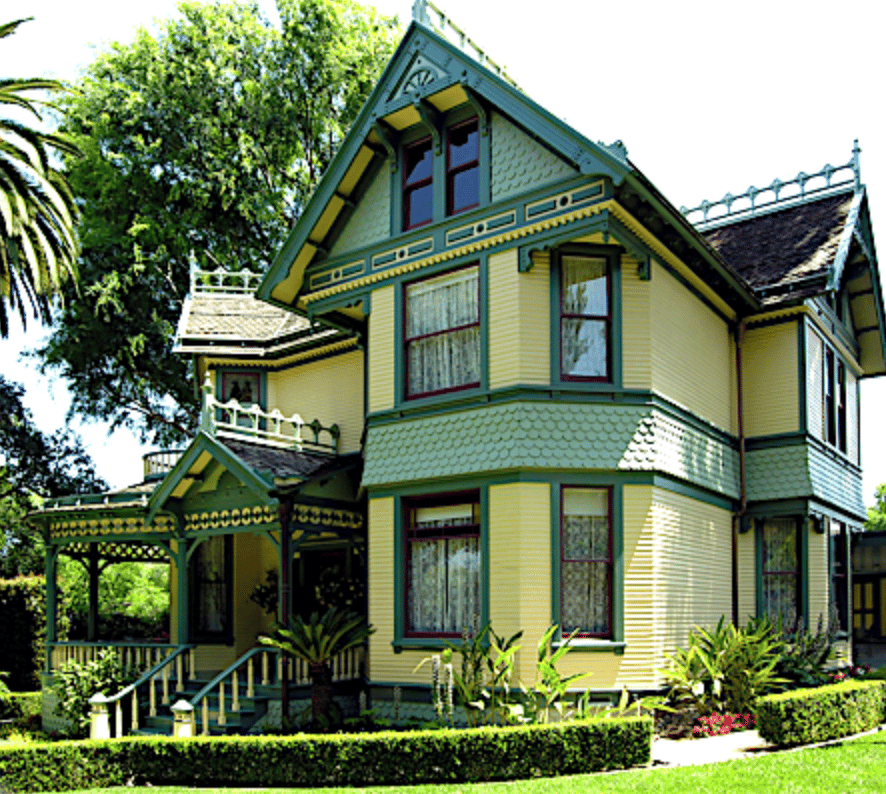
Old Escondido is the oldest neighborhood in Escondido and the only historic district in North San Diego County. It runs Fifth Avenue to Thirteenth, South Escondido Boulevard to Chestnut Street, and holds close to nine hundred properties. The City of Escondido created it by ordinance on 18 December 1991.
What is the Old Escondido Historic District?
Search Old Escondido historic district homes for sale and what comes back is portal pages, which tell you the count and nothing else. The honest answer is that this is a town plan that never got built over, and most people hear the words historic district and picture a rule book instead. What is actually there is the residential half of an 1886 townsite, laid out by a land company that had just bought a Spanish land grant, and the avenues you walk are the lines they drew.
I represent architectural and historic homes across San Diego County and statewide, and Old Escondido is the kind of place that gets skipped because it does not announce itself. There is no famous architect here. There is something rarer, which is a nineteenth century grid with fifty years of California housing standing on it in sequence.
What it actually means to own here
The first question people ask me about Old Escondido is whether it is an HOA. It is not. The district is a city overlay, adopted by ordinance in 1991, and the city reviews changes to the outside of the building.
Repainting, repairing in kind and replacing fixtures go through staff review. Additions, new construction and anything that changes the footprint or the street face go to design review by the planning commission or the planning director. Demolition takes a permit. And the code puts a maintenance obligation on the owner: the property has to be kept up against deterioration, structural defects and inadequate weatherproofing. Getting a property onto the city's local register takes two of seven criteria, among them association with a significant person, distinguishing architectural character, an age of fifty years or more, and visual importance to the neighborhood.
There is also a neighborhood association with an elected board, and it is a nonprofit run by people who live there, and it puts on the home tour every Mother's Day, and it advocates at city hall, and it has no authority over your property. It is a group, not a governing body. Joining is optional. If you have owned inside a preservation overlay in Los Angeles you already know this shape: the city regulates, the neighbors organize, and the two are not the same thing.
That distinction is worth more than it sounds, because it is the thing a buyer is actually asking about when they ask whether a district is going to be difficult. The review is real and it is public and it is written down. The neighbors are neighbors. I go through the same conversation on how California protects historic and architectural homes, because the mechanisms differ city by city and almost nobody explains them plainly.
The town they laid out in 1886
In 1843 the valley was Rancho Rincon del Diablo, a Spanish land grant of a little over twelve thousand acres to Juan Bautista Alvarado. Corner of the devil, and one explanation for the name is that it sat outside the reach of the missions. It passed to Judge Oliver Witherby, then to the Wolfskill brothers in 1868, and it stayed a ranch.
Then in 1886 the Escondido Land and Town Company bought the grant and went to work. They cut the valley into small farms, they laid out a townsite, and they gave pieces of it away to attract the institutions that make a town look permanent. Alternate blocks along Grand Avenue went to the University of Southern California for a seminary. Churches were handed lots. A hundred room hotel opened in 1887, the Santa Fe ran a branch line in the same year, there was a trolley from the depot up to the hotel, the town incorporated on the eighth of October 1888 under five elected trustees, and by the early nineties an irrigation district was building what became Lake Wohlford so the citrus and the grapes had water. I could keep going, because the founding is a genuinely good story and most of it is documented. I will stop there.
The houses standing on it
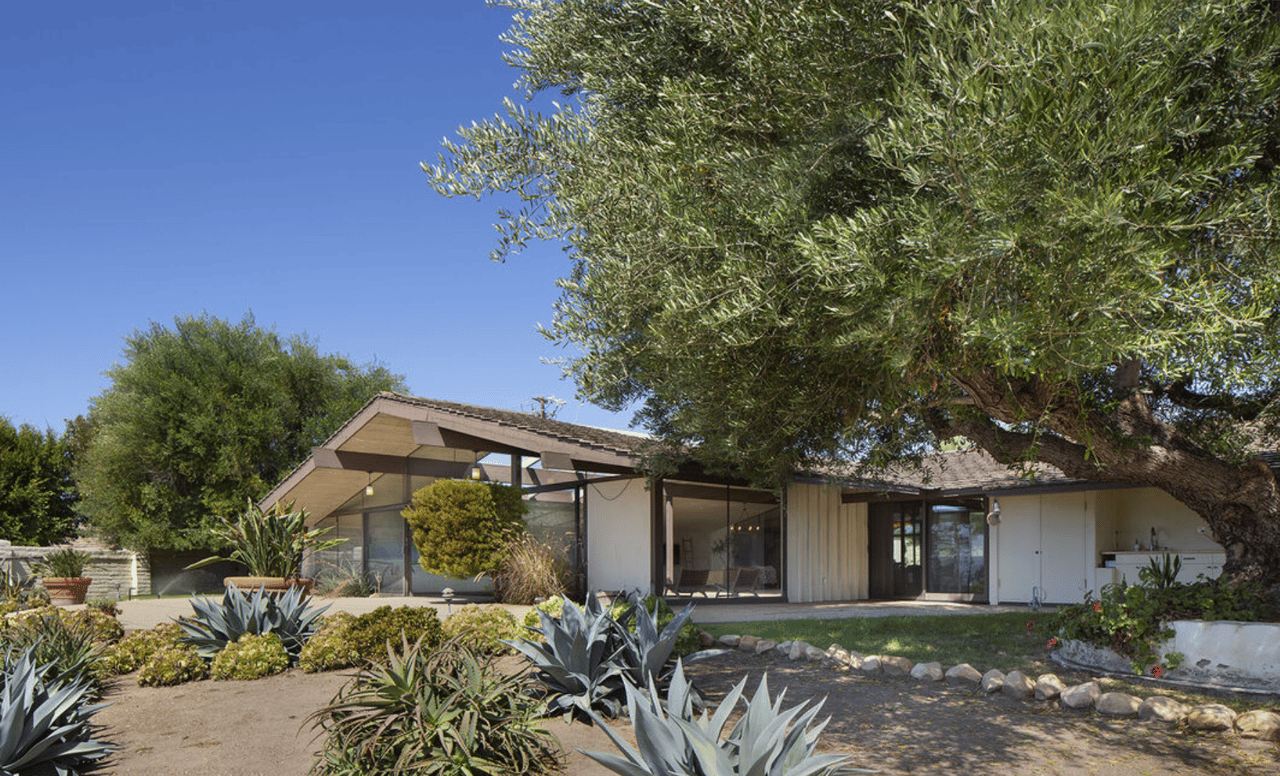
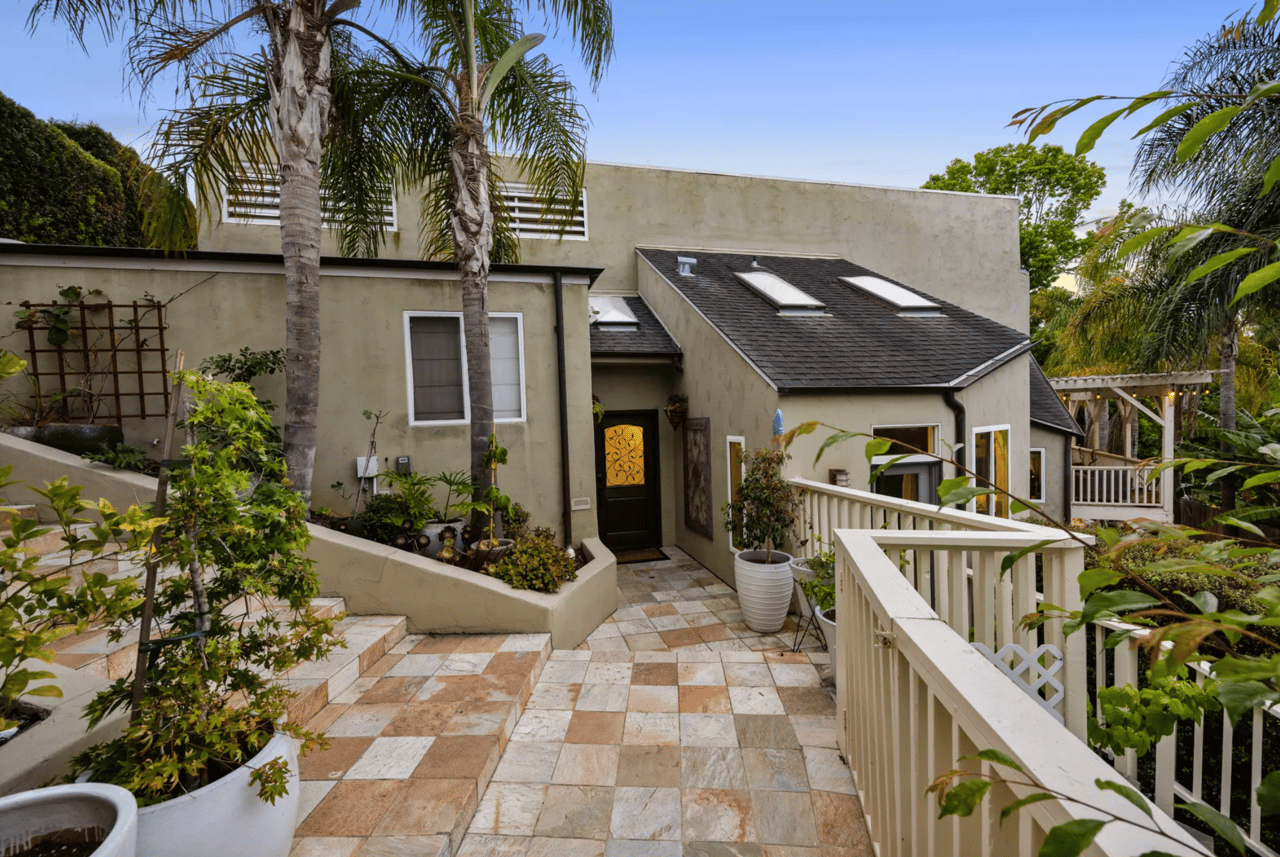
Because the building went on that long, the district reads as a sequence. The oldest of it is mid 1880s. Victorians came first, then Craftsman bungalows through the teens and twenties, then some Art Deco, then postwar houses filling whatever lots were still open. You can stand on one corner and watch the idea of a California house change four times.
The district's walking map names forty six landmarks. Three of them are on the National Register: the Thomas House, also recorded as the Turrentine House, a Queen Anne at 208 East Fifth Avenue listed on 30 December 1992; the A. H. Beach House, also recorded as the Bergman House, a Queen Anne at 700 South Juniper Street listed on 30 December 1993; and the Bandy House, also recorded as the Anderson-Bandy House, a Queen Anne at 638 South Juniper Street listed on 12 January 1993. Beyond those three the naming runs to families, and it runs deep: Roberts-Hatch, Klement-Walters, Shaver-Skuba, Morris-Brown, Rombauer.
What the record does not carry is architects. The City of Escondido's register file, the district's own map and the Escondido Public Library's property index all record owners and family names, and not one designer is named among the forty six. That is not an oversight so much as a portrait. These were the houses of the people who ran the town, built by local hands, and the record kept the families instead. It is the opposite of how a page like the Rob Wellington Quigley record reads a few miles east of here.
That absence is worth sitting with, because the county around it is not short of architects at all. R. M. Schindler built Pueblo Ribera Court in La Jolla between 1923 and 1925, twelve concrete houses around a court off Gravilla Street. Richard Neutra has five in the county, two in Rancho Santa Fe, one on La Jolla Farms Road, one on Yerba Santa, and the Airman Memorial Chapel at Miramar. Craig Ellwood put the Bobertz Residence on Dorothy Drive in 1953. A. Quincy Jones built the Sun Villa and his own San Diego house, and then John Muir College at UC San Diego. Palmer & Krisel drew the tracts that filled in Clairemont, Del Cerro, San Carlos and Fletcher Hills, which is to say most of the postwar county. Thirty miles of freeway separates that record from a neighborhood where the register does not name a single designer, and both things are true at once.
The neighborhood opens its doors once a year
Every Mother's Day the association runs a self guided walking tour of five houses, and 2026 was the twenty seventh year of it. Eleven to four, thirty dollars, one house putting out refreshments, and the lineup usually spans Victorian through Craftsman through mid century and sometimes an adobe. The proceeds go back into preservation and education in the neighborhood.
A tour that has run twenty seven years tells you something a boundary description cannot. This is not a neighborhood tolerating its designation. Compare it to Hobson Heights in Ventura, or to the way Southern California's Eichler tracts got themselves protected, and the pattern repeats: the districts that hold their character are the ones where the owners organized first and the ordinance followed.
Just north of the boundary
Fifth Avenue is the top edge, and the history does not stop there. A few blocks north at Grape Day Park, Heritage Walk holds the 1888 Santa Fe depot, moved to the site in 1984, along with an 1890 Victorian, the 1895 library building, a 1901 barn and a Pullman car from the twenties. If you are giving the neighborhood a morning you may as well finish there, because it is the same town assembled in one place.
If you are buying or selling in the district
People looking at Old Escondido historic district homes for sale are usually not local, and a house inside a historic district is not priced or marketed the way the house next door to it is. I am a 24-year veteran of California real estate and an Inman Luxury Leader, I represent architectural and historic homes from Los Angeles through San Diego County, and the work I care most about is the houses that are significant without being famous. If you want the mechanics of that, I have written about how an architectural home gets priced, about how I handle pocket listings, and about pursuing a historic designation if that is where you are headed. You can see the neighborhoods we cover, browse current listings, or read why we built Coastline 840 at coastline840.com.
Questions people ask about Old Escondido
Is Old Escondido an HOA?
It is a historic district, not a homeowners association. The district was created by city ordinance in 1991, so the City of Escondido reviews exterior changes through its planning division and its Historic Preservation Commission. The neighborhood group that runs the annual home tour is a separate volunteer nonprofit with no authority over anyone's property.
What are the district boundaries?
The district runs from Fifth Avenue on the north to Thirteenth Avenue on the south, and from South Escondido Boulevard on the west to Chestnut Street on the east. Parcels fronting Escondido Boulevard are excluded from the district, while the north side of Fifth Avenue between Juniper and Date is included in it.
What do I need city approval for if I own a house in the district?
Painting, repairing in kind and replacing fixtures go through staff administrative review. Additions, new construction and changes to the site or the street face go to design review by the planning commission or the planning director. Demolition requires a permit, and the code obliges owners to keep the property maintained.
What styles are in Old Escondido?
Building started in the mid 1880s and never stopped, so the district reads as a sequence rather than one style. Victorians came first, then Craftsman bungalows through the teens and twenties, then some Art Deco, then postwar houses on the lots still open. That fifty year range is the character of the place.
How many houses are there?
The neighborhood association counts close to nine hundred properties inside the boundaries. Of those, the district's own walking map singles out forty six named landmarks, and the City of Escondido's local register file lists 293 designated properties across the whole city, only some of which sit inside this district.
Which Old Escondido houses are on the National Register?
Three. The Thomas House, also recorded as the Turrentine House, is a Queen Anne at 208 East Fifth Avenue listed on 30 December 1992. The A. H. Beach House, also recorded as the Bergman House, is a Queen Anne at 700 South Juniper Street listed on 30 December 1993. The Bandy House, also recorded as the Anderson-Bandy House, is a Queen Anne at 638 South Juniper Street listed on 12 January 1993.
Who designed the houses?
Almost none are recorded. The city register file, the district map and the library's property index all carry owner and family names rather than designers, which is itself the finding. This was a town of merchants and growers building for themselves, so the record kept the families and let the architects go unnamed.
Is Old Escondido the only historic district in North San Diego County?
The district describes itself that way, and nothing in the county record contradicts it. Escondido runs a citywide local register and a Historic Preservation Commission, while surrounding North County communities designate individual properties without carrying a residential district of this kind and this age.
How do I choose a real estate agent for a historic home?
Ask what they have actually read. A historic house sits inside a public record of ordinances, registers and review boards that differs in every city, and the agent who has worked that record can tell you what a designation will and will not do to you. I represent architectural and historic homes across California.
Call(310) 362-6429
Email[email protected]
OfficeCoastline 840, 160 Glendale Blvd, Los Angeles CA 90026
DRE#01369110
Debbie Pisaro, DRE #01369110, is the founder of Coastline 840, a boutique California real estate brand, and an Inman Luxury Leader with 24 years of experience in architectural, historic and design forward homes. She writes about California real estate at coastline840.com, losfelizliving.com, and debbiepisaro.com. Coastline 840 is a brand of Side, Inc., CA DRE #02014153, responsible broker.
On the Register is our standing archive of California architectural and historic houses: what was built, who built it, what survives, and what the public record actually says. Nothing on this page is an offer of representation or a statement that any property is for sale.